Why go
Matcha, split by purpose
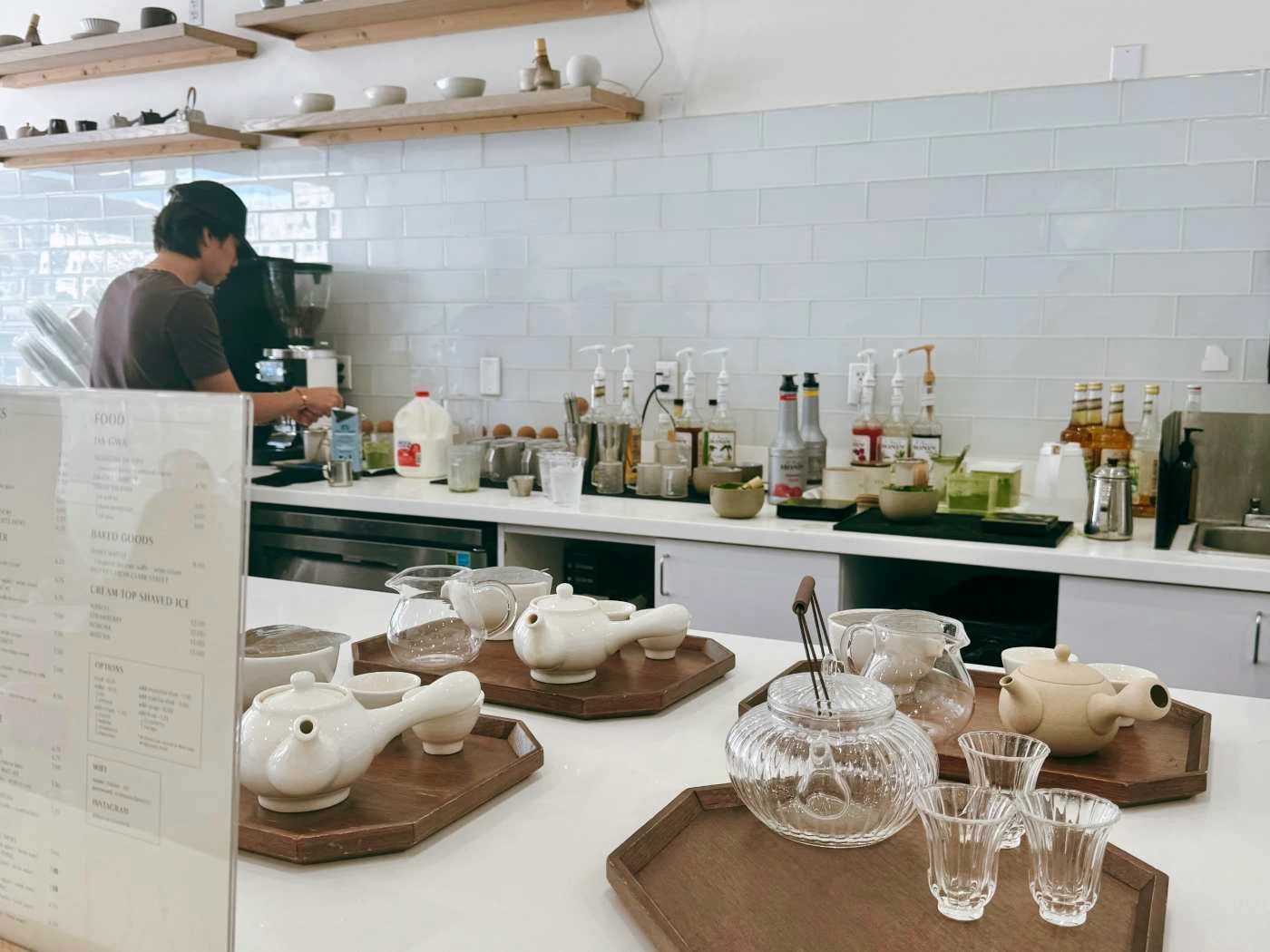
Matcha is not one all-purpose powder here. The Los Feliz shop in Los Angeles keeps three latte-specific matcha varieties and a separate blend for traditional whisked preparation, which is the clearest signal of how this counter thinks: creamy milk drinks and direct tea service are different jobs and deserve different tea. This is Kettl's first West Coast outpost and its flagship, opened in late February 2025 by founder Zach Mangan after fifteen years building the importing company and a first New York shop in 2020. Beyond matcha, the board runs to hojicha and sobacha lattes and cortados, iced sparkling matcha, shaken gyokuro, genmaimatcha with roasted rice, mugicha barley tea, hot wakoucha Japanese black tea and sencha.
Tea that arrives weekly
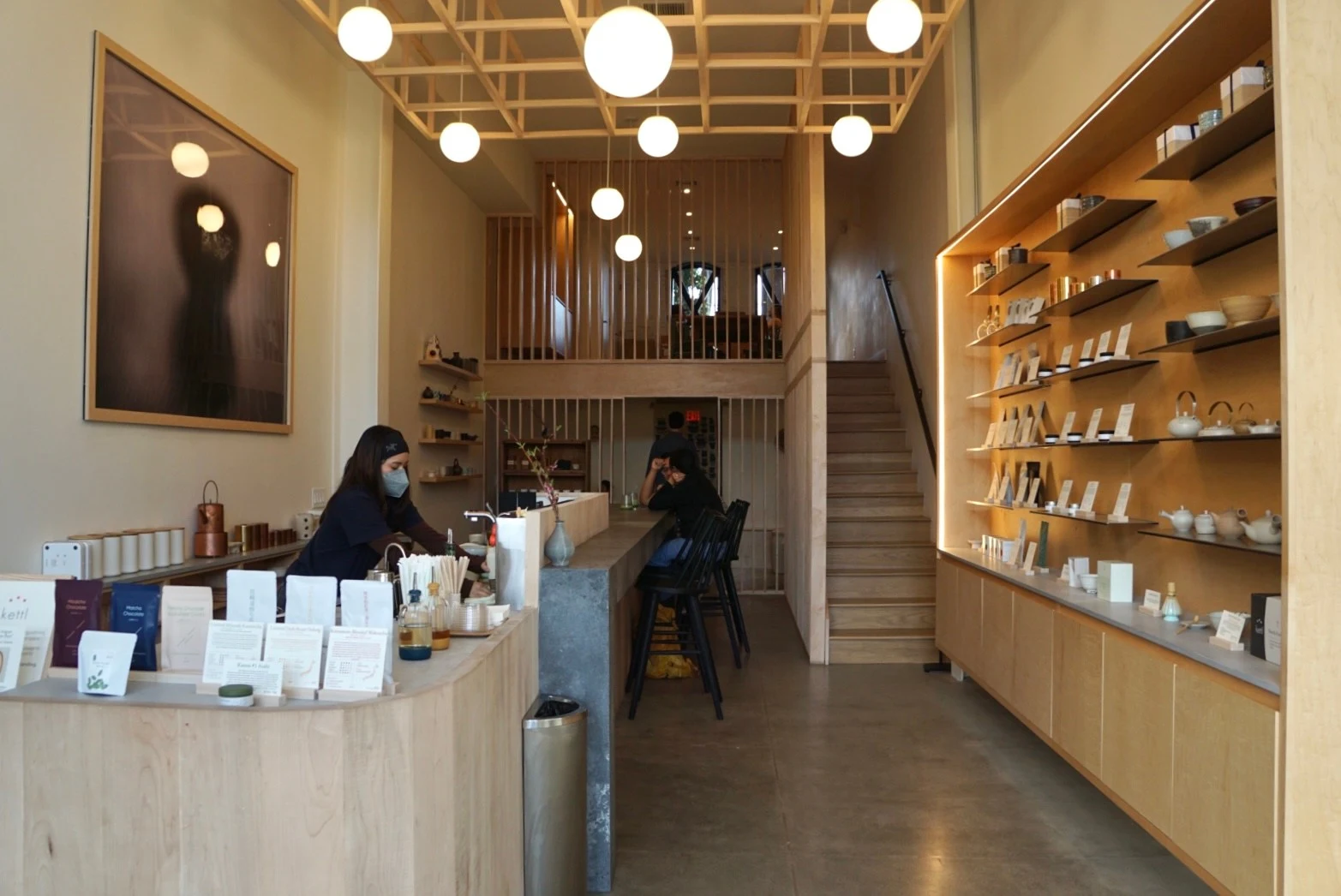
The sourcing story runs deeper than the drinks list. The company works directly with growers and producers in Japan, visiting several times a year, and its import arm is incorporated there with a main office in Fukuoka. Tea arrives weekly from producers to the company's facility before being repackaged and distributed in the United States, and the time from producer to customer usually stays under ten days. The room itself is small and minimal, with light wood shelves and stone countertops echoing the Brooklyn shops. Drinks travel well, a small rear area and communal mezzanine seating hold anyone staying, and a four-seat tasting counter runs guided omakase tastings alongside ordinary à la carte ordering. The mezzanine is intended to become an education lab, matching the class-heavy New York programming.
Start with the matcha latte
Start with the matcha latte, the format the brand is best known for and the reason three latte-specific matchas are kept behind the counter. For tradition, move to whisked matcha, made with its own blend. For a colder green-tea route, iced genmaimatcha brings roasted rice into the cup and gyokuro comes shaken; sparkling matcha is the carbonated option, and mugicha moves the order into barley tea. For roast, choose the hojicha latte or hojicha cortado, with sobacha continuing the roasted, grain-based line. Hot brewed options include sencha and wakoucha, the Japanese black tea that more producers are now developing. For something sweet, the Los Feliz-only item is a tea-flavoured plant-based ice cream bar, and the retail shelves carry matcha, loose tea, tea bags, tools, ceramics, incense, kombucha and sweets.
Tags
Frequently asked questions
What should I order at Kettl Tea?
Start with the matcha latte, the format the shop is best known for and the reason it keeps three latte-specific matcha varieties. For tradition, move to whisked matcha, made with its own separate blend. Iced genmaimatcha, shaken gyokuro and sparkling matcha cover the colder routes, while hojicha latte or cortado brings in the roasted side.
Where does the tea come from?
Directly from growers and producers in Japan, visited several times a year, with an import arm incorporated there and a main office in Fukuoka. Tea arrives weekly at the company's facility before being repackaged and distributed in the United States, and the journey from producer to customer usually stays under ten days, which is why the cups taste fresh.
Compare nearby places
| Venue | Type | Area |
|---|---|---|
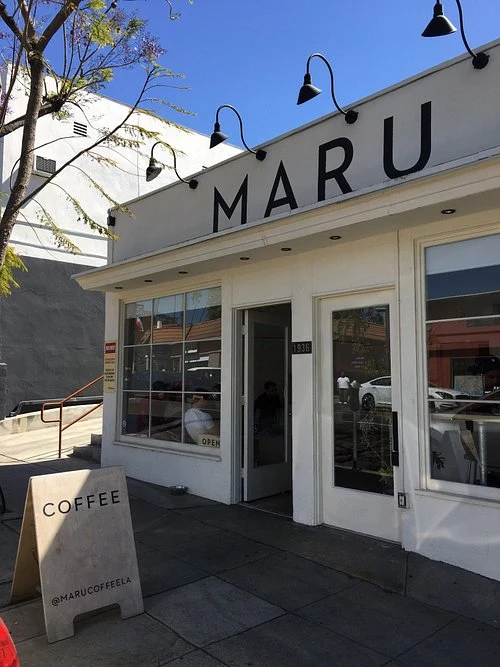
| Maru Coffee | Café | Los Feliz |
| Ondo Coffee | Café | East Hollywood |
| Damo | Café | Koreatown |
| Endorffeine | Café | Chinatown |
| Dinosaur Coffee | Café | Silver Lake |