Why go
Pistachio first, then whatever the case is showing
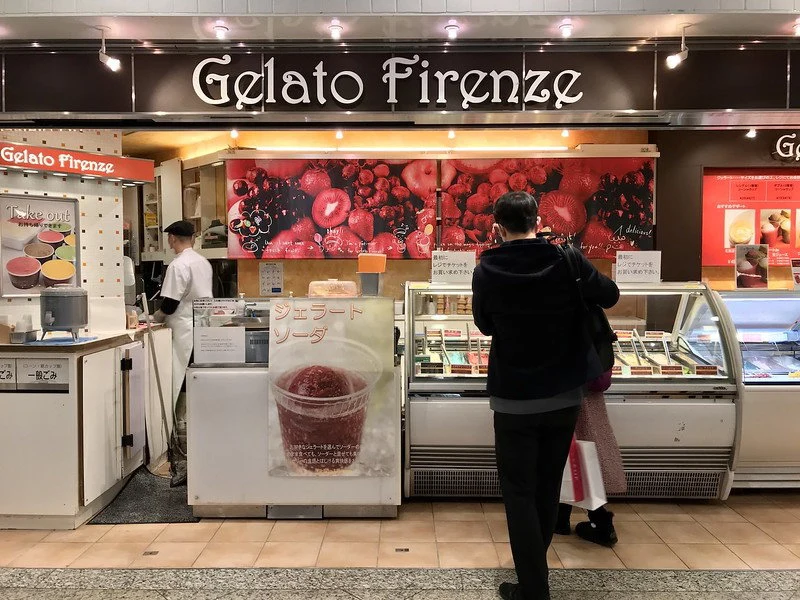
Order the pistachio. It is the flavour that tells you whether a gelateria is working with real nuts or opening a tub of paste, and it is the one Gelato Firenze is best known for. Green tea sits at the other end of the range, the obvious Japanese answer to an Italian format and a useful contrast if you are taking two scoops rather than one. Melon and soda both appear as gelato in their own right, which is more of a Japanese convention than an Italian one. The persimmon gelato soda float is the least Italian and most interesting thing on the board: fruit gelato dropped into soda and eaten with a spoon and a straw at the same time.
An Italian format on an upper floor of Landmark
Gelato Firenze works inside Yokohama Landmark, and that setting shapes what the visit is. This is a counter, not a room: you look, you choose, you carry it back out into the rest of the complex. Gelato rather than ice cream is the declared style, which is a real technical difference and not just a word. Less butterfat, less air churned in, and a warmer serving temperature mean the flavours read more directly and the texture is denser and more elastic than an American scoop. The Florentine name is a statement about that method rather than a claim about ingredients travelling from Tuscany, and the range on the board reflects a Japanese audience as much as an Italian tradition.
A ranked stop, not a destination meal
Gelato Firenze was ranked 75th on the Tabelog 100 in 2023, which is unusual for a dessert counter inside a shopping complex and is the clearest outside marker the shop has. It does not change what the place is. There is no seated service, no coffee programme worth planning around and no kitchen behind the counter; the entire proposition is the case and the decision made in front of it. That suits how most people arrive, which is partway through a visit to Minato Mirai rather than on a special trip. Take a cup rather than a cone if you are walking on, choose one fruit flavour and one nut or tea flavour if you are having two, and eat it before it warms.
Tags
Frequently asked questions
What should I order at Gelato Firenze?
Pistachio is the flavour to judge the shop by, since it shows whether the nuts are being worked properly. Green tea is the strongest local contrast, melon and soda both appear as gelato in their own right, and the persimmon gelato soda float is the most distinctive thing on the board.
Is Gelato Firenze worth a special trip?
It is a counter rather than a destination, best folded into a visit to Minato Mirai. The one outside marker is a place on the Tabelog 100, ranked 75th in 2023, which is rare for a dessert stop inside a shopping complex. There is no seated service and no kitchen.
Compare nearby places
| Venue | Type | Area |
|---|---|---|
| Bunmeidou Sakan Ru Cafe | Café | Isezakicho |
| Boulangerie JEAN FRANCOIS Yokohama poruta | Bakery | Yokohama Station East Exit |
| ECHIRE PATISSERIE AU BEURRE Yokohama takashimaya ten | Bakery | Nishi-ku |
| BLUFF BAKERY Motomachi honten | Bakery | Motomachi |
| Patisserie Les Bien Aime | Bakery | Naka-ku / Ishikawacho |