Yokohama Station East Exit

Boulangerie JEAN FRANCOIS Yokohama poruta

BakeryBakery Cafe3.9 on GoogleAbout $10 a head
Boulangerie JEAN FRANCOIS Yokohama poruta

Why go

The first read here is architectural rather than culinary: a bakery counter folded into Yokohama Porta, the underground commercial concourse that turns station movement into a dining ecosystem. This is not the hushed, destination-bakery model of a side-street shop with a slow queue and a narrow window of availability. It belongs to a Japanese station tradition where bread, coffee, sandwiches, and takeaway sit beside rail schedules, office commutes, family errands, and late-evening shopping. In that setting, Boulangerie JEAN FRANCOIS Yokohama poruta has a useful tension: French bakery cues inside a high-traffic transit container.

Yokohama’s station dining is often underestimated by visitors who frame the city through the waterfront, Chinatown, or Minato Mirai. The station itself is a serious eating zone, with subterranean malls, department-store food floors, and compact restaurants handling a volume that would overwhelm many street-level kitchens. Bread fits that environment neatly. It travels, it works for breakfast, and it can be eaten alone without the social contract of a full restaurant meal. That is why a bakery-cafe inside Yokohama Porta can matter more than its footprint suggests.

A French bakery format built for Yokohama Station flow

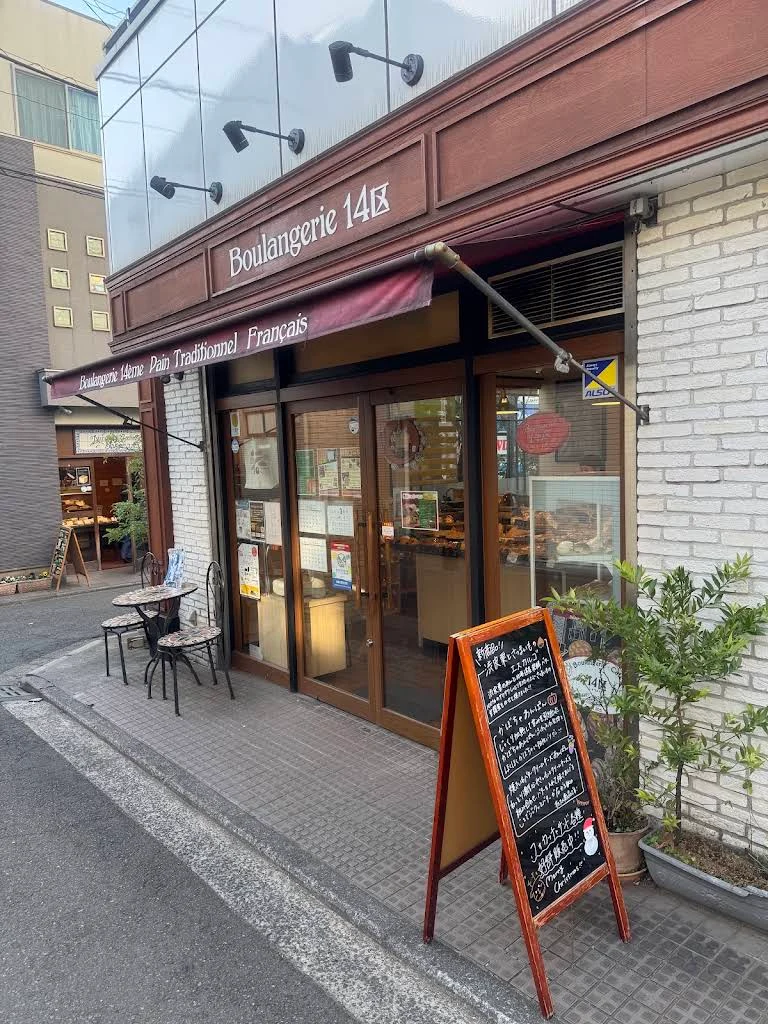
Japan’s bakery culture has long absorbed French technique without treating it as museum work. The country’s stronger urban bakeries tend to be pragmatic: viennoiserie and baguette references on one side, cafe seating and packaged takeaway on the other, with the customer deciding whether the stop is breakfast, a snack, or a light meal. This branch sits squarely in that hybrid category, listed across bread, cafe, and sandwich rather than formal restaurant dining.

The recognition signal is specific: selection for Tabelog Bread EAST “Tabelog 100” in 2020 and 2022. In a category crowded with independent neighborhood bakeries and polished retail counters, that matters because it places the shop within a regional bread conversation rather than merely a station convenience set. The Tabelog score of 3.62 also reads differently in Japan than on international review platforms; high-volume casual venues rarely receive the inflated numbers common elsewhere, so the award selection carries more weight than a casual glance at the rating might imply.

Its competitive frame is not Yokohama’s tasting-menu dining or the higher-spend grill rooms around the station. It belongs with the low-ticket, high-frequency side of the city, closer in price behavior to ECHIRE PATISSERIE AU BEURRE Yokohama takashimaya ten and Italiano Jerato Ya than to Napule Yokohama takashimaya ten or Yakiniku Ushigoro Yokohama ten. That distinction is useful for travelers: Yokohama Station can handle a celebratory meal, but it also excels at precise, inexpensive stops that solve a narrow need well.

The room matters because the station is the audience

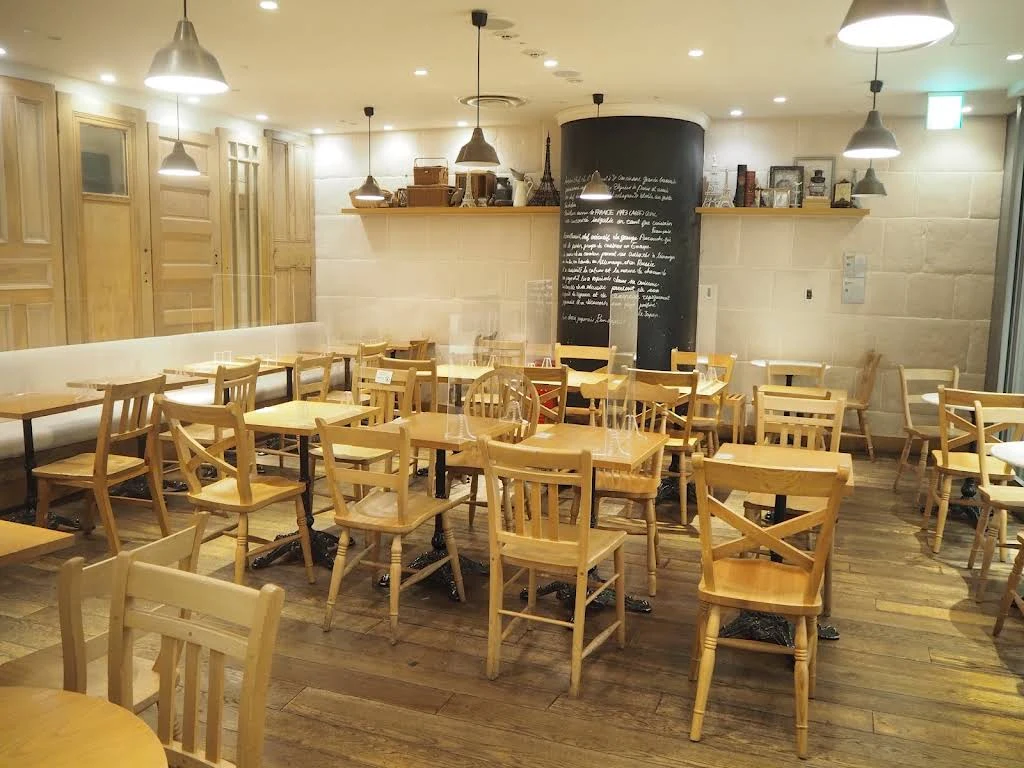
The physical setting shapes the experience. A 54-seat bakery-cafe in an underground station complex serves a different purpose from a boutique counter with three stools and a production kitchen in view. Seating gives the format a pause button; takeaway keeps it compatible with train travel. The room’s role is less romance than efficiency, which is exactly the point in Yokohama Porta. The station diner is often between commitments, and the better venues in this environment understand that speed does not have to mean carelessness.

The design language also reflects a broader Japanese approach to European bakery formats in commercial spaces. Rather than separating bread retail from cafe use, the model compresses browsing, payment, and sitting into one compact circuit. That makes the shop legible to commuters and visitors who do not want a full restaurant interaction. It also explains why breakfast availability and allergy information are practical strengths in this category: station bakeries serve mixed audiences, including families, office workers, and travelers managing dietary constraints before getting on a train.

There is a credentialed French thread behind the brand: JEAN FRANCOIS carries the skills and spirit of Jean-François Lemercier, associated with the Meilleur Ouvrier de France title. The more interesting point is how that pedigree is translated into a Japanese retail environment. The authority is not expressed through a long tasting sequence or chef-centered storytelling; it appears through a bread program designed to function at station speed.

Where it fits into a Yokohama eating day

For a traveler using Yokohama as a base, this kind of address is most useful at the edges of the day. It can anchor breakfast before a train, a low-commitment lunch between neighborhoods, or a takeaway stop before returning to a hotel. It also gives a different view of the city from more formal dining rooms: Yokohama’s food culture is not only Chinatown banquets and waterfront restaurants, but also polished station infrastructure where thousands of small decisions are made daily.

That is the editorial case for including it in a serious Yokohama itinerary. Not every worthwhile food stop needs ceremony. Some reveal how a city actually eats when time is compressed. For broader planning, compare it with other Yokohama entries such as 1000 (Yakitori (Grilled chicken skewers)), Aichun, Ajowan, and Alpenjiro Honten, then widen the map through Our full Yokohama restaurants guide. Travelers building a fuller stay can also use Our full Yokohama hotels guide, Our full Yokohama bars guide, Our full Yokohama wineries guide, and Our full Yokohama experiences guide.

Its value becomes clearer when set against Japan’s wider casual-dining spectrum. A railway-adjacent bakery has little in common with -Grilled beef Sukiyaki- KAMAKURA TANUKIAN 鎌倉 たぬき庵 in Kamakura,. 鮪と炭火焼き うお炭 秋葉原店 in Tokyo,.cafe in Osaka,.know in Kumamoto, (Shoku) Vietnam in Kawasaki, [Curry Senmon Ten] Maruyama Kyoju. in Sapporo, Jōdo Saké Bar in Los Angeles, Onigiri Time in Pasadena, or Anzen Shokudo. Yet that contrast is useful: Japan’s eating culture is built as much from efficient daily formats as from destination meals. Boulangerie JEAN FRANCOIS Yokohama poruta is strongest when read through that lens.

Tags

CozyModernLivelySoloAfter WorkCasual HangoutLate NightFamilyStandaloneDesign Destination