Why go
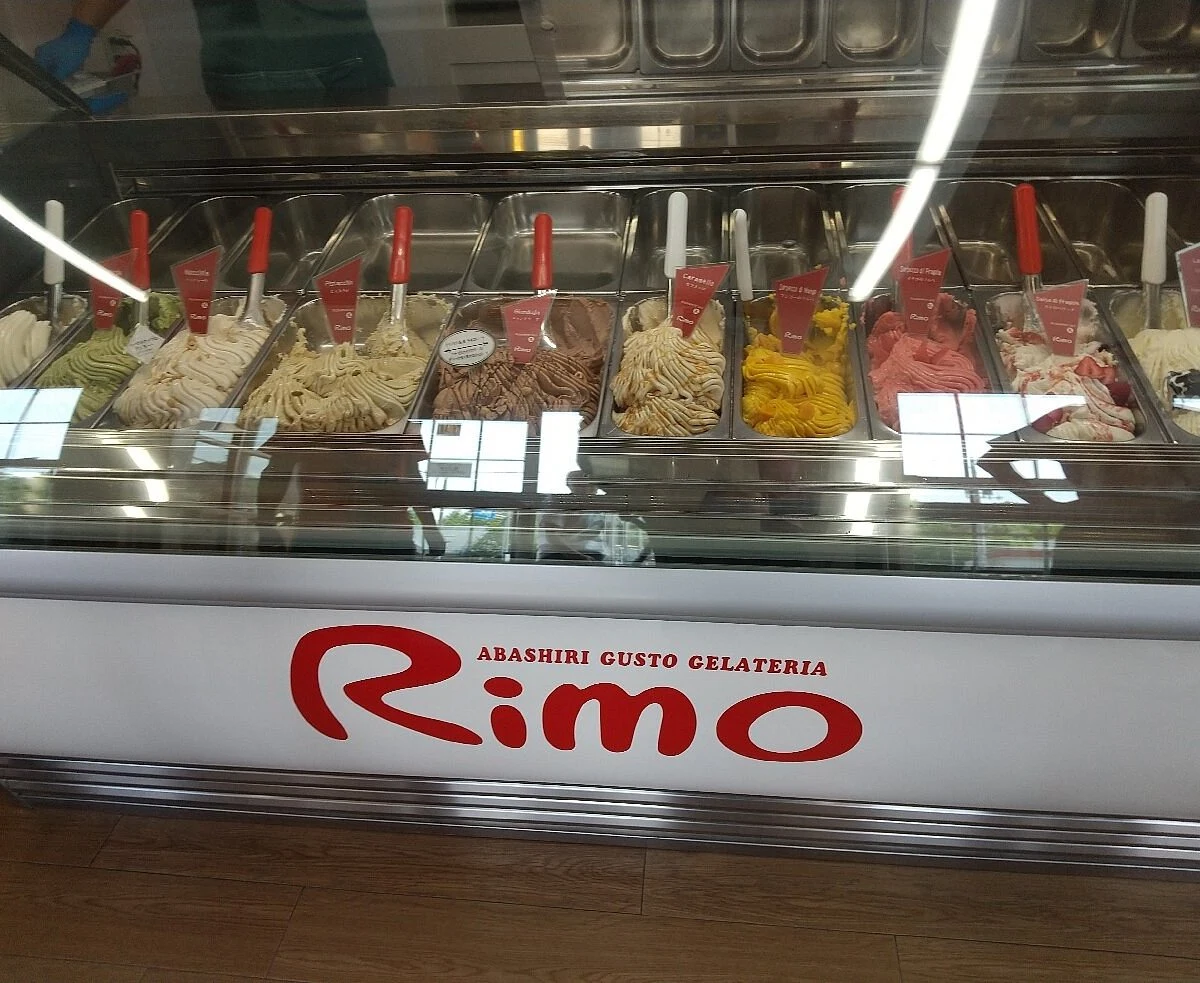
The case at this Hokkaido gelateria runs from milk and sweetcorn to an infusion of roasted crab shell, which is roughly the range the house is after.
A family shop rebuilt around competition craft
Rimo’s Abashiri main store is the flagship of the brand, and it started as a family gelato shop inherited in 2007 from the previous generation, then rebuilt around Italian gelato craft and Hokkaido produce. The working idea is stated plainly by the house: local specialities crossed with gelato, as a way of putting something back into the region. What separates it from a dairy counter is the technical side. The maker here is a competition gelatiere, the only Japanese one holding two international gelato titles won in Italy, with a win at the Sherbeth Festival in 2017 and another at the MIG Gastronomy Contest in 2019. The method is built on aroma, on recipes designed to shift as they melt and to leave an aftertaste rather than a flat cold sweetness.
The case, and what is in it
This is a dessert counter rather than a café with courses, and the menu is simply the flavour lineup. Hokkaido ingredients carry most of it: milk, pumpkin, corn, haskap and local salt. Italian reference points fill the rest, with Bronte pistachio, Piedmont hazelnut, Montelion vanilla and Domori chocolate arriving from further away. The list runs long, from Milk, Vanilla, Chocolate Chip and Strawberry Milk through Limone, Matcha, Rum Raisin, Caramel and Coffee to Nocciola, Gianduja, Castagna and the house names Magico, Risu no Mori and Schorcolata. That breadth is why people travel for it: a first cup can be entirely familiar and a second can be a formulation exercise.
Order Ibara first, then milk or corn
Start with Ibara for the most complete statement of what this shop does. It infuses roasted spiny crab shell and pairs it with pistachio, turning a local seafood reference into gelato rather than a stunt. For a straight read on Hokkaido dairy, take Milk, then set it against Corn or Pumpkin to see how the shop handles agricultural sweetness. Haskap is the other regional marker worth ordering. On the Italian side, Pistachio goes to Bronte, Nocciola to Piedmont hazelnut, Gianduja to the chocolate and hazelnut tradition, and Schorcolata to Domori chocolate. Magico is the last one to consider, made with honey and roasted coffee beans and built to change in flavour and aroma while it is eaten. Salt is the outlier, made because customers kept asking for it.
Tags
Frequently asked questions
What should I order at Gelateria Rimo?
Ibara is the signature and the most complete statement of the shop, infusing roasted spiny crab shell and pairing it with pistachio. After that, Milk gives the clearest read on Hokkaido dairy, and Corn, Pumpkin or Haskap show how the local produce is handled. Magico, made with honey and roasted coffee beans, is the other one to try.
How is the gelato different from a standard ice cream counter?
The recipes are built around aroma rather than sweetness, and they are designed to change as they melt and to leave an aftertaste. The maker is a competition gelatiere with a win at the Sherbeth Festival in 2017 and another at the MIG Gastronomy Contest in 2019, and the case mixes Hokkaido produce with Bronte pistachio, Piedmont hazelnut and Domori chocolate.
Compare nearby places
| Venue | Type | Area |
|---|---|---|
| caffe kaiyodai | Café | Nakashibetsu / Kaiyodai Observatory area |
| boulangerie coron Honten | Bakery | Chuo Ward |
| Patisserie Shiiya | Bakery | .null |
| Boulangerie La fontaine de Lourdes | Bakery | Chuo Ward / Miyanomori |
| GELATERIA Geream Nishino ten | Café | Nishi Ward |