.null · Sapporo

Patisserie Shiiya

BakeryPatisserie4.2 on GoogleAbout $15 a head
Patisserie Shiiya

Why go

Sapporo’s serious pastry culture is quieter than the city’s ramen mythology suggests. Around Maruyama and Nishi 28-chome, the pace shifts from station-concourse appetite to neighborhood precision: small shops, measured foot traffic, and dessert treated as craft, not an afterthought to coffee. Patisserie Shiiya belongs to this side of Sapporo, where the city’s dairy reputation and Japan’s French-pastry fluency meet without luxury-dining theatre.

Sapporo is often reduced to miso ramen, soup curry, seafood, and winter beer halls, but its sweets culture deserves serious reading. Hokkaido butter, cream, and milk give pastry shops a structural advantage, though recognition is not automatic. The distinction is between pleasant neighborhood pâtisserie and a shop entering a broader national conversation. Selection for Tabelog’s Sweets EAST 100 in 2018, 2020, 2022, and 2023 places Patisserie Shiiya in that competitive bracket: not merely a local sugar stop, but part of eastern Japan’s assessed sweets canon.

Sapporo pastry with national sweets recognition

The repeated Sweets EAST 100 selection matters because dessert in Japan is unusually category-conscious. Cake shops, wagashi counters, chocolate specialists, parfait salons, and hotel lounges compete for different attention, and a pâtisserie must prove consistency rather than spectacle. Patisserie Shiiya’s listed categories, cake and macaroon, place it in a familiar French-derived lane, but Sapporo changes the reading. In Tokyo, this format often competes on density and fashion; in Sapporo, the stronger argument is regional ingredient confidence, restraint, and repeat custom from residents who do not need another tourist performance.

That context helps travelers planning food days in the city. A serious Sapporo itinerary can run from noodles to curry to sushi without touching pastry, a mistake if the goal is to understand how the city eats across the day. A bowl at 175°DENO Tantanmen Sapporo kitaguchi ten speaks to urban spice and station-area convenience; [Curry Senmon Ten] Maruyama Kyoju., Ajanta Indo Curry Ten, and Ajanta Sohonke show how deeply curry has entered local comfort food. Pastry runs on another clock, rewarding a slower afternoon when appetite moves from heat and broth toward cream, fruit, chocolate, and texture.

The comparison with higher-priced Sapporo dining clarifies a pâtisserie’s role. Our full Sapporo restaurants guide includes formats that ask for a full evening, from sushi counters such as Sushi Miyakawa to French-leaning rooms such as La Sante. Patisserie Shiiya works in another register: lower commitment, sharper focus, and easier integration into a day shaped by museums, shopping, or a Maruyama-area walk. That does not make it casual in intent. In Japan, a small-format sweets shop can carry as much technical expectation as a tasting menu, compressed into a box rather than paced through courses.

Cake and macarons as a measure of restraint

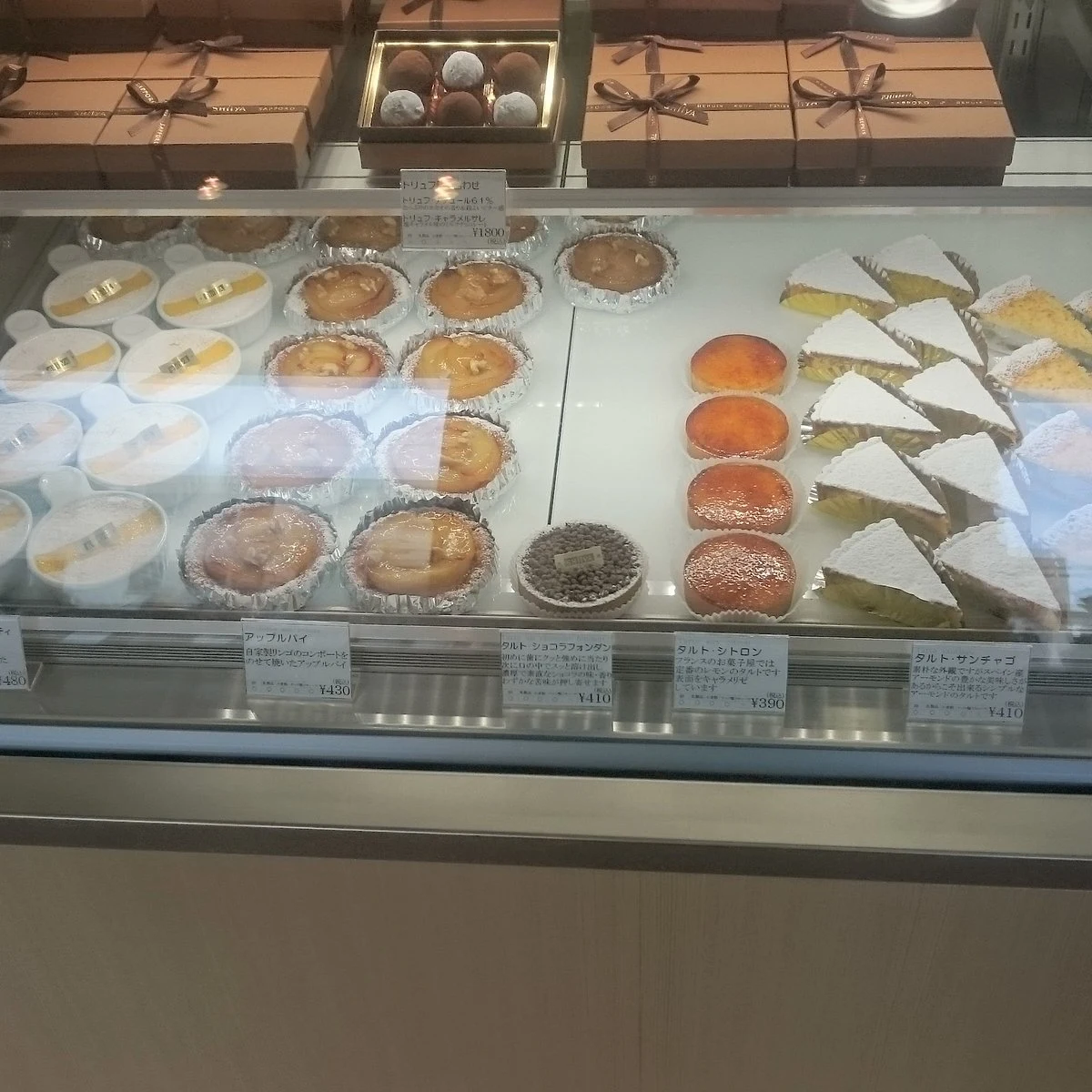
French pastry in Japan has long been filtered through discipline: clean lines, controlled sweetness, and packaging that treats transport as part of the experience. The cake-and-macaron format at Patisserie Shiiya fits that tradition, giving Sapporo a precise benchmark for European technique absorbed into Japanese retail food culture without turning dessert into a grand statement. The absence of a sprawling restaurant format is the point: this is not a dining room built around chef narrative, but a specialist shop whose reputation depends on whether the case justifies repeat selection and visits.

For travelers used to hotel patisseries, the distinction matters. Hotel pastry signals status through setting, service, and afternoon-tea choreography. A neighborhood pâtisserie has fewer distractions: judgment falls on range, finish, quality through the day, and confidence in takeaway as the primary mode. In a city where winter can make logistics part of every meal, takeaway is practical rather than secondary. Dessert can be carried back to a hotel, folded into a train-day plan, or used as a reset between heavier Sapporo meals.

The surrounding food map supports that rhythm. Aigues Vives brings bread and European baking into the wider Hokkaido conversation, while casual price-tier peers such as Kokopelli, RED CHILI, and Araton Honten show how much of Sapporo’s everyday appeal sits outside formal dining rooms. Patisserie Shiiya belongs with that everyday-specialist group, though repeated sweets selection gives it a firmer critical signal than a simple neighborhood recommendation. The smarter reading is not “dessert after lunch,” but Sapporo’s mid-priced craft culture in miniature.

How to place it in a Sapporo day

The strongest use of Patisserie Shiiya is within a west-side Sapporo plan, not as a single-purpose cross-city errand. Maruyama and Nishi 28-chome suit travelers who prefer a less frantic city, with residential streets, parks, and cafés replacing the harder commercial pulse around Sapporo Station and Susukino. That geography changes expectations: fold it into the day with intent, not as a late-night substitute for dessert service.

Its practical character also separates it from reservation-led dining. Whole cakes and petit gâteau can be reserved in advance, while custom-made cakes are not part of the reservation offer. Payment is cash-oriented, with credit cards, electronic money, and QR code payments not accepted. The shop is non-smoking, children are welcome, and a small parking allocation is listed, pointing to local use as much as visitor interest. These details matter more than adjectives when deciding whether a stop fits a real itinerary.

For a broader Sapporo plan, pair the pastry stop with other specialist categories rather than forcing it into a dessert-only frame. Our full Sapporo hotels guide helps anchor the neighborhood decision; Our full Sapporo bars guide is better for later in the day; Our full Sapporo wineries guide and Our full Sapporo experiences guide widen the itinerary beyond meals. Readers comparing Japan-wide dining notes can place it against other city entries such as -Grilled beef Sukiyaki- KAMAKURA TANUKIAN 鎌倉 たぬき庵 in Kamakura,. 鮪と炭火焼き うお炭 秋葉原店 in Tokyo,.cafe in Osaka,.know in Kumamoto, (Shoku) Vietnam in Kawasaki, and [ki:] in Kyoto. For a transpacific contrast in Japanese drinking and casual formats, Jōdo Saké Bar in Los Angeles and Onigiri Time in Pasadena show how differently Japanese food culture travels outside Japan.

The editorial case is concise: Patisserie Shiiya is not the place to understand Sapporo through scale, ceremony, or chef mythology. It is the place to read a quieter reputation, built through a specialist sweets category, repeat national selection, and a neighborhood format that asks for attention rather than hype. In a city famous for heavier comforts, that restraint is exactly why it belongs on a serious Sapporo food map.

Tags

CozyClassicHidden GemCasual HangoutSoloFamilyAfter WorkStandalone