Why go
A Gelato Counter in Upper Austria's Everyday Fabric
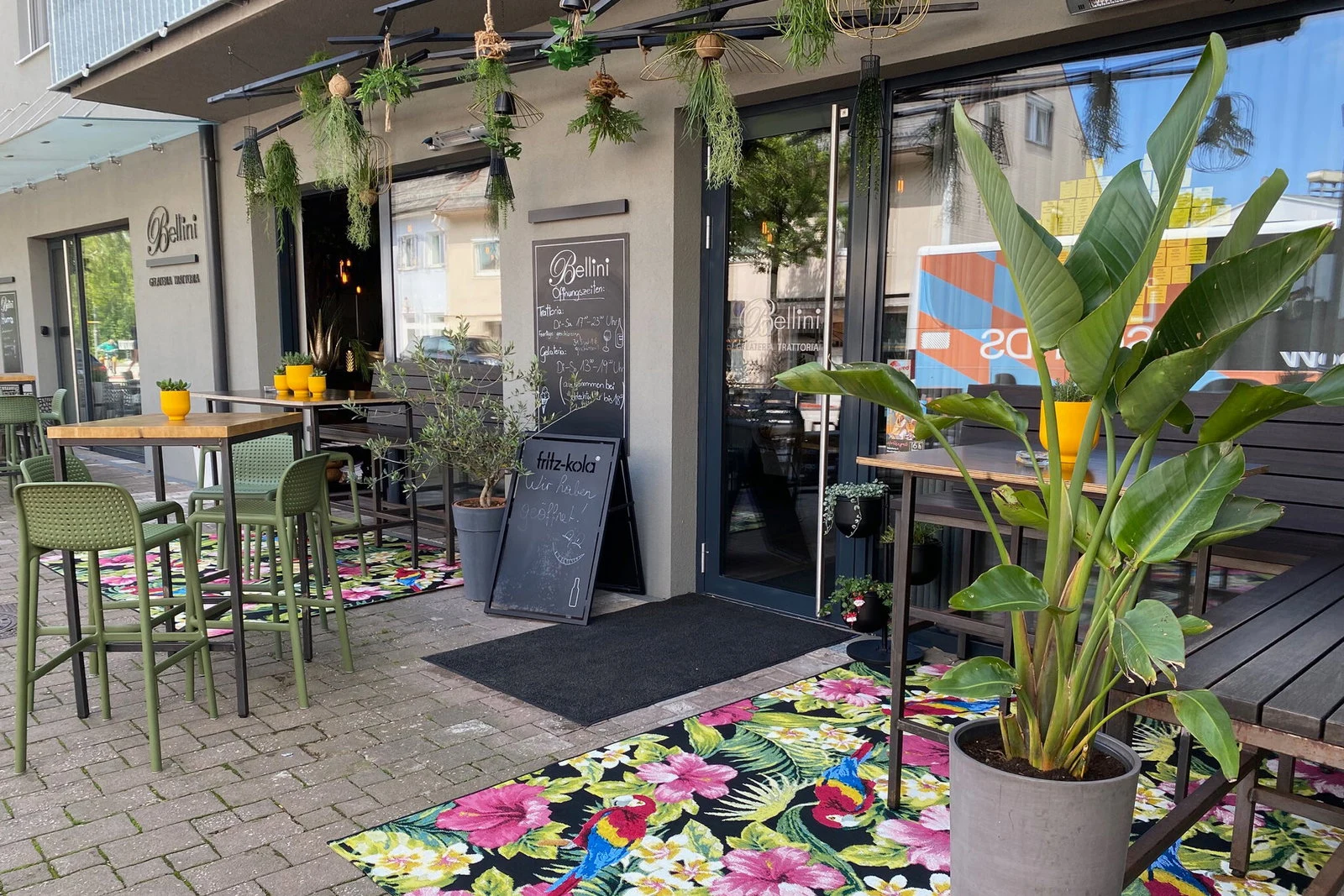
Gelateria Bellini is a casual Italian gelateria and trattoria in Marchtrenk, Upper Austria, with a 4.7 Google rating and an average price of about $8 per person. Welser Strasse runs through the working centre of Marchtrenk, a compact Upper Austrian town that sits between Wels and Linz without making much claim to destination status. That geographic modesty is precisely the context in which Gelateria Bellini operates. The storefront at number 3 belongs to a category of food business that succeeds or fails on repeat custom: the neighbourhood gelateria, where the customer base is measured in minutes of walking distance rather than kilometres of driving. The people who come are the people who live nearby, and that local accountability shapes everything about how a place like this maintains its standards over time.
Gelateria Bellini occupies a specific position in our full Marchtrenk restaurants guide, one that reflects how Upper Austria's food culture operates at a granular, everyday level rather than only at the celebrated end represented by restaurants such as Steirereck im Stadtpark in Vienna or Döllerer in Golling an der Salzach. Those kitchens engage ingredient sourcing at the level of named farms and seasonal foraging programmes. A gelateria operates on the same fundamental principle at a different price point and register: the base ingredient, its provenance, and how it is handled determine the product's quality more directly than technique alone can.
The Ingredient Logic Behind Italian-Style Gelato
Gelato's quality hierarchy is built on raw material more nakedly than almost any other prepared food. A pistachio gelato is only as interesting as the pistachios used to make it, and there is a measurable difference between Sicilian Bronte-origin nuts and commodity alternatives that no amount of sugar adjustment or stabiliser can bridge. The same argument applies to hazelnuts, milk fat content, citrus zest, and seasonal fruit. This is the editorial frame through which any serious gelateria in central Europe should be read, whether it holds awards or not.
Austria sits at a geographic intersection that gives its food producers access to Alpine dairy traditions in the west, Central European grain culture to the east, and a longstanding relationship with Italian culinary practice that predates the modern republic by centuries. Upper Austria's dairy output in particular gives any producer working with milk-based products a credible local sourcing argument, if they choose to pursue it. The question for a gelateria in a town like Marchtrenk is whether the sourcing logic reaches from ingredient to finished product in a way the customer can taste.
Across the broader Austrian restaurant scene, the sourcing conversation has become increasingly central. Landhaus Bacher in Mautern an der Donau and Obauer in Werfen have built their reputations partly on regional ingredient relationships developed over decades. Taubenkobel in Schützen am Gebirge works a modern Austrian-French axis that foregrounds local produce. The principle operating at those price points filters down, eventually, to the standards a local community expects from its everyday food businesses.
Marchtrenk as a Food Town
Marchtrenk is not a dining destination in the sense that Ischgl is, where Stüva draws an international ski clientele, or that Sankt Anton am Arlberg is, where Gourmetrestaurant Tannenhof operates within a resort economy. It is a town where food businesses serve residents, and resident-serving businesses face a different discipline: they cannot rely on novelty or tourism to carry a slow patch. The customer who comes in on a Tuesday in October is the same customer who will, or will not, return the following Tuesday.
That rhythm produces a different kind of food culture, one that values consistency and accessibility over spectacle. A gelateria in this context is a social infrastructure point as much as it is a retail food business. In Italian towns of comparable size, the gelateria holds a specific civic function: it is where the afternoon hour is observed, where families stop after the market, where the decision between flavours is a genuine if minor pleasure. Whether that social register transfers intact to Upper Austria depends on the specific community and the specific operator.
Other corners of Austria's food scene that operate outside the major destination clusters include Ois in Neufelden, Atelier Fischer in Sankt Gilgen, and Thaller - Gasthaus in Sankt Veit am Vogau. Each occupies a town that rewards the visitor who looks beyond the obvious circuit. Marchtrenk fits that pattern.
Where Gelateria Bellini Sits in the Broader Picture
Gelato has undergone a quality correction across Europe in the past fifteen years. The shift mirrors what happened in specialty coffee: a product that was formerly evaluated on sweetness and volume came to be evaluated on origin, processing, and technique. The Italian gelateria model that informed much of this correction emphasises lower overrun (less air incorporated into the mix), shorter shelf life, and display temperatures that preserve texture rather than maximise visual appeal. A counter operating at minus 11 degrees Celsius rather than minus 18 produces a softer, more immediate product that must be consumed closer to production.
Gelateria Bellini's standard is best judged by the product itself. What the category itself demands is clear enough, and it provides the benchmark against which any serious gelateria should be measured. Internationally, the sourcing and technique conversation in frozen desserts has reached venues as far apart as Le Bernardin in New York City and Lazy Bear in San Francisco, where pastry and dessert programmes now apply the same ingredient traceability logic as savoury courses. The trickle-down effect of that seriousness reaches neighbourhood producers over time.
For visitors moving through the Wels-Linz corridor, or residents of Marchtrenk itself, Gelateria Bellini at Welser Str. 3 represents a specific kind of food stop: low ceremony, direct product, and a quality that depends on what goes into the mix. The broader Austrian scene, from Ikarus in Salzburg to Kräuterreich by Vitus Winkler in Sankt Veit im Pongau to Griggeler Stuba in Lech, rewards engagement at every level. A gelateria is as legitimate an entry point as any, and in some ways a more instructive one, because the product has nowhere to hide.
Planning Your Visit
Gelateria Bellini is located at Welser Str. 3 in Marchtrenk, Upper Austria. No booking is required for a counter service format.