Why go
Frozen Coffee, a Frozen Strawberry Slushy under Matcha Cloud Foam, and an affogato built on French Vanilla or Coconut Gelato: Clerks Coffee Co leads with cold drinks. It is the café attached to Emeline’s downtown Charleston hotel world, presented as “Clerks Coffee Company, Charleston Cafe” and described as a natural extension of the hotel, but it is not a lobby coffee counter. Its own language gives it breakfast, brunch and lunch, coffee any way you want it, and a choice between sitting with a drink or taking a cup and a snack to go.
Frozen coffee, matcha cloud foam and a focused café identity
The beverage identity is built around classic espresso service alongside cold and frozen drinks, tea, matcha and kombucha. The café’s own copy names the cappuccino, a fresh pour with a cold foam finish, the Frozen Coffee, the Frozen Strawberry Slushy topped with Matcha Cloud Foam, and the affogato made with French Vanilla or Coconut Gelato. Its partner list adds the useful detail: Foresight Coffee, Holy City Matcha, Fizza Local Kombucha and Art of Tea. Foresight Coffee is a Charleston roasting company; Holy City Matcha supplies the local matcha connection; Art of Tea is a Los Angeles importer and wholesaler known for hand-blended organic teas and botanicals.
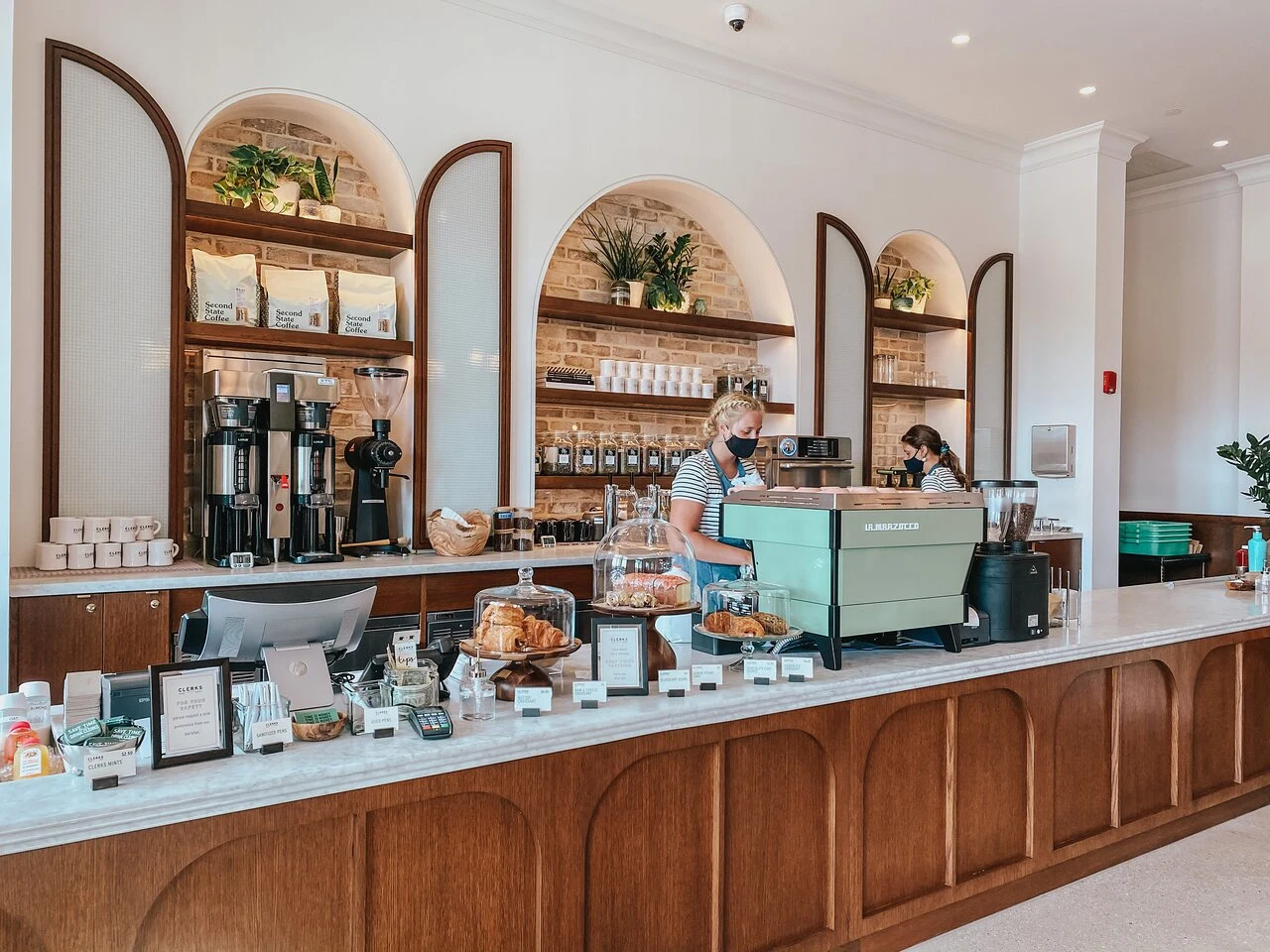
The counter feels like part of the setting
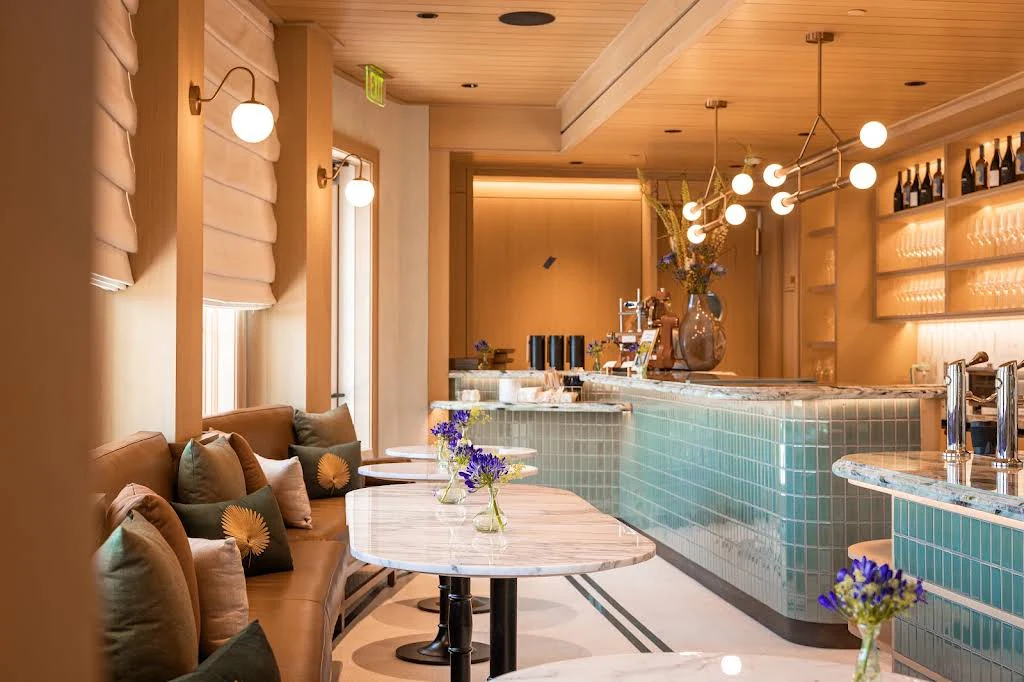
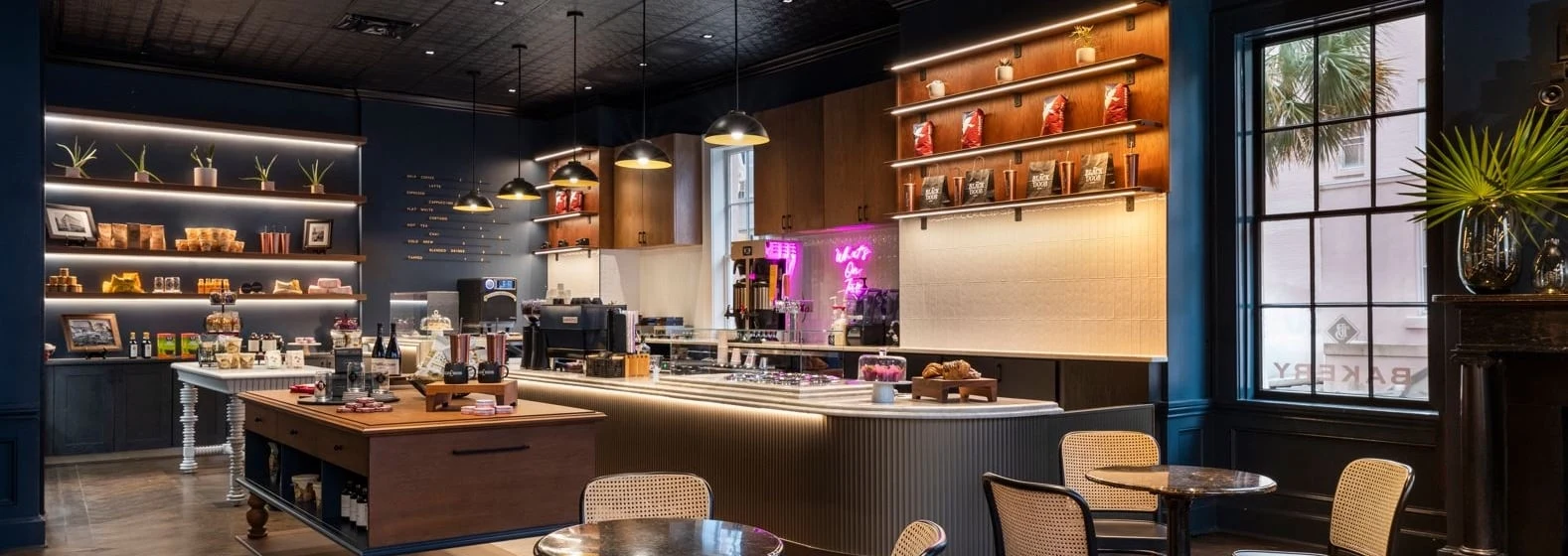
The room is framed as part of Emeline rather than as a separate-feeling café, with language that calls Clerks handsome, charismatic and an independent character. The atmosphere is airy and timeless with a hint of nostalgia, warm underneath and busy at the counter. That matters because the guest path is flexible: sit and sip, take a cup and a snack to go, or settle in with the wifi on. The café is also positioned as a starting point for wandering downtown, with the surrounding streets pointing toward Charleston City Market, Waterfront Park, Rainbow Row and The Battery. One especially specific detail: a window bell for frozen treats, rung for passers-by on hot days.
Order the Frozen Coffee first, then decide how sweet the day is
Start with the Frozen Coffee for the most direct named signature, then move toward the sweeter side. The Frozen Strawberry Slushy topped with Matcha Cloud Foam connects two clear parts of the programme, a fruit-forward frozen drink and the Holy City Matcha partnership. For a dessert finish, the affogato comes with French Vanilla or Coconut Gelato, giving the coffee menu a gelato-based route rather than only espresso drinks. For something more traditional, the café points to the cappuccino and the fresh-pour coffee with cold foam. Food runs wider than pastry, since Clerks names breakfast, brunch and lunch, so the strongest reading of the counter is cold drinks first, gelato-based treats second, a plate when the hour calls for one.
Tags
Frequently asked questions
What should you order at Clerks Coffee Co?
The Frozen Coffee is the most direct named signature. From there, the Frozen Strawberry Slushy topped with Matcha Cloud Foam is the fruit-forward option, and the affogato, made with French Vanilla or Coconut Gelato, is the dessert one. For something traditional, take the cappuccino or the fresh-pour coffee with cold foam.
Who roasts the coffee at Clerks Coffee Co?
Foresight Coffee, a Charleston roasting company, supplies the coffee. The rest of the drinks programme runs on named local and specialist partners too: Holy City Matcha for matcha, Fizza Local Kombucha for kombucha, and Art of Tea, a Los Angeles importer known for hand-blended organic teas and botanicals.
Compare nearby places
| Venue | Type | Area |
|---|---|---|
| Cooper Coffee & Wine | Café | Downtown Charleston |
| The Black Door Café | Café | Historic Downtown Charleston |
| The rise COFFEE BAR | Café | Harleston Village |
| The Harbinger Cafe & Bakery | Bakery | North Central |
| Grit Bakery | Bakery | Meeting Street |