Why go
A coffeehouse under the arches of Palais Ferstel
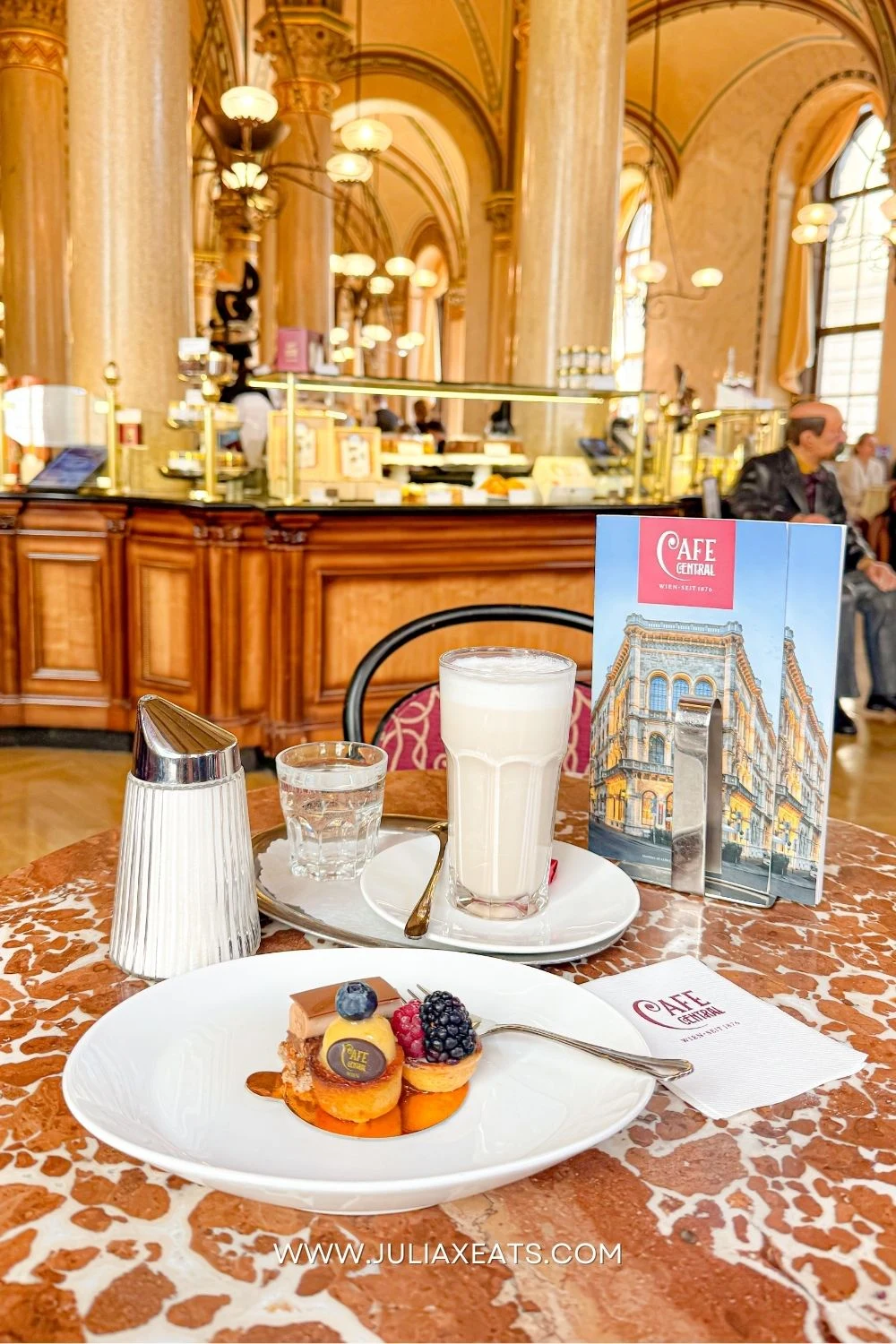
Order a Melange and a slice of something, then stay. That instruction has held at Café Central since 1876, when the coffeehouse opened on the ground floor of what was then Vienna's bank and stock exchange building, designed by Heinrich von Ferstel and now known by his name. The room is the reason: vaulted arches, marble columns, high windows and a scale that belongs to a nineteenth century financial palace rather than to a cafe. Service is at the table, the coffee arrives on a tray with a glass of water beside it, and that glass is not decoration but the signal that the table is yours for as long as you want it. Newspapers are part of the arrangement. It is the format Vienna invented, and one of the few rooms that still runs it at full size.
The room where half of Vienna argued
Café Central spent the turn of the century as a working office for people who did not have one. Peter Altenberg used it as his postal address. Theodor Herzl, Alfred Adler, Adolf Loos, Robert Musil, Stefan Zweig, Alfred Polgar and Leon Trotsky all belong to its recorded history, and the old nickname, the Chess School, says most of what needs saying about the pace. That history is not staged for visitors; it is why the seating plan makes sense, with tables spaced for conversation and a room that absorbs noise rather than amplifying it. The building draws many of the people who come through the door, but the coffeehouse habit is what the room is actually for.
Coffee, then the pastry counter
Take a Viennese coffee speciality first and let the patisserie decide the rest. The house Apfelstrudel is made by hand and finished with almond flakes, and it is the order that most often ends up on the table beside a Sachertorte, which is the other benchmark here. Both are better with a coffee than with anything else, and both are large enough to share if the plan is a pause rather than a meal. Breakfast works on the same logic earlier in the day, with the pastry case doing most of the persuading. There is a savoury side as well, running to classic Viennese plates, which is what turns an afternoon coffee into lunch without moving. The sequence that works is simple: coffee to the table, cake from the case, and an hour that does not need filling.
Tags
Frequently asked questions
What should you order at Café Central?
A Viennese coffee speciality to start, then something from the patisserie. The handmade Apfelstrudel, finished with almond flakes, is the house benchmark, and Sachertorte is the other one. Both are large enough to share, and both are built to be eaten slowly beside a coffee rather than as a course in a meal.
What makes Café Central different from a modern coffee bar?
The format. Service is at the table rather than at a counter, the coffee arrives on a tray with a glass of water, and the room is built for long stays with newspapers and space between tables. It has run that way since 1876, and the literary and political history attached to it came from people using it as an office.
Compare nearby places
| Venue | Type | Area |
|---|---|---|
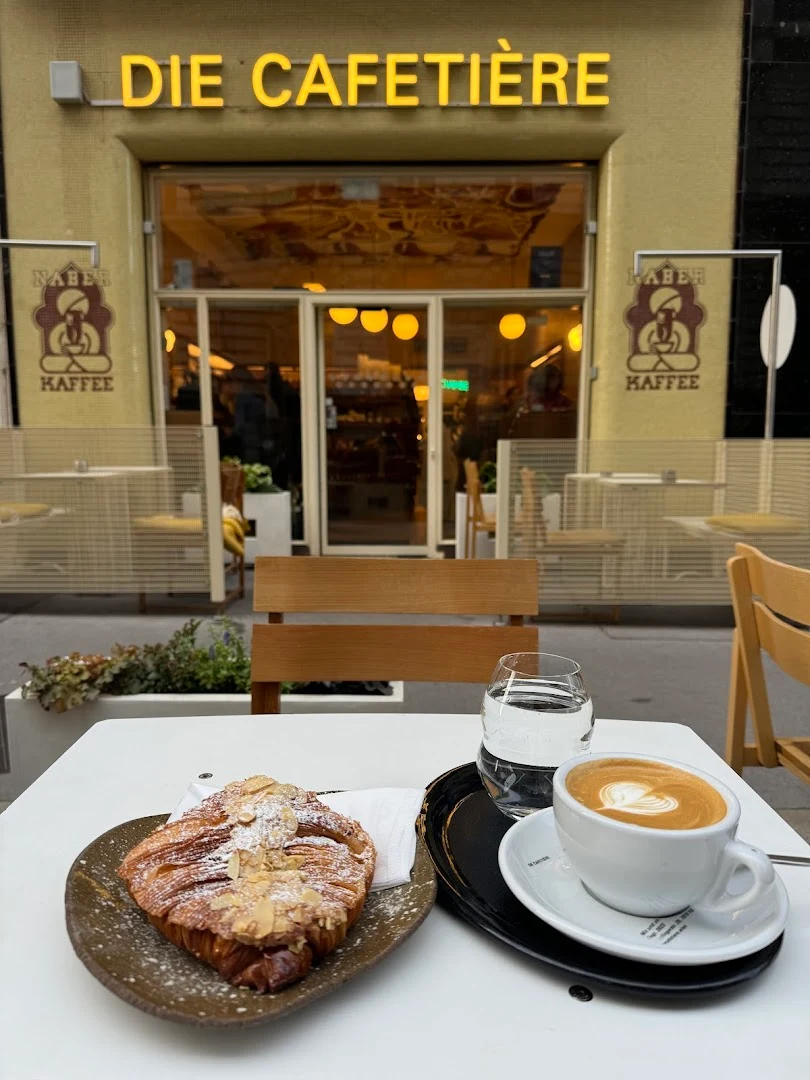
| Die Cafetière | Café | Innere Stadt |
| Cafe Giacomo Aragall | Café | Innere Stadt |
| Café Caspar | Café | Innere Stadt |
| Café Exchange | Café | Innere Stadt |
| Alt Wien Kaffee | Café | Innere Stadt |