Why go
Flour comes before bread at this New Orleans bakery. Bellegarde makes its own stone-milled flour, so the loaves on the retail shelf and the sacks going out to restaurant kitchens are two halves of one operation rather than a bakery with a sideline.
Grain, flour, then the loaf
Bellegarde’s clearest identity is the line it draws between grain, flour and bread. The business is organised around a bread catalogue, a flour catalogue, a bakery menu and a roster of bread partners, which is a product system rather than a pastry case. It sells to restaurants, retailers and anyone who wants better ingredients at home, so the same milling decisions feed a professional kitchen and a household loaf. That focus is why the bakery became a city reference for bread rather than for cakes, and why Eater has kept it in its guides to the best bakeries in New Orleans. What sits on the shelf shifts, but flour selection and bread production stay the centre of the work.
A working bakery with a public counter
It reads as a craft bakery with a retail side and a serious wholesale function. The retail shop opened in Leonidas in 2019, and the bakery now works from The Commissary, a production-forward setting rather than a decorated dining room. Around the counter sit workshops, a bakers’ club, internships and consulting, so people meet Bellegarde in more than one way: as a shopper, as a student, or as a restaurant using its flour. Ownership changed in 2022, when the bakery became worker-owned after founder Graison Gill, a James Beard nominee, left to open a bakery in London. It stayed itself through that transition, which says more about the operating culture than any statement about atmosphere. Casual in format, exacting in process.
Start with the sourdough
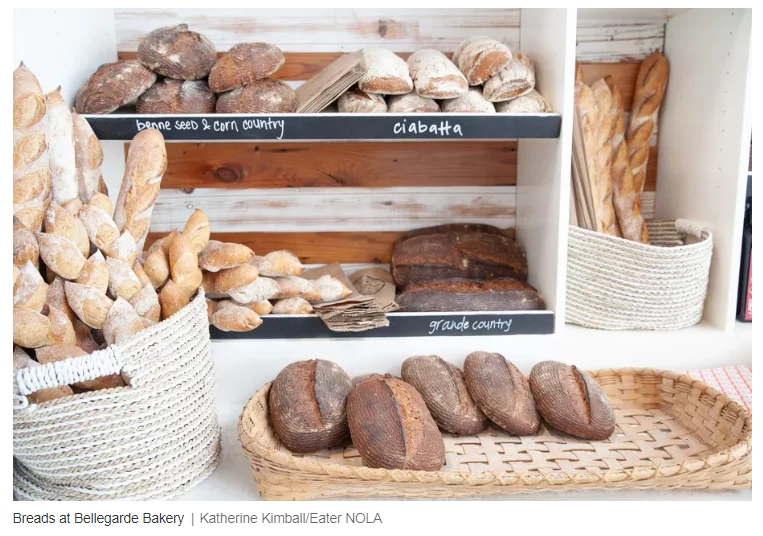
Start with the bread, because that is where the reputation was built. Bellegarde loaves have long been part of New Orleans bread culture, and Eater has placed them both among the city’s best bakeries and behind some of its greatest sandwiches, which is the useful signal: the bread works as a loaf on the counter and as the foundation of somebody else’s kitchen. From there, the flour is the order that separates this place from other bakeries. Taking a bag home means baking with the same milling the shop uses, a rarer souvenir than a pastry. Add whatever the bakery menu is carrying that day, then treat the workshops as the deeper version of the visit, for anyone who wants to see how the grain is handled before it becomes a loaf.
Frequently asked questions
What should I buy at Bellegarde Bakery?
Buy bread first, then flour. The loaves are what put the bakery into New Orleans bread culture and into Eater’s guides to the city’s best bakeries and sandwiches. A bag of the stone-milled flour is the order that separates Bellegarde from other bakeries, since it is the same milling the bakers use.
Is Bellegarde only a retail bakery?
No. It works as a bread and flour supplier as much as a shop, sending loaves and stone-milled flour to restaurants and retailers across the city. Alongside the counter it runs workshops, internships, a bakers’ club and consulting, and the business has been worker-owned since 2022, after its founder left for London.
Compare nearby places
| Venue | Type | Area |
|---|---|---|
| Ayu Bakehouse | Bakery | Frenchmen Street |
| Lagniappe Bakehouse | Bakery | New Orleans |
| Café at The Barnett | Café | Central Business District |
| Cafe Beignet, Royal Street | Café | French Quarter |
| Last Sunday Coffee Bar | Café | Central Business District/Downtown |