Why go
Umbria on the espresso bar, pastry in the case
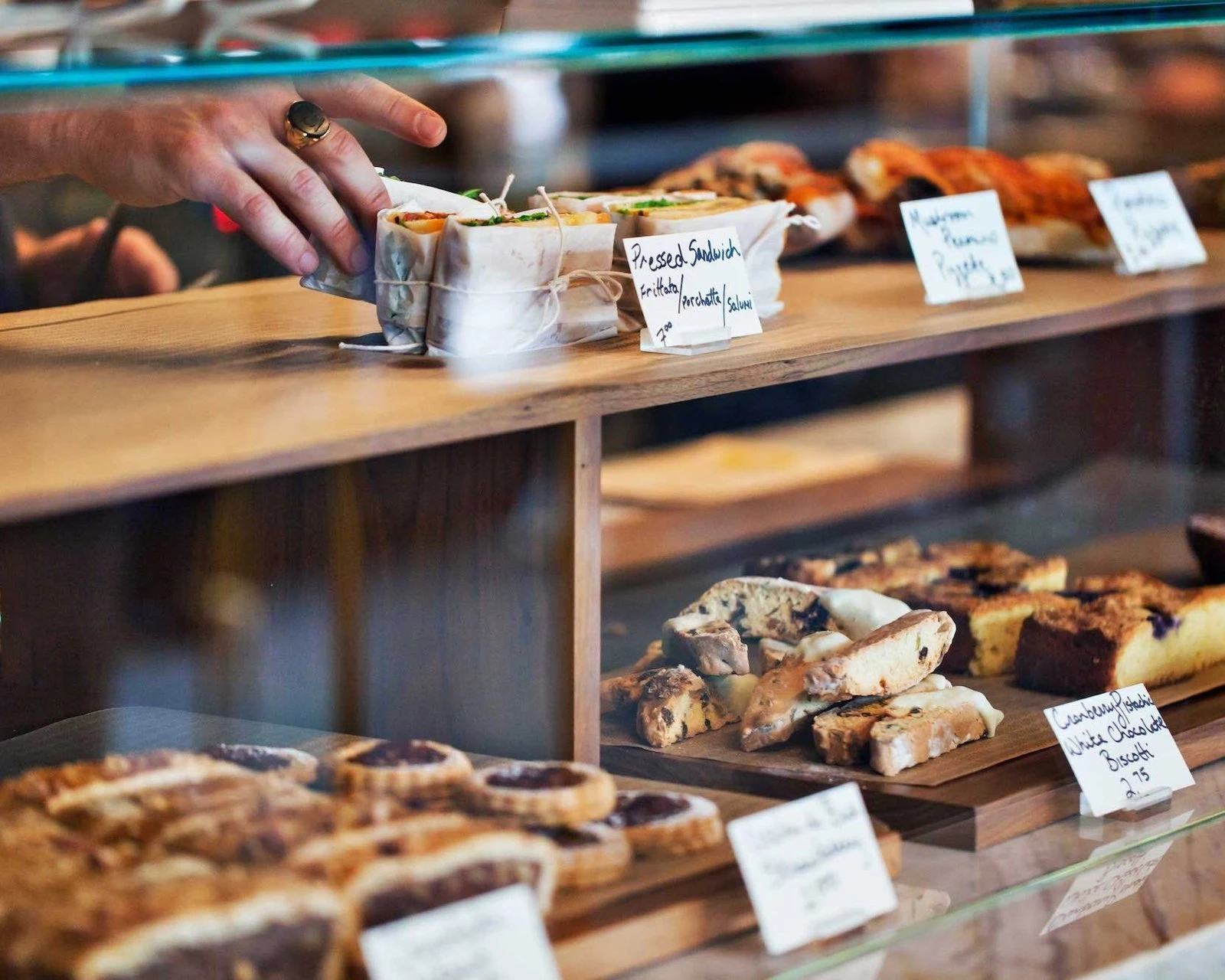
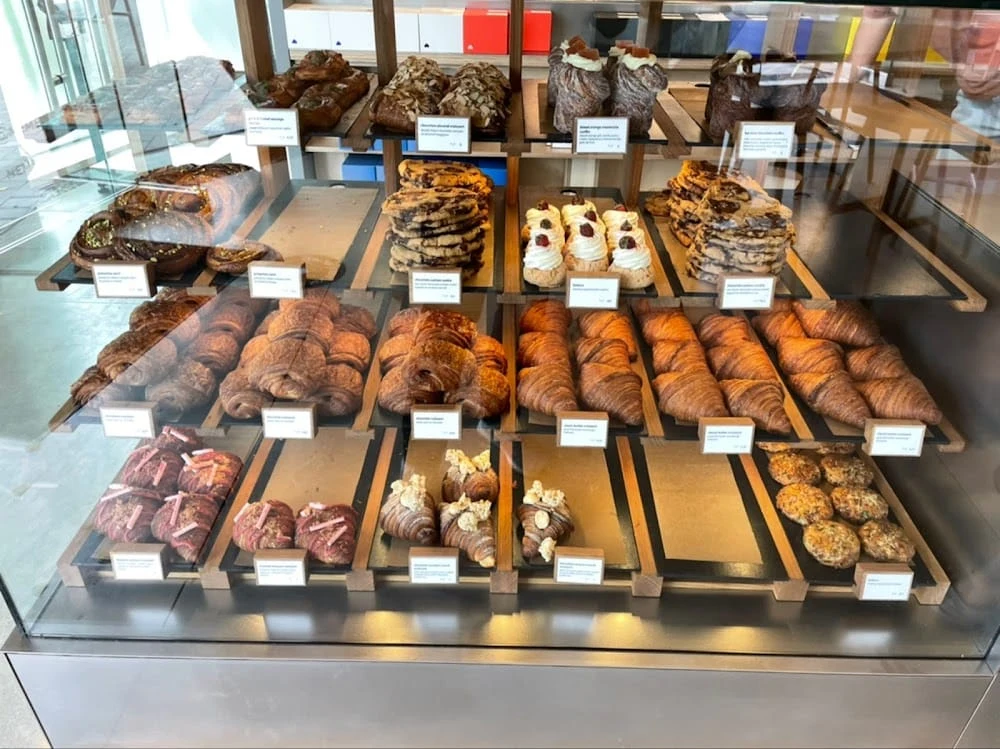
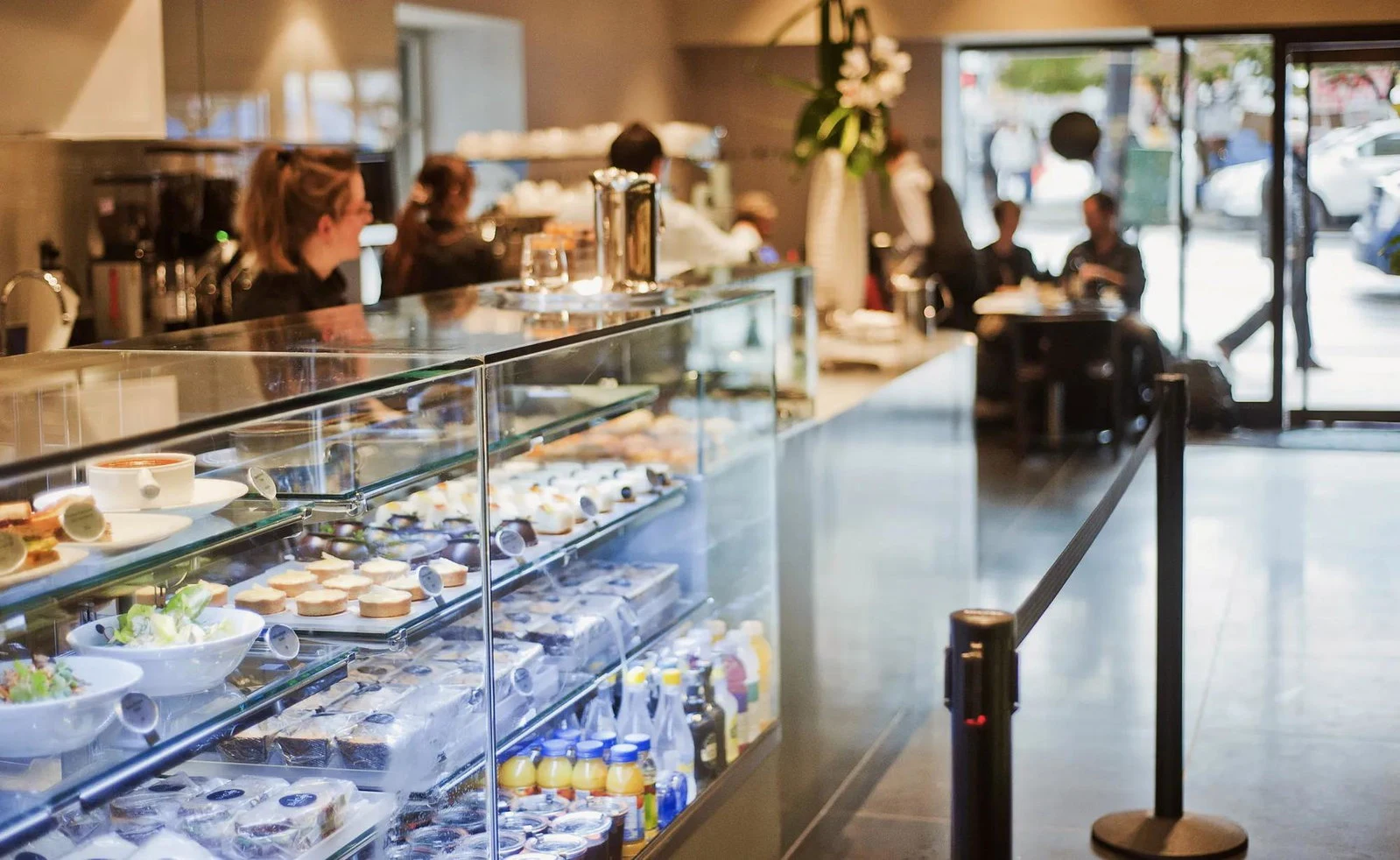
Coffee here is custom roasted locally by Caffè Umbria and pulled by trained baristas, with single origins ground and brewed to order for anyone who asks. The pastry work runs alongside it: butter croissants, pain au chocolat, double-baked almond croissants, an Earl Grey and lemon loaf, cream puffs, danishes, muffins, scones and cookies, plus house-made confections, sourdough, brioche and jam.
The kitchen behind it belongs to chef David Hawksworth, whose team selects the savoury and sweet range, which is why a downtown café counter reads more composed than the format usually allows.
A Classic Breakfast Sandwich anchors the start of the day, and the bakery side is made in house throughout, from confections to sourdough, brioche and jam, which is what separates this from a café buying its pastry in.
Built for four different visits
This is Bel Café's downtown Vancouver room, distinct from the group's Kitsilano café, and it is designed to absorb whatever hour you arrive at. Morning is coffee and something from the case; afternoon returns to pastry and a drink.
Lunch opens the menu out into sandwiches, soups and salads: grilled cheese, the Italian, mortadella and pistachio, an open-faced smoked salmon bagel, a BLT, a lemongrass chicken banh mi, slow-roasted brisket, roasted tomato and chicken noodle soups, and salads including a Mediterranean chopped, Bel's Cobb and a blackened steelhead soba. Service is efficient at the table, with a grab-and-go shelf for anyone on the move.
What to order, by the clock
In the morning, take a butter croissant or the pain au chocolat with a flat white, or a single origin brewed to order if the counter is quiet enough to ask.
At lunch, grilled cheese with roasted tomato soup is the most direct pairing on the menu, while the mortadella and pistachio and the lemongrass chicken banh mi show the kitchen pushing past standard café sandwiches. In the afternoon the pastry case is the better bet than another sandwich: the matcha and raspberry cream puff, the strawberry and elderflower danish, or the Earl Grey and lemon loaf. The drinks list stretches from espresso and cold brew to London fog, chai, matcha and hazelnut hojicha lattes.
Seasonal drinks come and go alongside the standing list, with panela ginger lemonade, an iced berry matcha latte and a café espresso lemonade among the warmer-weather additions.
Tags
Frequently asked questions
What coffee does Bel Café serve?
Caffè Umbria, custom roasted locally for the café and pulled by trained baristas. Single origin coffees are ground and brewed to order on request, so the counter can go beyond the standard espresso menu. The wider drinks list runs from flat whites and cold brew to London fog, chai, matcha and hazelnut hojicha lattes.
What should I order at Bel Café?
At lunch, grilled cheese with roasted tomato soup is the most direct pairing, while the mortadella and pistachio sandwich and the lemongrass chicken banh mi show more of the kitchen. Earlier or later in the day, work through the pastry case: butter croissant, pain au chocolat, the matcha and raspberry cream puff or the Earl Grey and lemon loaf.
Compare nearby places
| Venue | Type | Area |
|---|---|---|
| Giovane Caffè | Café | Downtown Vancouver |
| Nemesis Coffee GNW | Café | Great Northern Way |
| Kafka's Coffee Roasting | Café | Yaletown |
| Pallet Coffee Roasters - Roastery, Cafe & HQ | Café | Railtown |
| Prototype Coffee | Café | Mount Pleasant |