Why go
House roasts, listed by farm and ferment
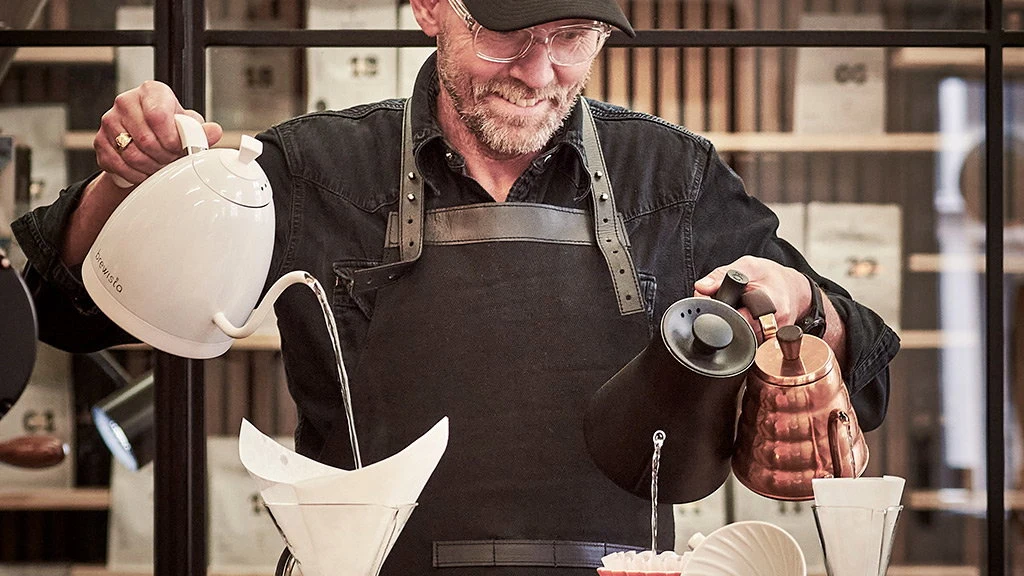
The coffee list here is written like a producer index. Recent roasts have run through Colombia Yesid and Villa Maria, including a wet fermented and cofermented Ombligon; an extended fermented lot from Frinsa Estate in Indonesia; Chania Estate French Mission and Oreti with SL-34, SL-28 and SL-14 from Kenya; and two lots from Volcan Azul in Costa Rica, a double fermented Caturra and a honey Gesha. The tasting notes move accordingly, from caramel, orange, honey and red berries to nectarine, blackcurrant, jasmine, lime and red grapefruit. Hand brewing is the way to read them, with Chemex, V60 and siphon all in use at the brewbar. Everything is roasted in house, and the roasting, brewing and sensory work sit in the same room rather than in separate operations.
A brick former chocolate factory down a back alley
The setting reinforces the identity. Stiller’s occupies a back-alley space in the old Latin Quarter of Aarhus, inside a brick-walled former chocolate factory whose industrial traces still shape the room. The house description, roastery, brewbar and lab, is accurate rather than decorative: roasting, brewing, sensory training and education happen together, and the counter can feel more barista-led than customisable. Soren Stiller Markussen, who renamed the former Great Coffee after himself, has spent more than two decades on the craft as barista, roaster, competitor, educator and author, and his approach ties origin, chemistry and taste together, down to measuring the pH of a signature drink to sharpen its sweetness. The plainest description of a visit is that you get the coffee the way he makes it, not the way you usually order it.
Espresso first, then filter
Order espresso first, because the competition record sits behind the bar as much as the roasting does: five gold wins as a barista, two finalist positions at the World Barista Championship and a silver medal in the World Cup for Latte Art. More recently the shop took Best Barista in Denmark at the Falstaff Nordic Coffee Awards in Goteborg and Overall National Winner for Denmark at the Global Coffee Awards Europe, where one of its coffees reached the final in the espresso single origin experimental category. After espresso, move to filter, where the range is easier to read. V60, Chemex and siphon are the routes to take, and the lots worth the extra time are Oreti, the Volcan Azul honey Gesha and the extended fermented Frinsa Estate.
Tags
Frequently asked questions
What should I order at Stiller’s Coffee?
Espresso first, since the bar’s competition record is built on it, then filter to read the roasting range. V60, Chemex and siphon are all used at the brewbar, and the lots that reward the extra time are the Kenyan Oreti, the Volcan Azul honey Gesha and the extended fermented Frinsa Estate.
What kind of coffee does the roastery buy?
Lots chosen for their processing as much as their origin: wet fermented and cofermented Colombian coffees, an extended fermented Indonesian lot, Kenyan SL varieties from Chania and Oreti, and double fermented and honey-processed coffees from Volcan Azul in Costa Rica. Roasting happens in house, in the same room as the brewbar.
Compare nearby places
| Venue | Type | Area |
|---|---|---|
| La Cabra Coffee Roasters | Café | Midtbyen |
| Aoife Coffee | Café | Ebeltoft harbor |
| Behag din smag | Café | Gabels Torv |
| Quedensgård Cafe Og Krambod | Café | Skibbroen |
| Kaffe Station | Café | Frederikshavn center |