Why go
Naturals, honeys and anaerobics
The roast list is the reason to come. Push Pull leans hard into natural-process coffees, honeys, anaerobics and experimental lots, a direction the founders chose because they felt fruit-forward profiles were under-represented in Portland's specialty market. The selection stays small and rotates, so the board is rarely the same twice, and cherry-dried coffees have been a particular interest from the start. Nothing stays on the board long enough to harden into a house standard.
The equipment matches the ambition. The company roasts on a 2-kilo North machine from Mill City Roasters and buys green coffee through Cafe Imports and Royal Coffee, a small-production setup rather than a wholesale operation with a café attached. In 2025 it was ranked number 34 in The World's 100 Best Coffee Shops.
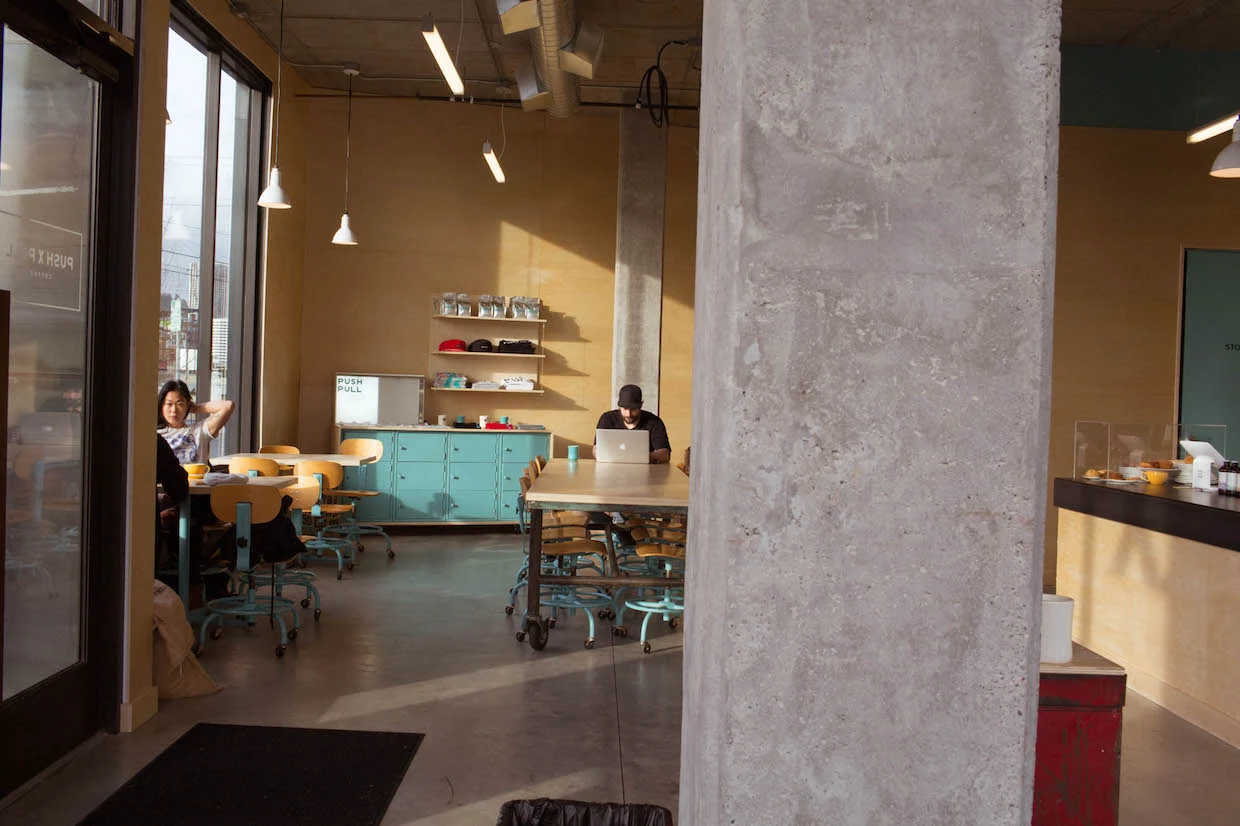
A roaster's room, without the ceremony
Push x Pull, said as Push Pull, launched in late 2016 from Christopher Hall and Jacob Cowdin: a longtime barista with retail experience and a graphic designer, which is why the business came out coffee-led and visually considered. Hall framed the move as working on his own dream rather than helping other people's happen.
It began with popups before opening a Northeast Portland roasting facility, and a tasting room followed, keeping tasting, comparison and coffee education near the middle of the brand. The Stark Street café belongs to that story rather than to a brunch-and-pastry model, and the stated position is meticulous sourcing without the sniffy presentation the founders wanted to avoid. Early traction included wholesale orders from Portland State University and a monthlong residency at Airbnb's headquarters.
Come for the filter
Approach the counter by brew format. Espresso, batch brew and hand-brew filter are the three routes, and filter is the most direct way into what separates this roaster from a classic profile, because the fruit and the process work are easiest to read when nothing else competes with them. Since the rotation moves, the right answer changes, so ask what came off the roaster most recently.
Espresso is the quicker read if you want a concise drink, and batch brew covers the everyday cup without ceremony. Beans to take home are part of the point, since the café sits downstream of the roasting decisions rather than beside them. On a Portland coffee itinerary this belongs with the roaster-driven stops rather than the dessert cafés and brunch rooms.
Tags
Frequently asked questions
What should I order at Push Pull?
Order filter coffee, either hand-brew or batch brew, because the roaster leans toward naturals, honeys, anaerobics and experimental lots and those profiles read most clearly without milk. Espresso is the quicker option if you want something concise, and beans to take home make sense given the small rotating selection.
What kind of coffee does Push Pull roast?
Fruit-forward lots: natural-process coffees, honeys, anaerobics and experimental preparations, with cherry-dried coffees a long-running interest. The founders chose that direction because they felt those profiles were under-represented in Portland. Roasting happens on a 2-kilo North machine, with green coffee bought through Cafe Imports and Royal Coffee.
Compare nearby places
| Venue | Type | Area |
|---|---|---|
| SORO SORO Coffee & Dessert | Café | East Burnside |
| The Society Cafe | Café | Old Town Chinatown |
| Deadstock Coffee | Café | Old Town Chinatown |
| Kure Superfood Cafe | Café | Pearl District |
| Stumptown Coffee Roasters | Café | Downtown Portland |