Waterside

Peacocks Tearoom

CafeTea House4.7 on Google
Peacocks Tearoom

Why go

Where the Cathedral City Slows Down

Waterside in Ely is the kind of street that makes the case for the English market town without needing to try very hard. The River Great Ouse runs alongside it, the cathedral looms at the city's high point, and the buildings carry the particular unhurried confidence of a place that has not needed to reinvent itself. Peacocks Tearoom, at 65 Waterside, sits within this fabric rather than apart from it. Arriving on foot from the cathedral precincts, you pass through a city that operates at a different pace to Cambridge, eleven miles south, and the tearoom reflects that register exactly.

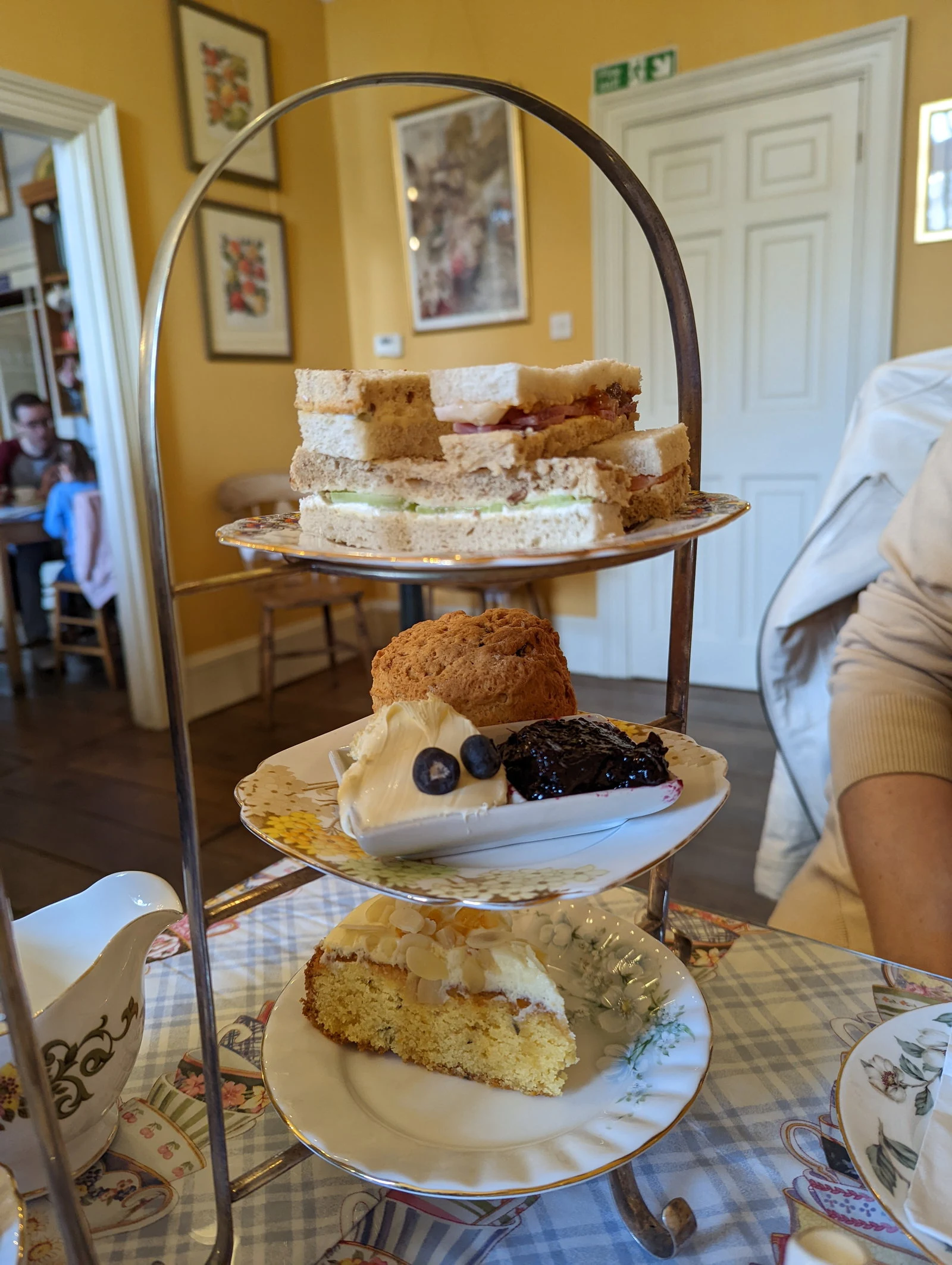
The English tearoom tradition is one of the few dining formats that has resisted the pressure to modernise into irrelevance or spectacle. At its most serious, it remains a study in sourcing and timing: the provenance of the tea, the freshness of the baking, the temperature at which things arrive. The leading examples of the format in market towns across East Anglia tend to be the ones that treat these details as non-negotiable rather than aspirational. Peacocks belongs to that category.

The Tearoom as a Sourcing Argument

The editorial angle that matters most in assessing any serious tearoom is not ambience or price but ingredient sourcing. Afternoon tea in Britain has split into two distinct tiers. One is the hotel-lobby version, scaled for volume and built around brand recognition, where you are paying primarily for the room rather than what is on the plate. The other is the independent tearoom that treats its supply chain as a point of principle: flour from named mills, jam made in small batches, tea sourced from estates rather than blended anonymously for commodity buyers.

Peacocks operates in Ely, a city whose agricultural hinterland is among the most productive in England. The Fens that surround the city have supplied British markets with fruit, vegetables, and grain for centuries. A tearoom that draws on this geography intelligently has access to a larder that larger, more celebrated venues in more fashionable postcodes would envy. This is the context in which Peacocks should be understood: not as a quaint local stop, but as a format with genuine sourcing potential anchored to one of England's most productive food-producing regions.

For comparison, consider the sourcing philosophies at work in destination dining outside the tearoom category. L'Enclume in Cartmel has built its reputation partly on hyper-local Cumbrian supply chains. Moor Hall in Aughton operates in similar territory. These are Michelin-starred operations with very different ambitions and price points, but the underlying principle, that proximity to a productive agricultural region is a competitive asset rather than a coincidence, applies equally to a Fenland tearoom operating a fraction of a mile from the river that once transported those same goods to market.

Ely's Dining Character and Where Peacocks Sits

Ely supports a dining scene that punches above its size in certain categories. The Old Fire Engine House has maintained a reputation for honest British cooking over several decades, and together with Peacocks it anchors the city's case for unhurried, ingredient-led eating. Both venues occupy a register that prioritises the specific and the local over the fashionable and the imported. That is not a limitation; it is a position, and it is one that many visitors to Ely specifically seek out after days spent in Cambridge or at the major Fenland heritage sites.

The city draws a particular kind of traveller: people who have come for the cathedral, for the Ely Museum, for the waterway network, or for the cycling routes through the Fens. These are visitors with a higher-than-average appetite for quality and context, and Peacocks sits squarely in their path, both geographically and in terms of what it offers. For a broader picture of where Peacocks fits within the city's dining options,

The British Tearoom in a National Context

To understand what a tearoom like Peacocks is attempting, it helps to set it against the national picture. At the formal end of the afternoon tea spectrum, venues like Waterside Inn in Bray or Le Manoir aux Quat'Saisons in Oxford offer afternoon tea as one format within a broader luxury proposition, priced accordingly and weighted toward occasion dining. Further north, Gidleigh Park in Chagford and Restaurant Andrew Fairlie in Auchterarder operate in similar territory. The independent tearoom occupies a different tier entirely: lower price points, no rooms to amortise costs across, and a proposition that depends almost entirely on the quality of what is served and the atmosphere in which it is served.

This is a harder commercial equation, and the tearooms that survive in it over the long term tend to do so because they have resolved the sourcing question well. Baking daily from quality ingredients, maintaining a tea list with genuine range and provenance, and keeping the room warm without tipping into nostalgia-as-decoration: these are the variables that separate a working tearoom from a heritage attraction.

Venues working at the sharp edge of British food culture, from CORE by Clare Smyth in London to Ynyshir Hall in Machynlleth, have demonstrated that British ingredients can carry serious culinary ambition. The tearoom tradition, at its most careful, makes the same argument at a different scale and price point: that provenance, timing, and attention are enough.

Planning a Visit

Peacocks Tearoom is at 65 Waterside, Ely, CB7 4AU, a short walk from both the cathedral and Ely railway station, which sits on the Cambridge to King's Lynn line and offers direct services from London Liverpool Street via Cambridge. The station is approximately fifteen minutes on foot from Waterside, making Peacocks a practical stop for day visitors arriving by train. For those coming from Cambridge, the journey takes around fifteen minutes by rail, placing it comfortably within reach for a half-day excursion. Given the tearoom's popularity, arriving without a plan for the busiest periods, particularly weekends and school holidays, carries some risk.

Tags

ClassicCozyScenicHidden GemSoloBrunchHistoric BuildingDesign DestinationStandalone