Why go
Bossolà, panettone and the rest of the case
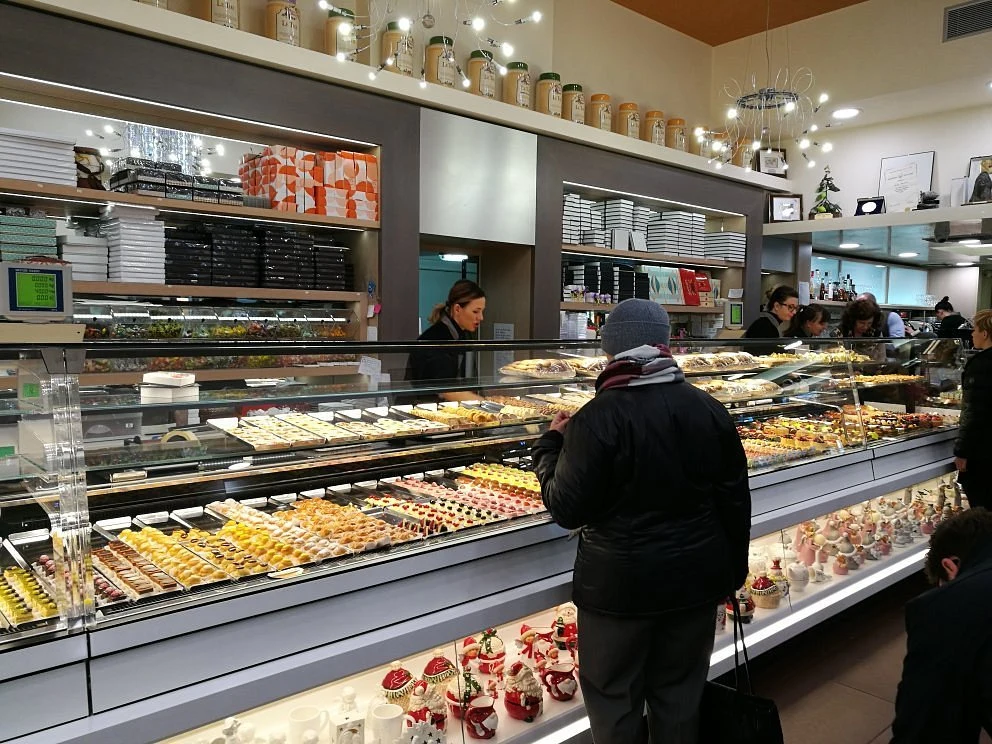
Bossolà, the ring-shaped Brescian cake, is the local order at Pasticceria Veneto, and it shares the case with panettone, the Battito cake, tiramisù and a long run of chocolate desserts. The pasticceria opened in 1971 and is the house where Iginio Massari built his name, which is why the display reads as a catalogue of Italian pastry technique rather than a neighbourhood selection.
The work behind the glass is the reason to come: leavened doughs given time, mirror-smooth cakes, chocolate handled with precision, and classics held to an exacting standard. This is a pastry address first and not a dining room, so the visit is built around choosing rather than sitting down to a meal. The display sets the agenda, and most people have decided what they want before they reach the till.
Two directions in the pastry line
The main decision is which side of the repertoire you want. Bossolà and panettone belong to the leavened side, where the dough is proved slowly and the crumb stays soft and aromatic for days. The Battito cake, tiramisù and the chocolate desserts sit on the composed side, layered and finished in the manner that made the house famous.
Both directions carry the same signature. Gambero Rosso awarded the pasticceria its Tre Torte d'Oro for 2026, and the house is a Relais Desserts member boutique, recognition that matches the level of the counter rather than adding anything to it. Take it as a marker of what the case already shows.
How to order
Tiramisù is the easiest way in, one of the signature desserts and a fair test of a kitchen that treats a familiar recipe as a technical exercise. The chocolate desserts are the other direct route into the house style, particularly for anyone who wants something composed rather than a leavened speciality.
If you would rather take something away, panettone and bossolà are the clearest names to ask for. Panettone connects straight to Massari's reputation for leavened pastry, while bossolà is the Brescian speciality that ties the shop to its own city. One of each, plus a small dessert eaten standing at the counter, covers most of what Pasticceria Veneto does well. Anything leavened is at its best within a day or two, so buy for the near term rather than the week ahead.
Frequently asked questions
What is Pasticceria Veneto known for?
It is Iginio Massari's pastry house in Brescia, open since 1971. The signatures run from bossolà, the local ring cake, and panettone on the leavened side to the Battito cake, tiramisù and a range of chocolate desserts on the composed side. Gambero Rosso gave it a Tre Torte d'Oro for 2026.
What should I order at Pasticceria Veneto?
Tiramisù is the clearest first order, a familiar dessert treated as a technical exercise. Chocolate desserts make a good second choice for anyone after something composed. To take away, ask for panettone or bossolà, the two leavened specialities that connect the shop to Massari's reputation and to Brescia itself.
Compare nearby places
| Venue | Type | Area |
|---|---|---|
| Il Pane di Maurizio Sarioli | Bakery | Centro storico |
| Pasticceria Roberto | Bakery | Centro storico di Erbusco |
| Dolce Reale | Bakery | Montichiari |
| Cortinovis | Bakery | Ranica |
| Bugan Coffee Lab | Café | Città Alta |