Why go
MUYU Coffee Roasters roasts and pours Bolivian coffee in Locarno, a micro roastery and coffee shop whose own line is “born in origin to elevate Bolivian specialty coffee.” The Ticino roastery is the visible end of a business that runs back to the growers through Elevate Coffee Bolivia and the sourcing programme Proyecto Elevate, built on relationships with smallholder producers and nano lots that rarely travel far.
The beans, listed by flavour
Coffees are sold by profile rather than by blend name. Gonzalo is the espresso with amarena, blackberry jam and cacao nibs, Caranavi AAA the nuttier espresso with brown sugar and peach, and Java Anaerobic Natural the filter lot, raspberry, lychee and blueberry, with its process written into the name. Beans are split into espresso and filter, so the brew method is the first decision.
The sustainability side is unusually literal. MUYU roasts in Ticino on solar power, and the whole shop runs on it: the electric roaster, the espresso machine and the grinders. A listing in the 2025 European Coffee Trip Awards is the outside recognition for a small operation that keeps its sourcing and its energy story in the same frame.
A roastery counter rather than a cafe menu
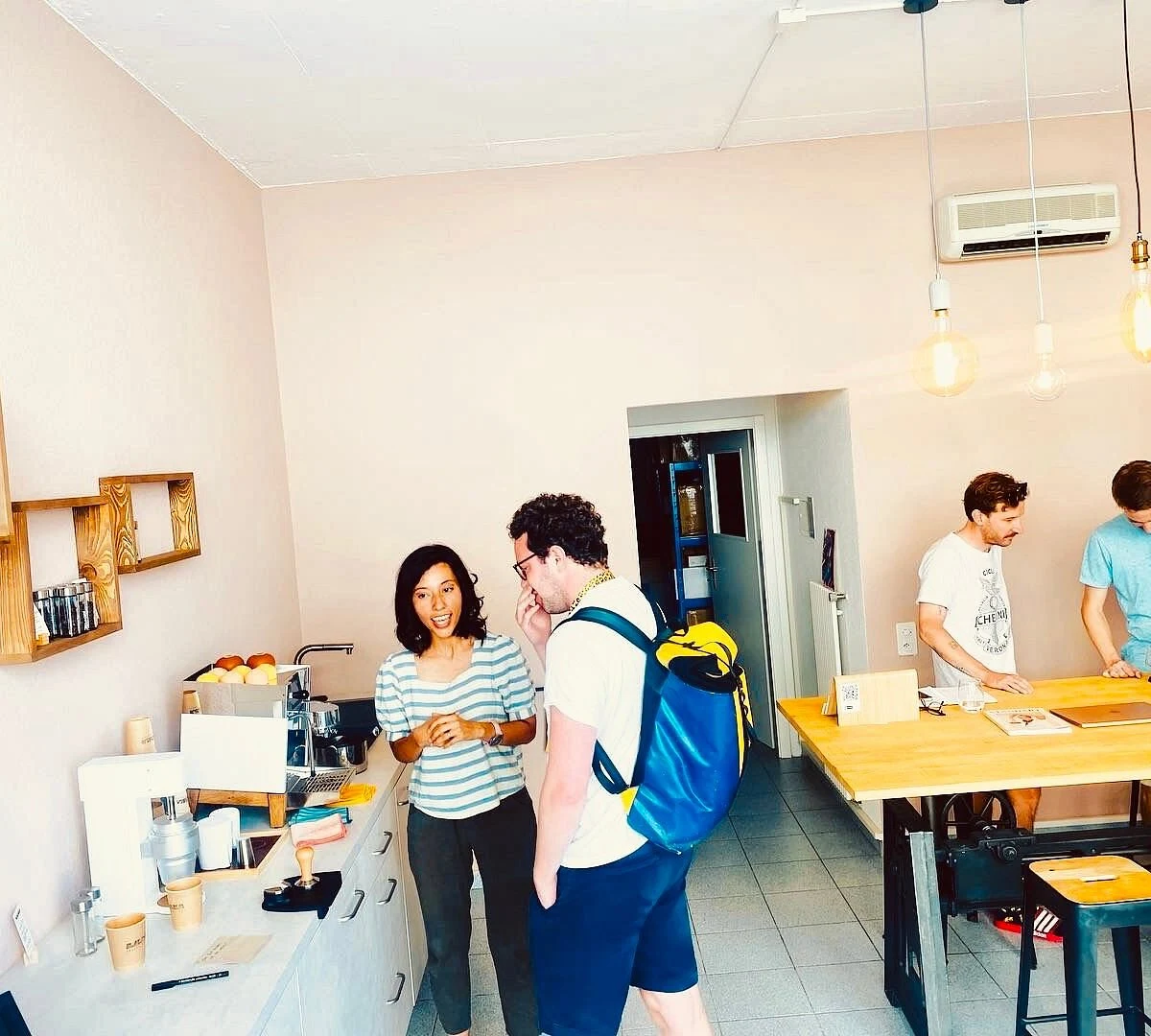
This is a coffee-led room. The house calls it a welcoming space to sample coffees, talk beyond the cup and play with equipment, which puts it closer to a tasting counter than a cafe with a kitchen attached. The look is modern and minimalist, and the point of the visit is the coffee in front of you.
The retail side carries it home. The Cafec Flower Dripper, the Timemore Black Mirror Basic 2 scale and Cafec Abaca+ filters sit alongside the beans, so a conversation at the counter can end with the kit to repeat it. The team speaks English, Italian, Spanish, German and French, which suits Locarno and the Swiss-Bolivian shape of the business.
What to ask for
Start with whichever Bolivian lot is open on filter. Java Anaerobic Natural is the clearest expression of the sourcing, and its raspberry and lychee notes show why the nano lots are worth the trouble. For espresso, Gonzalo is the darker fruit-and-cacao option and Caranavi AAA the rounder one.
Ask what came in most recently, since the lots rotate with the harvests rather than sitting as a permanent house blend. If you are buying beans, take the brew method as the starting point and let the flavour notes decide the rest.
Tags
Frequently asked questions
What should I drink at MUYU Coffee Roasters?
Take whichever Bolivian lot is open on filter, since that is where the sourcing shows: Java Anaerobic Natural carries raspberry, lychee and blueberry. On espresso, Gonzalo is the darker option, with amarena, blackberry jam and cacao nibs, while Caranavi AAA is rounder, with nutty, brown sugar and peach notes.
What makes MUYU’s roasting different?
It roasts only Bolivian coffee, sourced through Elevate Coffee Bolivia and the Proyecto Elevate programme, working directly with smallholder producers on nano lots that rarely reach Europe. The Ticino roastery also runs entirely on solar power, including the electric roaster, the espresso machine and the grinders.
Compare nearby places
| Venue | Type | Area |
|---|---|---|
| Vulaiga | Bakery | Val Mastallone |
| Grazioli | Bakery | Legnano |
| Cerere – L’Atelier del Pane | Bakery | Canonica Lambro |
| Forno Dal Mastro | Bakery | Centro storico (Monza) |
| EigerBean The Coffee Roastery | Café | Grindelwald |