Why go
Light roasts from the Gamlebyen roastery
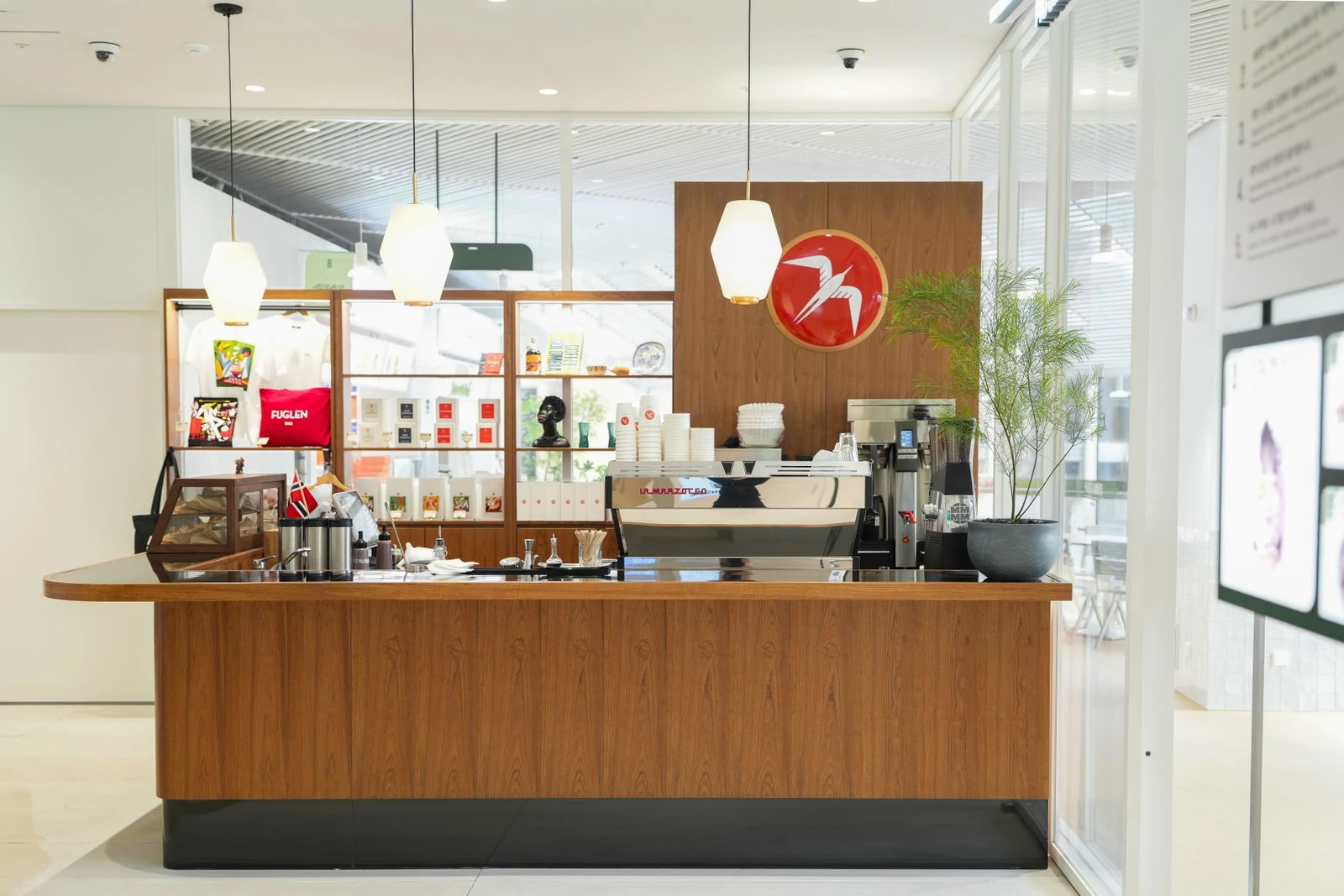
Roasting happens on site in Gamlebyen, and the bar in front of it pours what comes off the drum: lightly roasted coffee bought on direct-trade terms and sold as readily by the bag as by the cup. Fuglen Coffee Roasters began in Oslo in 1963, opened in Tokyo in 2012 and added its own roasting operation two years later, so this counter is the production end of a long-running project rather than a satellite café. Coffees of the Month rotate the line-up, and equipment, brewing guides, cupping sessions and the Truestory brewing course put tasting and education beside daily service. Distribution runs beyond Norway, but the roastery is where the work is visible.
Coffee bar by day, social room by night
The room starts as a morning coffee bar, holds through the middle of the day for reading or laptop work, then turns social: cocktails, live events and jazz through the year. That makes it a hybrid, a roastery, café, event room and neighbourhood meeting place at once, and the old-town setting matters, since Gamlebyen makes the branch a destination within an older part of Oslo rather than a stop on a commute. Tea sits on the list too, and dogs are welcome, which tells you most of what you need to know about the register. Food plays a supporting role; the roasting, the education and the room itself are what the place is built on.
How to approach a first visit
Treat it as a production-led coffee bar with community programming attached. Start with the roasting: ask what is on as Coffee of the Month, take the lightly roasted profile at face value, and let the bar steer you between filter and espresso depending on the lot. If the visit is about learning rather than drinking, cupping and the brewing course are part of the same offer, not a side business. If you want to take the project home, there are beans, subscriptions, equipment, brewing guides and a coffee club built around exactly that. The bar is used to explaining what is in the cup, so ask; the answer usually arrives with the origin and the roast attached. And if the visit runs late, the same room does jazz and cocktails, which is the second half of what a first visit can be.
Tags
Frequently asked questions
What should I order at Fuglen Coffee Roasters?
Ask what is on as Coffee of the Month and let the bar steer you between filter and espresso for that lot. The house style is light roasting on direct-trade terms, so a filter usually shows the coffee most clearly. Tea is on the list, and later in the evening the same room serves cocktails.
What else happens there besides coffee?
Quite a lot. The Gamlebyen site is a roastery, café, event room and neighbourhood meeting place at once, with cupping sessions, brewing guides and the Truestory brewing course on the education side, and live jazz and events after dark. Beans, subscriptions, equipment and a coffee club extend the same programme beyond the counter.
Compare nearby places
| Venue | Type | Area |
|---|---|---|
| Talormade | Café | Bispevika / Bjørvika |
| Pust | Café | Majorstuen |
| Kiosk! Oslo | Café | Galgeberg |
| Papegøye | Café | Grønland |
| Kuro Oslo | Café | Grünerløkka |