Why go
The clearest description of Carpenter Coffee Bar comes from the property itself: a neighborhood spot that just happens to be in a hotel. That is the useful lens for a room that works as a coffee counter, a bar with bites and cocktails, and a patio under pecan trees, depending on the hour.
A coffee counter that turns social after noon
Carpenter Coffee Bar belongs to Carpenter Hotel in Austin, but it is arranged for the neighborhood rather than for guests passing through a lobby. Coffee and casual bites carry the earlier part of the day, and the room shifts toward cocktails and cold drinks as the afternoon goes on, with the patio doing most of the work once the light softens.
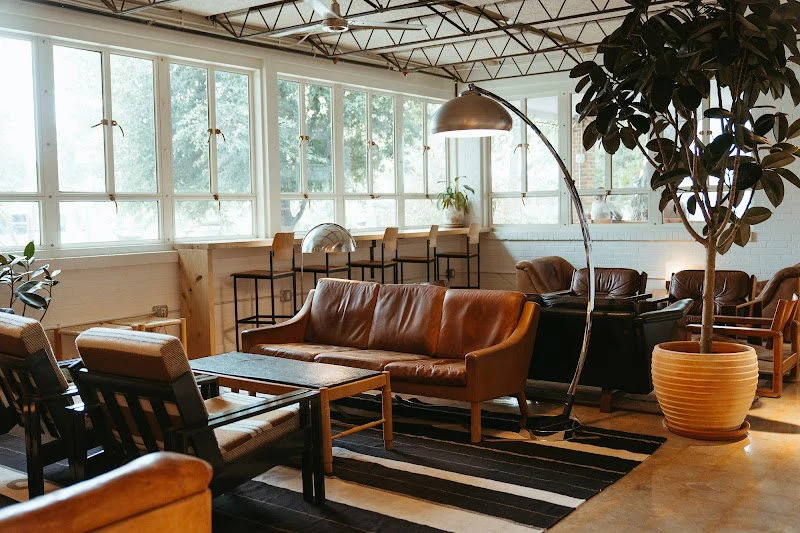
The character of the room changes with it. Mornings are bright and full of natural light, the middle of the day is closer to a laid-back hotel bar, and the evening belongs to the patio, which is where the place is most itself. It is relaxed and stylish without being formal, and nothing about it asks you to be a guest of the hotel to sit down.
The Friday Kickback and the pecan trees
The clearest occasion here is the Friday Kickback: rotating guest musicians, live Texas sounds, bites, cold drinks and the patio under pecan trees. It shows how the bar is meant to be used, as a gathering point rather than a takeaway window. Programming runs past music too, with workshops, fitness collaborations and gallery partnerships putting people in the room for reasons that have nothing to do with the menu.
Coffee early, cold drinks later
Come in the morning and it is a coffee bar; come on a Friday evening and it is a patio with a band. Either way the order is uncomplicated: coffee and something small to eat early, cold drinks or a cocktail later, taken outside if there is a table free. The hotel is the setting rather than the point, and the pecan trees are the reason people stay longer than they planned.
Tags
Frequently asked questions
What is the Friday Kickback at Carpenter Coffee Bar?
It is the bar's weekly Friday session on the patio, built around rotating guest musicians and live Texas sounds, with bites and cold drinks alongside. The setting is the outdoor space under pecan trees, and it is the clearest example of how the room works as a neighborhood gathering point rather than a hotel amenity.
Is there anything on besides coffee and drinks?
Yes. Alongside the Friday music session, the bar hosts workshops, fitness collaborations and gallery partnerships, so programming is part of the experience rather than a sideline. That mix is what pushes it past a hotel coffee counter and toward a room locals use for reasons other than a drink.
Compare nearby places
| Venue | Type | Area |
|---|---|---|
| 2nd & Roast Coffee Bar | Café | 2nd Street District |
| The Coffee Bar | Café | Downtown Austin |
| Jo's Coffee – Downtown | Café | Second Street District |
| Lakeside Coffee Bar | Johnny Beans Coffee Company | Café | Lake Austin |
| Comadre Panadería | Bakery | East Austin |