Why go
Pancakes, burritos and a bakery case
Cafe Telegrama is built on breakfast that keeps going all day. The brown-butter pancakes are the dish the kitchen is identified with and the breakfast burrito is the other, which tells you most of what you need about the register: recognizable food, made with more care than the format usually gets. All day in Los Angeles often means a kitchen stretched across too many ideas. Here it means breakfast is the anchor and everything else is built outward from it. The bakery side runs alongside that rather than behind it, and both are ordered at the same counter, sharing the same room and the same clock.
A sunny room on a daytime clock
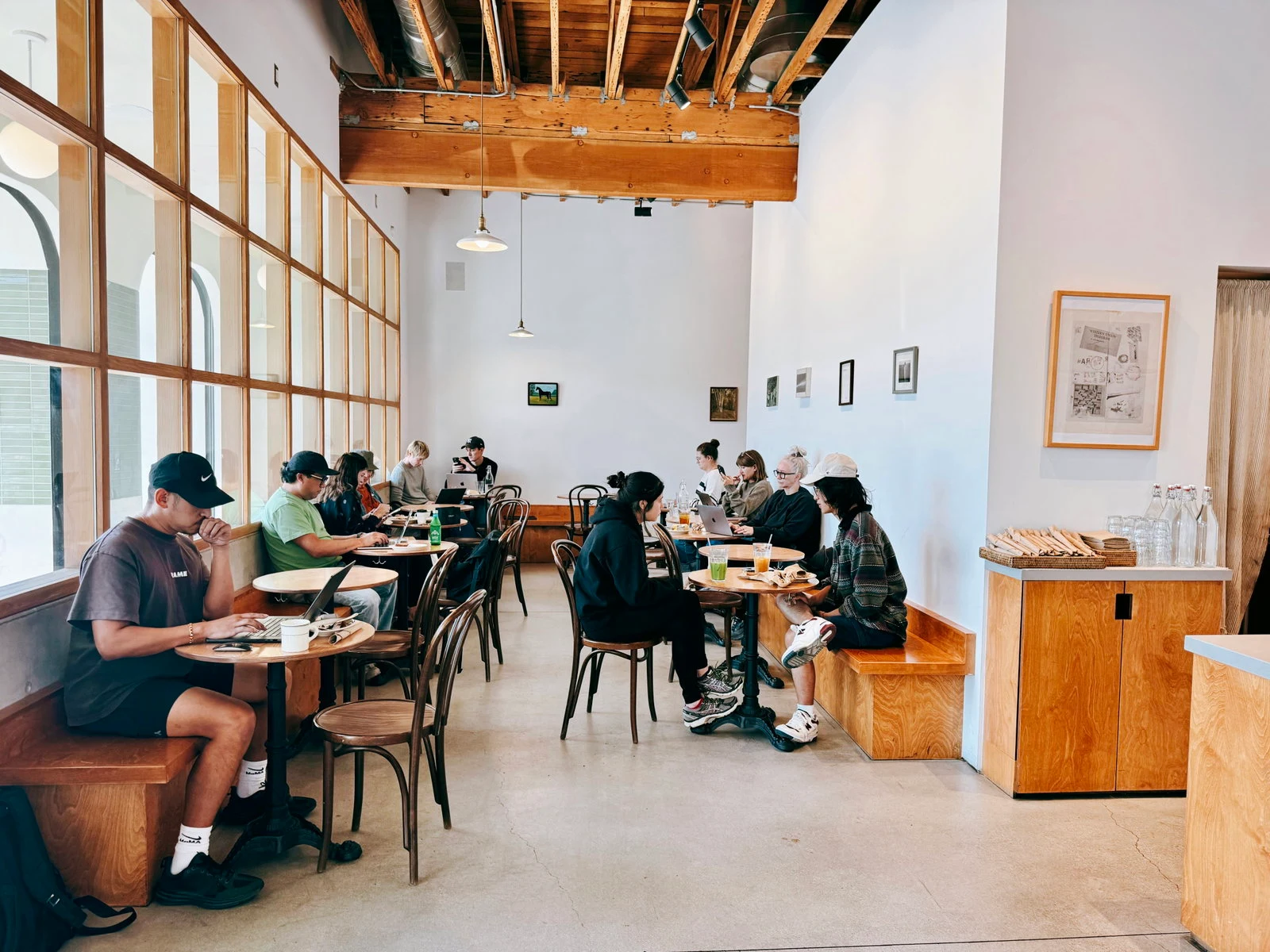
The room is clean, modern and full of light, and it operates as a daytime cafe rather than an evening restaurant. That shapes who is in it: people working, people meeting for an early lunch, people who wanted a proper breakfast instead of a pastry eaten standing up. Service is over the counter, so the pace is yours to set, and the calm is the first thing you notice about the space. In this part of Los Angeles, where the surrounding blocks are busy and functional, a quiet sunlit room doing careful breakfast food is a specific kind of relief. Light does most of the decorating and the rest of the room stays out of the way, which is why the tables turn over more slowly here than the counter format suggests they should.
Build the order around the griddle
Order the brown-butter pancakes on a first visit. They are the clearest statement of what the kitchen is trying to do, and the browned butter is the whole difference between them and a standard stack. The breakfast burrito is the counter-argument: bigger, savory, and the better choice if you want one thing to carry you through the afternoon. Sandwiches and salads fill the later part of the day, and they get the same attention as the breakfast plates rather than sitting on the menu as filler. If you are ordering for two, take one of each of the breakfast dishes and split them. The bakery case is worth reading on the way past, and it is the easiest way to leave with something for later.
Tags
Frequently asked questions
What should I order at Cafe Telegrama?
The brown-butter pancakes on a first visit, since they are the dish the kitchen is identified with and the browned butter is what separates them from a standard stack. The breakfast burrito is the bigger, savory alternative, and sandwiches and salads cover the later part of the day.
Is Cafe Telegrama counter service?
Yes. Food and bakery items are ordered at the same counter, so the pace of a visit is yours to set. It runs as an all-day cafe on a daytime clock, which suits working, an early lunch, or a proper sit-down breakfast.
Compare nearby places
| Venue | Type | Area |
|---|---|---|
| Couplet Coffee | Café | Westlake |
| Community Goods | Café | West Hollywood |
| Paper or Plastik Cafe | Café | Mid-City |
| Inara Coffee | Café | Venice |
| Ondo Coffee | Café | East Hollywood |