Why go
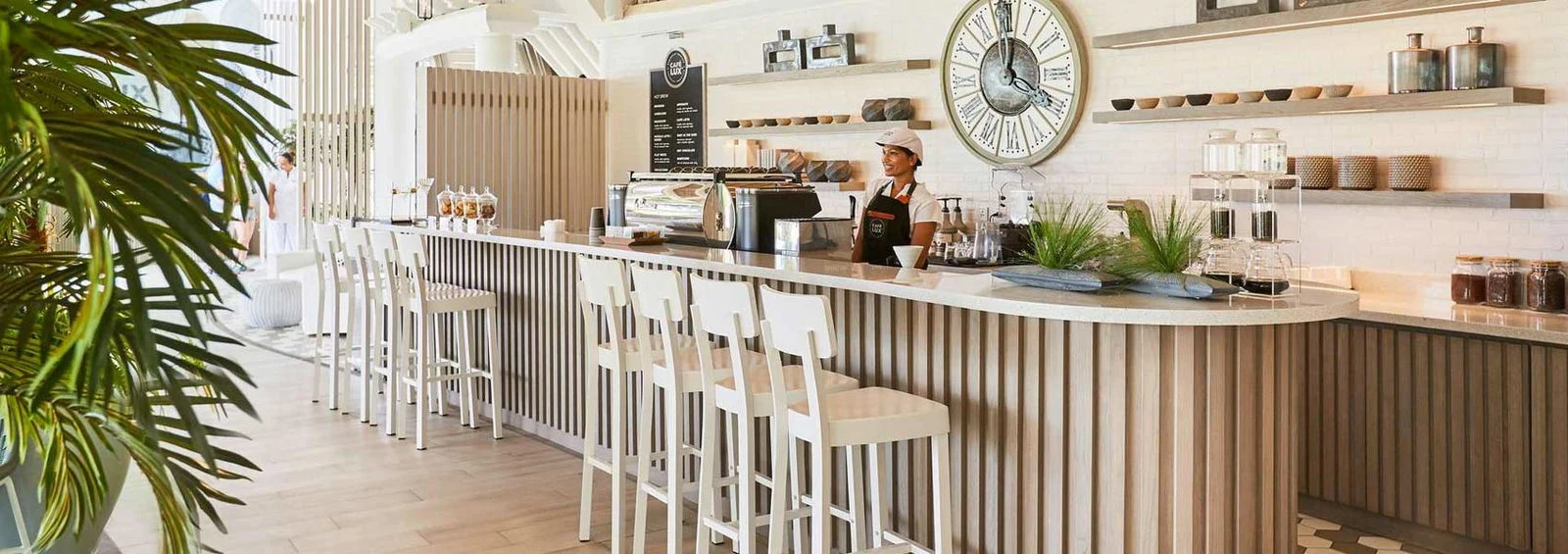
Green beans arrive ethically sourced, are roasted on site, blended in house and ground to order before a trained barista makes the drink. Café LUX* is the coffee-and-sweets counter at LUX Grand Gaube, the shortest stop among a resort portfolio that also runs INTI, The Palm Court, Beach Rouge and Creole Smokehouse.
House blends roasted on site
The identity is coffee rather than a broad restaurant format, and every stage of the chain happens on the property: sourcing, roasting, blending, grinding and brewing. That makes it more specific than a standard hotel coffee counter. The clearest signatures are cold drips, frozen coffees and hand-crafted blends ground to order. Cold drip points to a slow extraction style, while the frozen coffees suit the climate and give the menu a more indulgent register. Food stays deliberately light, built on sweet treats and pastries rather than a dining-room menu.
A pause point between beach and pool
Café LUX* works as a pause inside LUX Grand Gaube, particularly for guests moving between the beach, leisure time and the resort's other places to eat. It belongs to the whole day rather than to one meal slot, shifting from a breakfast coffee to a mid-afternoon pick-me-up to a dessert coffee later on. The mood is polished but casual, shaped by the resort setting rather than by formal restaurant service, and grinding to order means there is something to watch while the drink is built. This is the coffee-and-pastry corner of a larger dining ecosystem, not a room to approach for a long savoury meal.
Start with cold drip, then choose a sweet
Start with the cold drip for the most direct expression of what the counter does. Among the coffee formats here it is the clearest alternative to a routine hot coffee, and it shows how the programme leans on slower brewing. For something richer, move to the frozen coffees, which are the other signature. For the classic order, pair one of the hand-crafted blends, ground to order, with a sweet treat or a pastry. The blend is the point: these beans are ethically sourced, roasted on site and developed into house blends, so nothing here is anonymous hotel coffee.
Tags
Frequently asked questions
Does Café LUX* roast its own coffee?
Yes. Ethically sourced green beans are roasted on site, blended in house and ground to order before a trained barista makes the drink, so the whole chain runs on the property. That is what separates it from a standard hotel coffee counter, and it is why the house blends are presented as a product in their own right.
What should I order first?
The cold drip. It is the clearest alternative to a routine hot coffee among the named formats and it shows how the programme leans on slower brewing. For something richer and more suited to the climate, the frozen coffees are the other signature, and a house blend ground to order with a pastry is the classic pairing.
Compare nearby places
| Venue | Type | Area |
|---|---|---|
| Bahari Coffee Shela | Café | Shela Village |
| Aroma Coffee Shop | Café | Nairobi |
| Daisy's Café | Café | Karen |
| Connect Coffee Roasters | Café | Chiromo / Riverside |
| The Living Room: A 24-hour Café-bar and Coffee Roastery | Café | Lavington |