Why go
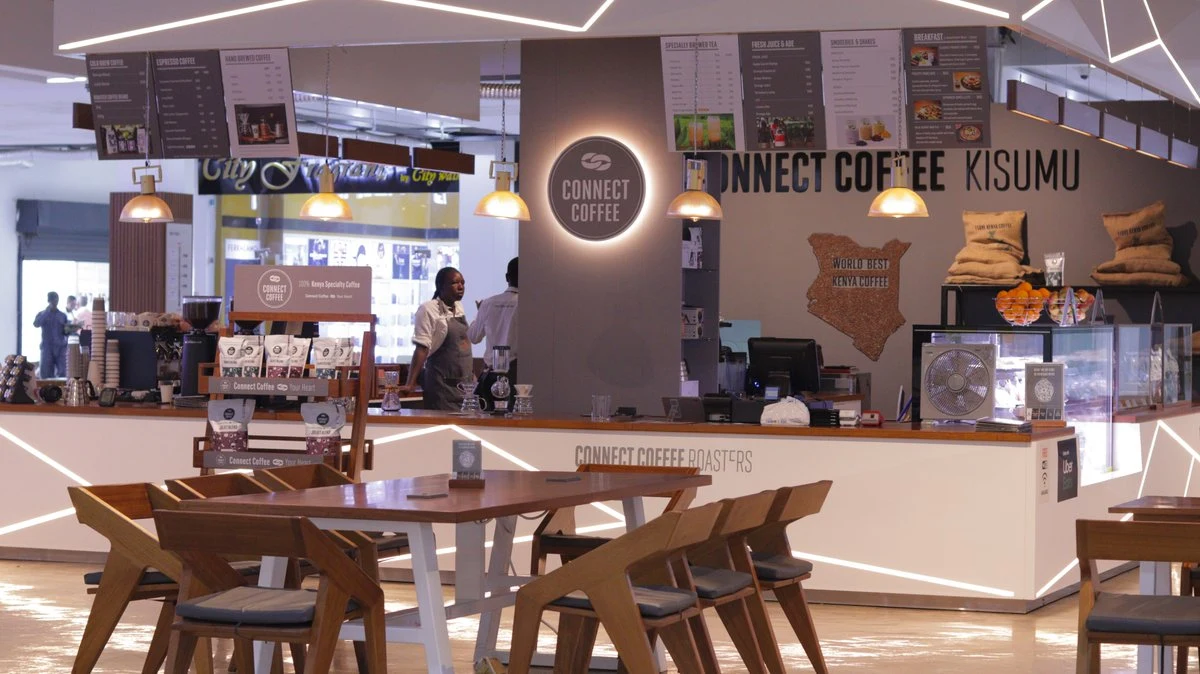
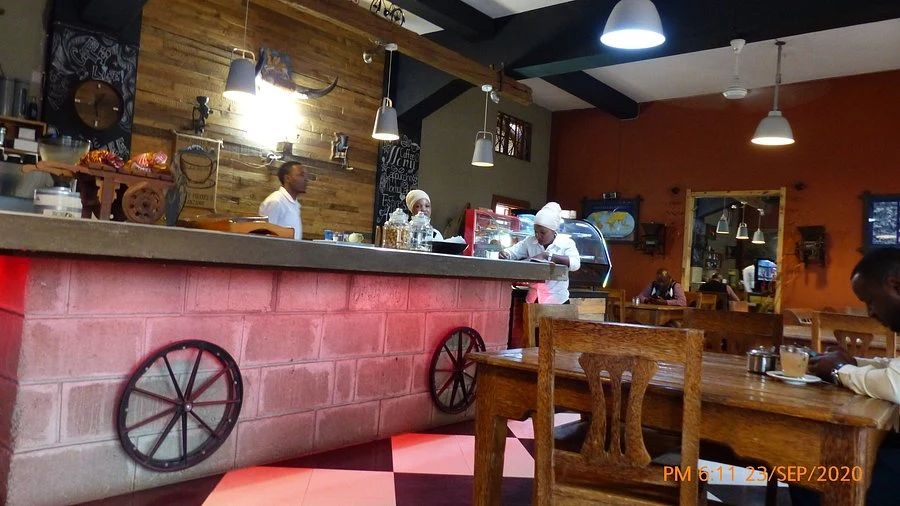
Approaching Aroma Coffee Shop means entering Nairobi through its working edge: freight lanes, airport traffic, rooftop air and the practical tempo of Jomo Kenyatta International Airport. This is not the leafy, lingering café culture of Westlands or Karen. It belongs to the city’s transit layer, where coffee is judged by timing, clarity and usefulness before romance enters the conversation.
Nairobi’s café scene has grown around two different habits. One is social and neighbourhood-led, with garden restaurants, mall cafés and long lunches shaping the day. The other is logistical: airport stops, office towers and commuter routes where the order needs to be legible and quick. Aroma Coffee Shop sits in the second category, and that matters because airport dining in East Africa often has to serve overlapping audiences: departing passengers, freight workers, drivers, airport staff and visitors killing time between movements.
Airport coffee in a country that grows serious beans
Kenya’s coffee reputation gives even a modest airport café a broader context. The country is associated with high-acidity Arabica, auction-market grading and growing regions such as Nyeri, Kirinyaga, Kiambu and Embu. Nairobi is the commercial centre through which much of that culture becomes visible to travellers, from specialty counters to hotel lounges and casual cafés. At an airport-adjacent coffee shop, provenance may not be presented with the ceremony of a specialist roaster, but the expectation is still higher than in cities without a serious coffee-growing hinterland.
The editorial question is not whether this is a tasting-menu address. It is whether a coffee stop at JKIA can give the traveller a useful Nairobi pause before the city proper begins. In that sense, Aroma Coffee Shop is better understood as part of the airport’s hospitality infrastructure than as a restaurant competing with full-service Nairobi dining rooms. For longer meals inside the city, the comparison shifts toward neighbourhood restaurants such as About Thyme Restaurant, garden-leaning addresses like Arbor Place, and mall-café formats such as Artcaffé Restaurant Ring Road Parklands.
How Nairobi's casual dining spectrum frames the stop
Nairobi dining is unusually broad for a capital often treated by travellers as a gateway. Thai dining has a place in the city through venues such as Thai Chi and BangBang Thai Kitchen; social gaming and casual eating converge at Bao Box; African traditional dining remains part of the visitor circuit through Carnivore. Aroma Coffee Shop belongs to none of those categories. Its role is narrower: a coffee-first airport stop at the threshold between international arrival and Nairobi’s restaurant map.
That threshold role can be valuable. Travellers moving on to safari lodges, the coast or city hotels often experience Nairobi in fragments, and airport cafés become part of the first impression. The choice is not between fine dining and failure; it is between a functional pause and a compromised one. The rooftop location gives this address a clearer identity than a generic terminal counter, while the airport setting keeps expectations practical.
For planning a wider Nairobi stay, use Aroma Coffee Shop as a point of orientation rather than the centre of the itinerary. The city’s dining range is better mapped through our full Nairobi restaurants guide, with parallel planning in our full Nairobi hotels guide, our full Nairobi bars guide, our full Nairobi wineries guide and our full Nairobi experiences guide. Kenya’s wider hospitality circuit then stretches far beyond the capital, from Ali Barbour's Cave Restaurant in Kwale and Baharini in Chale Island to Barharini Beach Bar and Restaurant in Diani Beach, Angama Mara Dining Pavilion in Narok, Boma in Maasai Mara National Reserve and Boma restaurant in Maasai Mara.
Who should use it, and who should wait for the city
Aroma Coffee Shop makes sense for travellers who need caffeine, a light stop or a holding point near JKIA rather than a long-form Nairobi meal. The address is especially relevant when the city’s traffic makes a quick detour unrealistic. Nairobi rewards those who give it time, but not every itinerary allows a move from the airport into Westlands, Kilimani or Karen before the next transfer.
Readers chasing a more specialised food crawl should treat this as a practical airport note and save appetite for the city. Readers connecting onward can treat it as a useful marker of how Nairobi hospitality operates at speed. For comparison outside Kenya, compact specialist formats such as Jōdo Saké Bar in Los Angeles or Onigiri Time in Pasadena show how tightly defined concepts can carry a whole visit; Aroma Coffee Shop is less concept-driven, more transit-driven, and that distinction is the point.