Why go
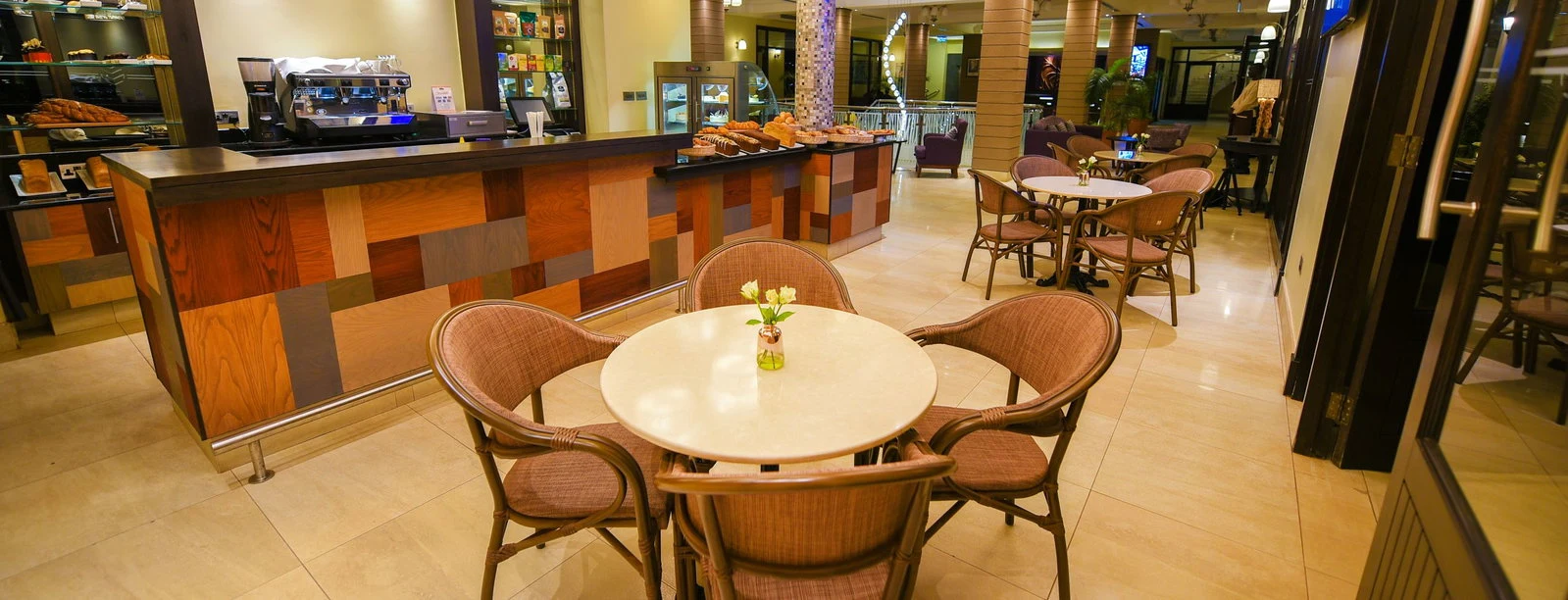
Lobby cafés in Kampala have a different rhythm from destination dining rooms. They work on arrival, waiting, and short conversations: the sound of doors, the movement of guests, the small choreography of coffee ordered between appointments. Blend Coffee Shop sits in that practical category, in a main-lobby setting on Barracks Drive, where the room’s value is less about spectacle than about giving the city a workable pause point.
That matters in Uganda because coffee is not an imported lifestyle accessory here. The country is one of Africa’s major coffee producers, with robusta deeply tied to central Uganda and arabica associated with higher-altitude growing areas such as the east and west. In Kampala, the café table often carries that agricultural background into urban form. A cup of coffee can be a quick office meeting, a family stop, or a quiet break from traffic. The better way to read a place like this is through that supply-chain reality: a coffee shop in the capital sits close to the producing culture, even when the venue itself operates in a low-key, everyday format.
Kampala's lobby-café format puts convenience ahead of theatre
The city’s restaurant scene splits across several useful lanes. There are social dining rooms built for group meals, Indian restaurants with long local demand, hotel restaurants serving mixed international menus, and coffee shops that function as neutral ground. Blend Coffee Shop belongs to the last group. Its address inside a main lobby gives it a clear role: not a long-form tasting-menu proposition, not a bar-led evening room, and not a destination built around a named chef. It is closer to the urban café as meeting infrastructure.
That distinction helps set expectations. A diner comparing Kampala options should not read every venue through the same lens. Amber Restaurant, Ambrosia Restaurant, and Khana Khazana sit more naturally in the city’s meal-focused restaurant conversation, where cuisine identity, group ordering, and evening service carry more weight. Blend Coffee Shop is better understood as a daytime or transitional address, useful when the agenda calls for coffee, a light bite, or a calm table rather than a full restaurant occasion.
The ingredient-sourcing angle is broader than any single menu claim. Uganda’s coffee economy gives Kampala cafés a native reference point that cities without local growing regions cannot claim. The editorial question is not whether every cup is traceable to a named farm, since that detail is not publicly listed here, but whether the setting participates in a city where coffee has agricultural depth behind it. On that measure, the category has substance. A lobby coffee shop in Kampala is still operating in a country where coffee is a serious crop, not a decorative afterthought.
The useful comparison is with Kampala's dining tiers, not global café mythology
Kampala rewards practical segmentation. For a polished sit-down meal, the city has a different set of addresses; for drinks, hotel lounges and standalone bars answer another need; for travel planning, hotels shape much of the visitor’s daily geography. Blend Coffee Shop occupies the quieter middle: suitable for a meeting that should not become dinner, a family pause that needs an easy setting, or a coffee stop tied to central-city movement.
That is also why the absence of award theatre is not a problem for the category. Awards can clarify ambition in fine dining, but cafés often earn relevance through location, reliability, and how well they fit the city’s daily patterns. Kampala’s traffic and appointment culture make neutral meeting points valuable. A main-lobby café has an advantage when the plan involves arriving, waiting, or regrouping without committing to a full restaurant experience.
For broader planning, the useful route is to compare by occasion rather than ranking. Use our full Kampala restaurants guide for meal-led decisions, our full Kampala hotels guide for where the city’s hospitality nodes cluster, our full Kampala bars guide for evening drinking, our full Kampala wineries guide for wine-focused planning, and our full Kampala experiences guide for cultural time outside the table.
How to place it in a wider coffee-and-casual-dining itinerary
Internationally, casual venues now do more editorial work than they used to. A small café, sake bar, taco counter, or tapas room can tell a sharper story about how a city eats than a formal dining room with heavier staging. That does not mean they should be judged identically. A coffee shop in Kampala should be read against local coffee culture and urban convenience, while a specialist bar or counter abroad belongs to its own tradition.
For contrast, Jōdo Saké Bar in Los Angeles belongs to a sake-led drinking culture, Onigiri Time in Pasadena to Japanese convenience-food translation, and -Grilled beef Sukiyaki- KAMAKURA TANUKIAN 鎌倉 たぬき庵 in Kamakura to a more formal Japanese beef tradition. Latin and Iberian casual formats tell different stories again: ¡Salud! in Los Angeles, ¡Toma! in Liège, ¿CóMO? Taperia in Vancouver, and ¿Por Qué No? in Portland all show how casual rooms can carry distinct culinary codes.
The same applies across Asia and Europe.. 鮪と炭火焼き うお炭 秋葉原店 in Tokyo,....Et la Fourmi in Nantes, and.cafe in Osaka are useful reminders that casual does not mean generic. The category only works when its format matches the city around it. In Kampala, Blend Coffee Shop’s case is simple: coffee culture has local agricultural weight, the lobby setting supplies utility, and the venue makes sense when the plan calls for a calm urban stop rather than a full dining commitment.