.null

Café de l’Europe

CafeCoffee BarAbout $75 a head
Café de l’Europe

Why go

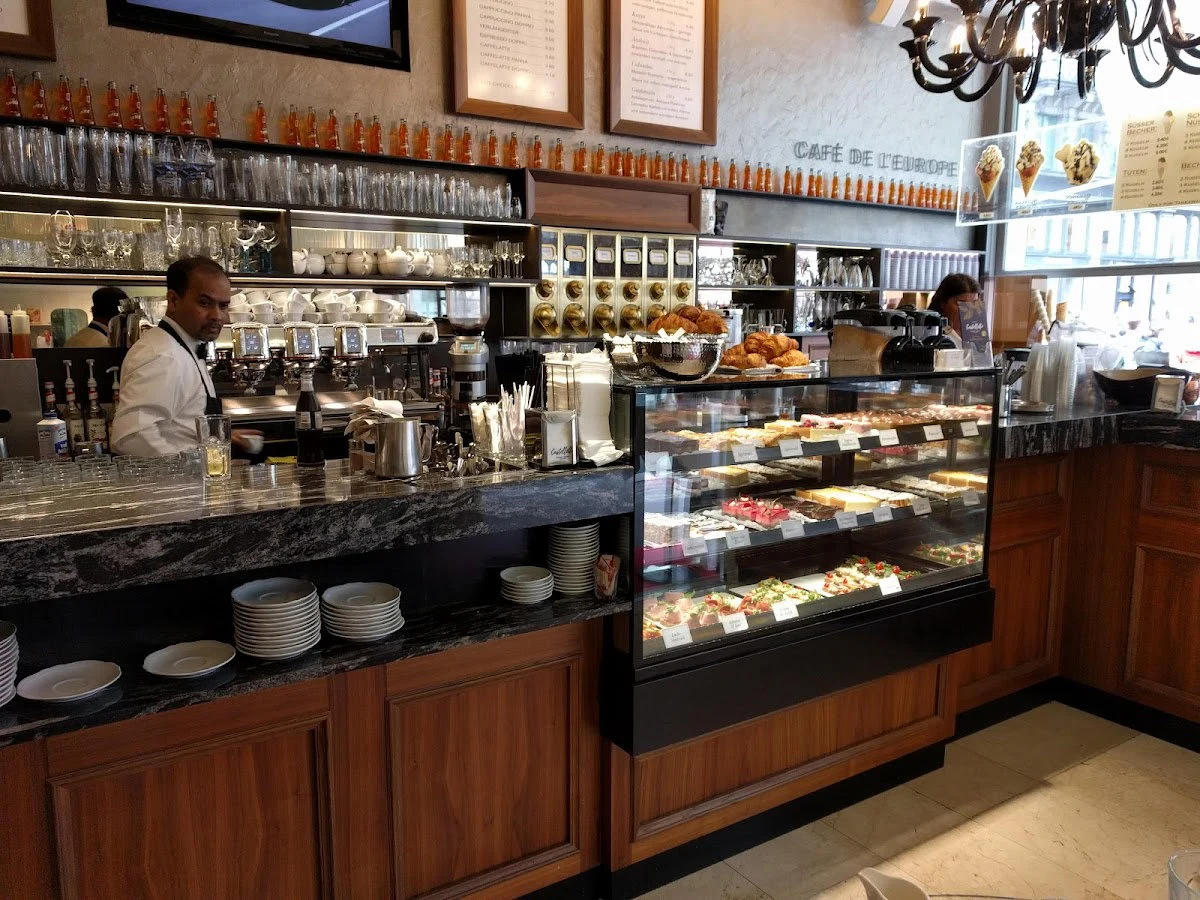
Approaching Café de l’Europe means entering Baden-Baden through one of its more theatrical urban sequences: casino-era architecture, clipped parkland, hotel façades, and the civic calm of a town built around taking one’s time. In this part of the city, the meal is rarely isolated from the walk before it or the salon-like drift afterward. Café culture here has always carried more weight than the word café suggests; it is a daytime institution, a social room, and a soft landing between spa appointments, shopping, concerts, and the Lichtentaler Allee promenade.

That context matters because Baden-Baden does not behave like a large German restaurant city. Its strongest dining identity is compact and tiered: grand-hotel restaurants, wine-led regional rooms, modern kitchens aimed at destination diners, and accessible central cafés that serve the town’s daily rhythm. Café de l’Europe sits in the last of those categories, where the judgement is less about tasting-menu ambition and more about whether the room fits the city’s tempo. Compared with modern-cuisine addresses such as Maltes hidden kitchen or traditional rooms such as Weinstube Baldreit, this is the less formal end of the local equation.

A café culture shaped by spa-town produce and pace

The ingredient story in Baden-Baden begins with geography. The city sits at the edge of the northern Black Forest and within easy reach of Baden wine country, so regional menus often draw on a familiar orbit: forest produce, dairy, orchard fruit, freshwater fish, cured meats, game in season, and wines from nearby slopes. Café de l’Europe should be read through that lens rather than through the vocabulary of destination gastronomy. The relevant question is not whether it performs culinary theater, but whether it works as a central Baden-Baden table in a town where eating is tied to walking, resting, and returning to public life.

That distinction separates the local café from the more formal hotel and restaurant circuit. Brenners Park-Hotel & Spa represents Baden-Baden’s grand-hotel tradition, while Fritz & Felix speaks to a more contemporary hotel dining grammar. Heiligenstein (Classic Cuisine) and Die Klosterschänke (International) point toward the region’s broader classic and international registers. Café de l’Europe occupies a different role: a central room for visitors who want the city’s social texture without committing the meal to fine-dining expectations.

In a spa town, sourcing is often expressed quietly. Regionality does not need to announce itself through manifesto language; it appears in the ingredients German and Baden kitchens have long relied on, and in the seasonal logic of lighter warm-weather plates, richer cold-weather cooking, and pastry-led afternoons. Without a named chef, published tasting format, or awards trail attached to Café de l’Europe, the stronger editorial reading is practical and cultural: this is a place to understand how Baden-Baden eats when the meal is part of a day rather than the whole purpose of it.

Where it fits in Baden-Baden's dining map

Baden-Baden’s restaurant choices split cleanly by occasion. For polished hotel dining, the gravitational pull is toward the established luxury properties; for wine-country classicism, the surrounding Baden region matters as much as the city itself; for late-evening drinking, the bar map has its own logic. A café in the center solves another problem: it gives structure to the middle of the day. That is useful in a town where the cultural schedule can include the Kurhaus, museums, thermal baths, and long walks rather than a single dining district.

Readers building a wider Baden-Baden plan should treat Café de l’Europe as one component rather than the anchor. The fuller local spread is better mapped through our full Baden-Baden restaurants guide, with hotel context in our full Baden-Baden hotels guide, evening drinking in our full Baden-Baden bars guide, regional bottles via our full Baden-Baden wineries guide, and cultural planning through our full Baden-Baden experiences guide. Within the city itself, Club Bernstein gives another local reference point for how compact Baden-Baden’s dining field is.

The comparison is also useful beyond Baden-Baden. Germany’s dining map changes sharply by city and region: Berlin rewards food-culture immersion, Heidelberg leans into its old university-town flow, Hamburg and Dresden have their own steakhouse and hotel-restaurant circuits, while smaller towns can be more dependent on one or two serious rooms. For contrast, see "Inside Berlin" Food & Culture Tour in Berlin, [CANTINACCIA] in Heidelberg, [KOOK] 36 in Deggendorf, [m]eatery in Hamburg, [m]eatery in Dresden, and [maki:'dan] im Ritter in Durbach. Internationally, the contrast grows sharper against focused Japanese formats such as Jōdo Saké Bar in Los Angeles and Onigiri Time in Pasadena, where the concept rather than the city promenade defines the meal.

The editorial read

Café de l’Europe is better approached as a Baden-Baden social address than as a credential-driven restaurant. There is no public awards narrative attached here, no chef biography shaping the room, and no published format that asks diners to surrender the evening. That absence is not a flaw in this category. In Baden-Baden, a central café can carry its value through location, continuity, and usefulness: a place for a family meal, a pause between appointments, or a low-pressure table when the day is organized around the city rather than the plate.

The critical case is therefore narrow but clear. Choose it when the priority is atmosphere in the old spa-town center and a meal that fits around Baden-Baden’s slower civic rituals. Choose a hotel restaurant, wine-led traditional room, or modern kitchen when the meal itself needs to carry the full evening. That distinction is the point: Café de l’Europe belongs to the fabric of the town, and its relevance comes from how naturally it fits the way Baden-Baden is used.

Tags

ElegantSophisticatedClassicIconicIntimateDate NightBusiness DinnerCelebrationSpecial OccasionAfter WorkPrivate EventPrivate DiningDesign DestinationHotel RestaurantHistoric Building
Café de l’Europe — Artefice