Why go
BlendIn Coffee Club’s Sugar Land room is the café side of a Houston-based specialty roaster. It opened on 17 November 2017 from husband-and-wife owners Weihong Zhang and Xuan Zhou, who brought different halves of the project: Zhang a biochemistry doctorate turned toward roasting and brewing, Zhou the design and presentation. It was built as café and coffee education space from the start, with in-house roasting, cupping and a choice of brew method.
Coffee is the reason to come
The bar covers traditional espresso, latte, tea and drip from single-origin lots, with French press, Aeropress and steampunk brewing for anyone who wants the preparation to change the cup. That is wider than a standard espresso bar, and it is the point.
The roasting programme adds the depth. The current catalogue names origins and lots from Panama, the United States, Ecuador, Burundi, Ethiopia, Colombia and Mexico, with blends across the last two. Examples run from Chevas SL 28 and a natural Geisha lot in Panama to Finca Soledad Sidra from Ecuador, Turaco from Burundi, Alo Morke from Ethiopia and El Diviso Ombligon from Colombia. Coffees are roasted to order, which keeps roast timing part of the offer rather than an afterthought. BlendIn was ranked 20th on The World’s 100 Best Coffee Shops for 2026.
A former bank with a lawn
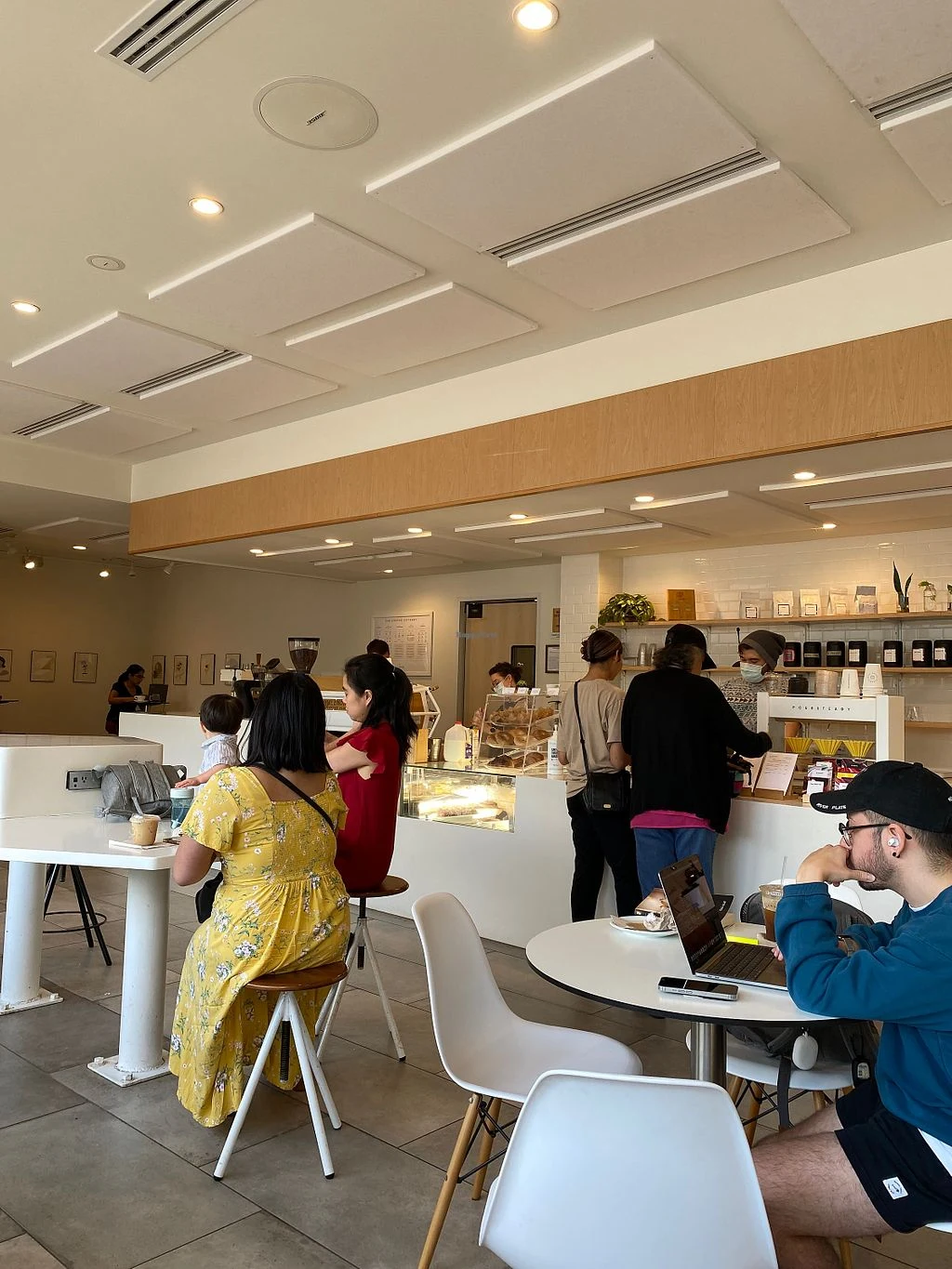
The building was a bank, redesigned by Zhou into something sleek and Nordic-leaning, with bright interiors and white-and-wood seating. Floor-to-ceiling windows face a grassy lawn, which opens the room out well beyond the counter, and the old drive-up ATM stations became an outdoor patio.
Inside, service is education-minded in a way that ties directly to the drink list: choosing between French press, Aeropress, steampunk, espresso, latte or drip turns an order into a conversation about brewing. Zhang’s technical background shaped that early on, with courses in green coffee, roasting, brewing and barista skills run from the shop. The result works for local regulars and for people driving in for the coffee.
Order coffee first, then something savoury
Start where the café is strongest. A straight espresso fits the traditional side of the menu, a latte keeps it familiar, and a single-origin drip or a brewed-to-choice cup reflects the sourcing work behind the counter. Tea has been on the list since opening for anyone off coffee.
Food is secondary to the beans but not a token. Sugar Land opened with a concise savoury list including a ham and bacon breakfast burrito, a grilled chicken panini, and vegetarian options such as an avocado Caesar salad. It is a compact café kitchen for breakfast, lunch and lighter all-day eating rather than a full restaurant, and the pairings are obvious enough: burrito with espresso or drip, panini for a fuller midday stop, salad when you want the lighter end.
Tags
Frequently asked questions
What is BlendIn Coffee Club known for?
Roasting. The Sugar Land café is the retail face of a Houston specialty roaster that roasts to order and lists lots from Panama, Ethiopia, Burundi, Colombia and beyond. Order espresso, latte or drip, or ask for French press, Aeropress or steampunk. A short savoury list covers breakfast burritos, paninis and salads.
Compare nearby places
| Venue | Type | Area |
|---|---|---|
| Maggie's Coffee | Café | Katy Freeway |
| Bagel Bob HTX | Bakery | Lazy Brook / Spring Branch |
| Common Bond Cafe & Bakery | Bakery | Medical Center |
| La Guadalupana bakery and cafe | Bakery | Montrose |
| BlendIn Coffee Club | Café | Houston |