Why go
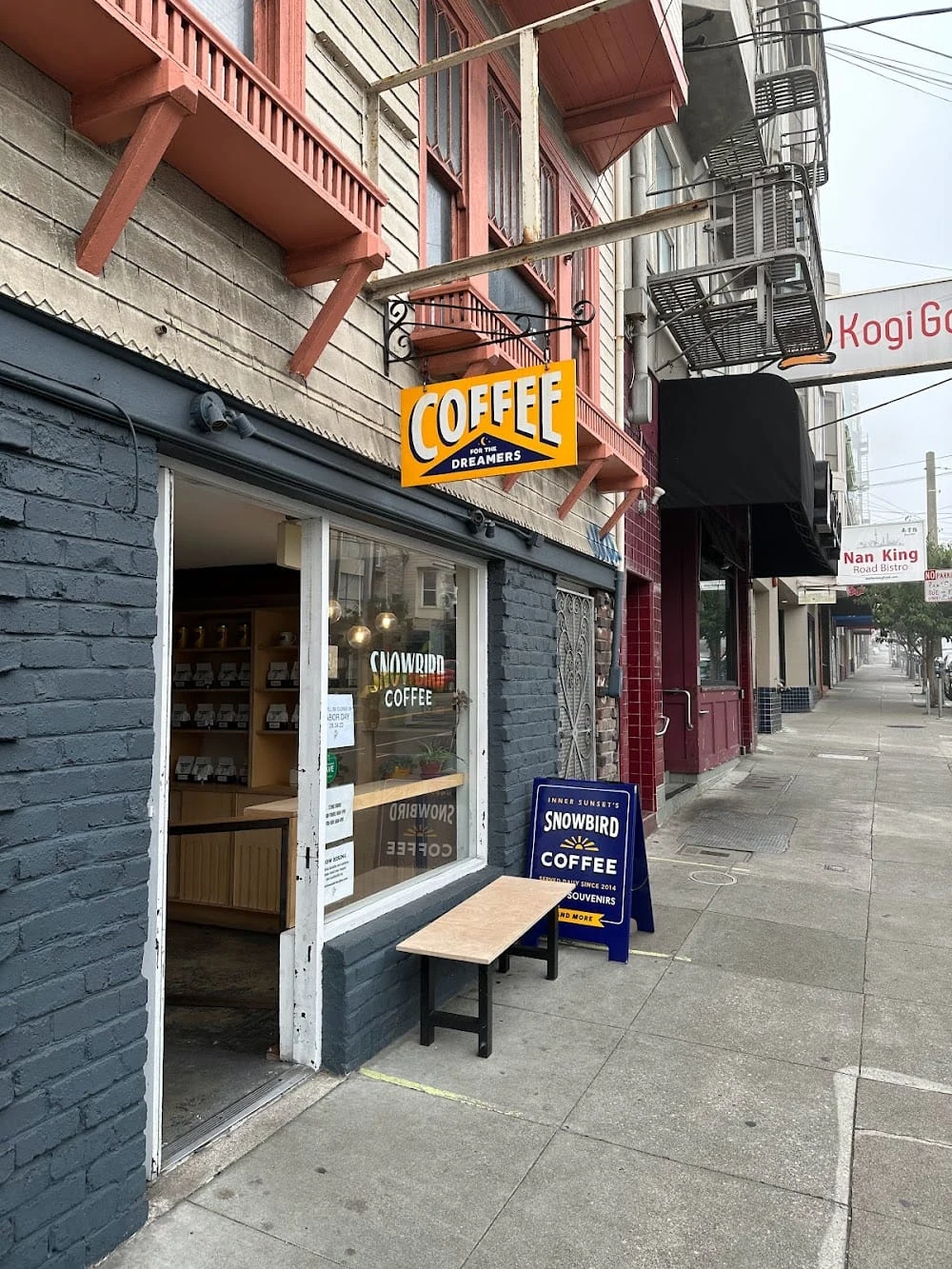
Condensed milk under a shot of espresso is the drink to order, and the room you drink it in is dim, low-ceilinged and lined with old coffee tins. Snowbird has been doing both since late 2014.
A multi-roaster bar in the Inner Sunset
Snowbird roasts in small batches and pours other people's coffee alongside its own, which was the founding idea: let people taste roasters from Wisconsin and Colorado by the cup instead of committing to a whole bag. Ruby Coffee, out of Wisconsin, has been among the featured names on the bar.
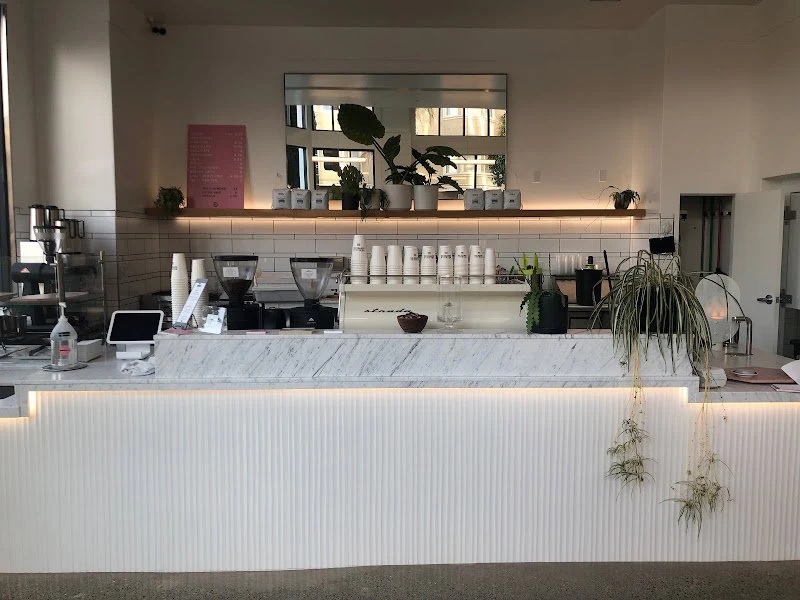
The kit backs the ambition. A La Marzocco GB/5 and two Mazzer grinders handle espresso, and the pour-over stand, brass arms set into cocobolo wood, was designed and built in house so that Hario V60 brewing happens at the bar in front of you rather than out of sight behind it. Espresso drinks, cold brew, V60 and a set of house specialities make up the board.
Eight hundred square feet of warm bulbs and plush seats
The ground floor of the old building was a garage long before it was a café, and the space took over from Drip'd Coffee Lab. The founders, two friends who left creative media to open it, wanted something basement-like, modelled on small New York rooms, and roughly eight hundred square feet gave them exactly that.
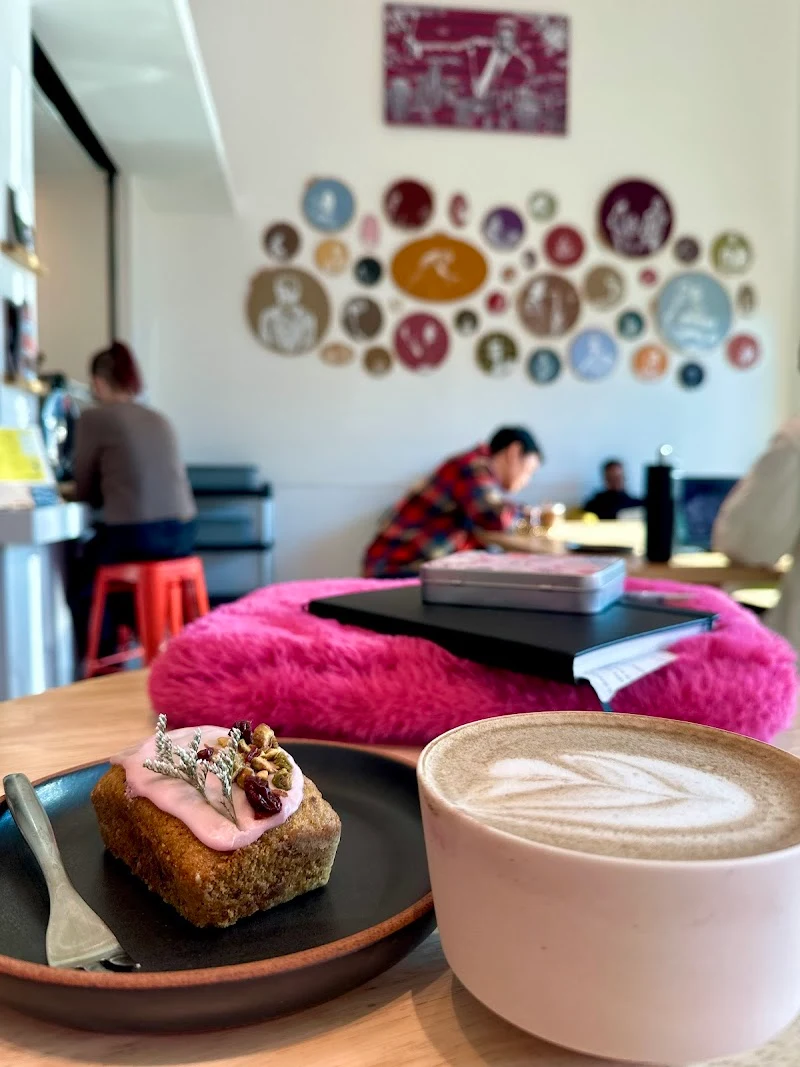
It reads as a cave in the best sense: warm-temperature bulbs, natural wood, vintage paraphernalia, old coffee cans, a vintage movie poster, plush seats and wooden banquettes. Seating is modest, with a standing bar and a bench out front for overflow, and locals work, read and talk in it all day. The house service philosophy is explicit, that staff should explain a drink without making anyone feel ignorant, and that hospitality comes before technical purity.
Start with the Café Bombon
The Café Bombon is the clearest first order: a shot of espresso over condensed milk, Spanish in origin and sweeter and denser than anything else on the board. It is the drink the café is most associated with.
The Shakerato is its iced companion, a shaken Italian-style drink following the same logic in a colder register. Beyond the two, cortados, mochas, affogatos, cold brew and matcha lattes fill out the list. Baked goods are there rather than the point. The name, incidentally, refers to people who leave cold climates for warm ones, which is a fair description of the room in a San Francisco winter.
Tags
Frequently asked questions
What should I order at Snowbird Coffee?
The Café Bombon, a shot of espresso poured over condensed milk. It is the drink the café is most associated with, sweeter and denser than anything else on the board. The Shakerato is its iced companion, and cortados, mochas, affogatos, cold brew and matcha lattes fill out the rest of the list.
Whose coffee does Snowbird serve?
Its own small-batch roasts plus a rotation of other roasters, which was the founding idea: let people taste coffee from places like Wisconsin and Colorado by the cup rather than buying a whole bag. Ruby Coffee from Wisconsin has been among the featured names, and espresso runs on a La Marzocco with Mazzer grinders.
Compare nearby places
| Venue | Type | Area |
|---|---|---|
| Arizmendi Bakery | Bakery | Inner Sunset |
| Pineapple King Bakery | Bakery | Inner Sunset |
| The Posh Bagel | Bakery | Inner Sunset |
| The Coffee Movement | Café | Chinatown |
| Cafe Réveille | Café | Lower Haight |