Why go
Bread first, in loaves built to last the week
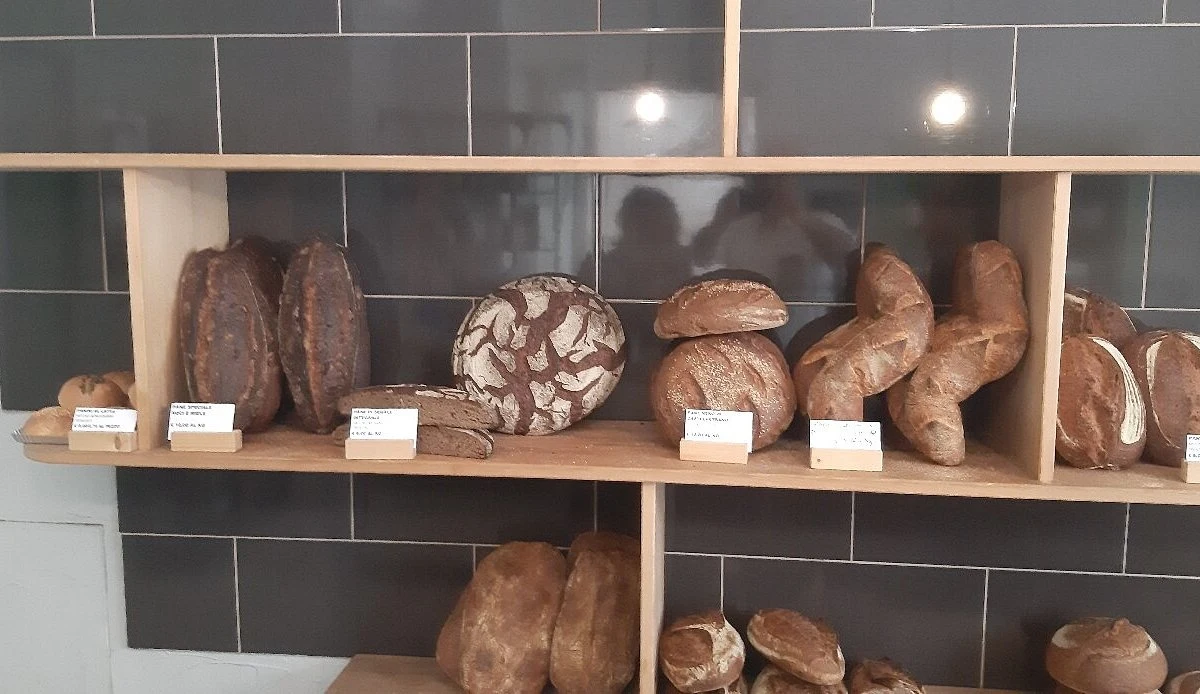
Lievito madre runs the whole counter here, in formats that climb from 500 grams to ten kilograms. The scale is deliberate: a larger loaf holds its fragrance and crumb for several days, and regulars who once bought a quartino now leave with a kilo under one arm. Pane di Conversano is the emblematic local loaf, while pane con grano arso carries the roasted-grain note that is specifically Puglian. The same slow fermentation carries into pizza in teglia and pizza al padellino, made with very little beer yeast and long rests.
An independent forno working local grain
The bakery opened in October 2020 as a bottega and working oven rather than a restaurant, founded by Francesco Colella and Ylenia Santostasi. Production is artisanal and independent, with no industrial pre-mixes and no shortcut model. Grain comes from small agricultural companies in the surrounding territory, including grano arso and soft wheat grown in nearby fields.
Colella came back to Puglia to open it. He started in kitchens, then worked in Brittany, where rye and artisan bread-making became central, and trained with Davide Longoni and Gabriele Bonci before bringing the project home. What lands on the shelf is that mix: Puglian grain, French-leaning pastry technique, and Roman-style tray pizza.
Order bread, then the savoury tray
Take bread first. Pane di Conversano, pane con grano arso, the ancient-grain loaves and pane proteico are the ones to weigh up. Then move to the aperitivo side, where pizza in teglia, pizza al padellino, focaccia, panzerotti and supplì carry seasonal toppings such as fried zucchini with stracciatella and mint, carrot cream with marinated cabbage, or ricotta with crudo and figs.
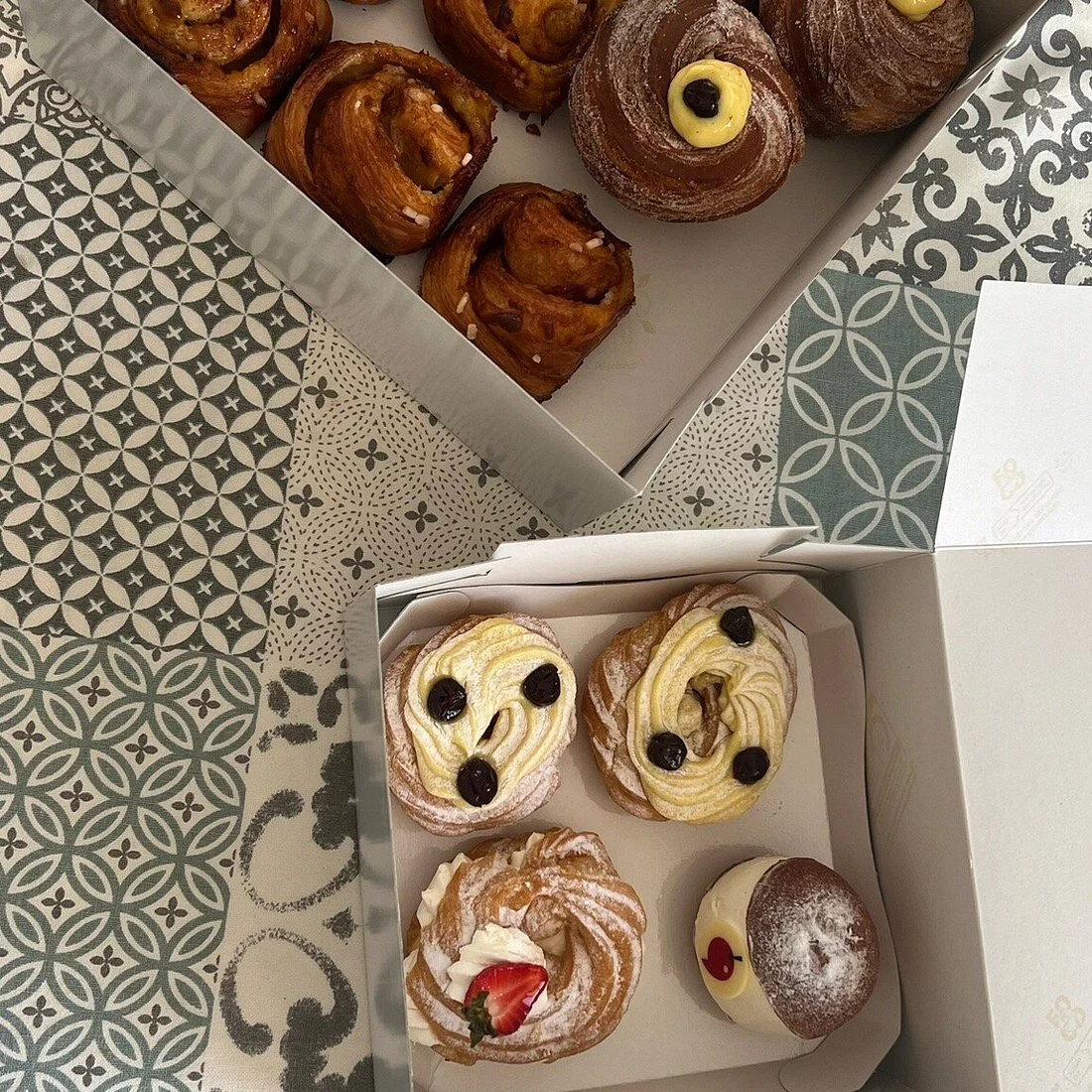
The sweet baking follows the same local logic: ricotta pastries, ricotta montata, cherry bakes and pane dolce alle ciliegie, with focaccia con i fioroni when the early figs arrive. Recognition came quickly. After an initial Due Pani, the bakery took Tre Pani in Gambero Rosso’s Pane e Panettieri d’Italia for consecutive years, and it also appears in the same publisher’s street food guide. The award is real, but the reason to walk in has not changed: local grain, mother dough, seasonal toppings, and an oven working for the neighbourhood.
Frequently asked questions
What should I order here?
Start with bread. Pane di Conversano is the emblematic local loaf and pane con grano arso adds the roasted-grain note that marks Puglian baking. From there the savoury tray is the draw: pizza in teglia, pizza al padellino, focaccia, panzerotti and supplì, with seasonal toppings such as fried zucchini with stracciatella and mint.
Why are the loaves so large?
The bakery works in lievito madre formats that run from 500 grams up to ten kilograms, because a bigger loaf keeps its fragrance and crumb for several days. Customers who once asked for a small quartino have adapted to kilo pieces and cut from them through the week.
Compare nearby places
| Venue | Type | Area |
|---|---|---|
| Panificio Adriatico | Bakery | Murat |
| Pane e Pace | Bakery | — |
| Virgola pasticceria terapeutica | Bakery | San Vito dei Normanni |
| Il Toscano | Bakery | Corato |
| Lula – Pane e Dessert | Bakery | Corso Matteo Renato Imbriani |