Why go
Roasting happens close to the cup
The counter at this Copenhagen specialty coffee bar is tied to a working roastery, with ROAST Coffee roasting directly in the shop and serving the same beans as espresso, cappuccino and pour over. That matters here because the café is not just a service point for someone else’s roast; the roasting, brewing and retail side sit in the same programme. ROAST was founded in 2014 around direct trade and a more transparent channel between farmers and drinkers, so the shelves tend to read like a buying map rather than a fixed house blend. Recent coffees have included Guatemala Rosma, Peru Intiwatana, Burundi Butegana, Burundi Nemba, Brazil Fazenda Aranquã, Rwanda Mushonyi, Indonesia Laga Lizu, Kenya Riakiberu, Colombia Ciprés, Colombia Higueron and Costa Rica Cascara. The range is broad, but the useful move is simple: ask what is being roasted and what is pulling well that day.
Down the stairs, the roast sets the pace
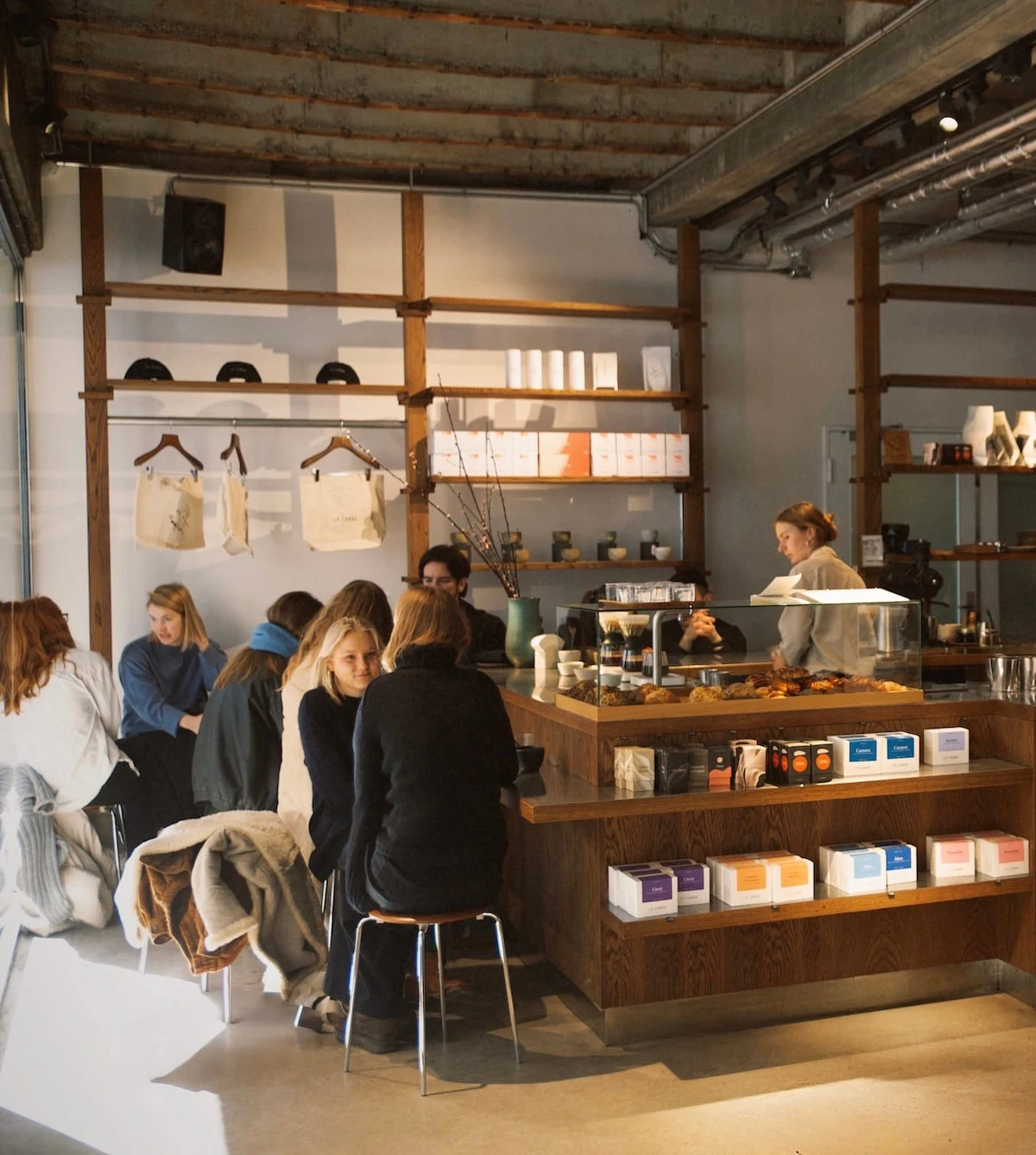
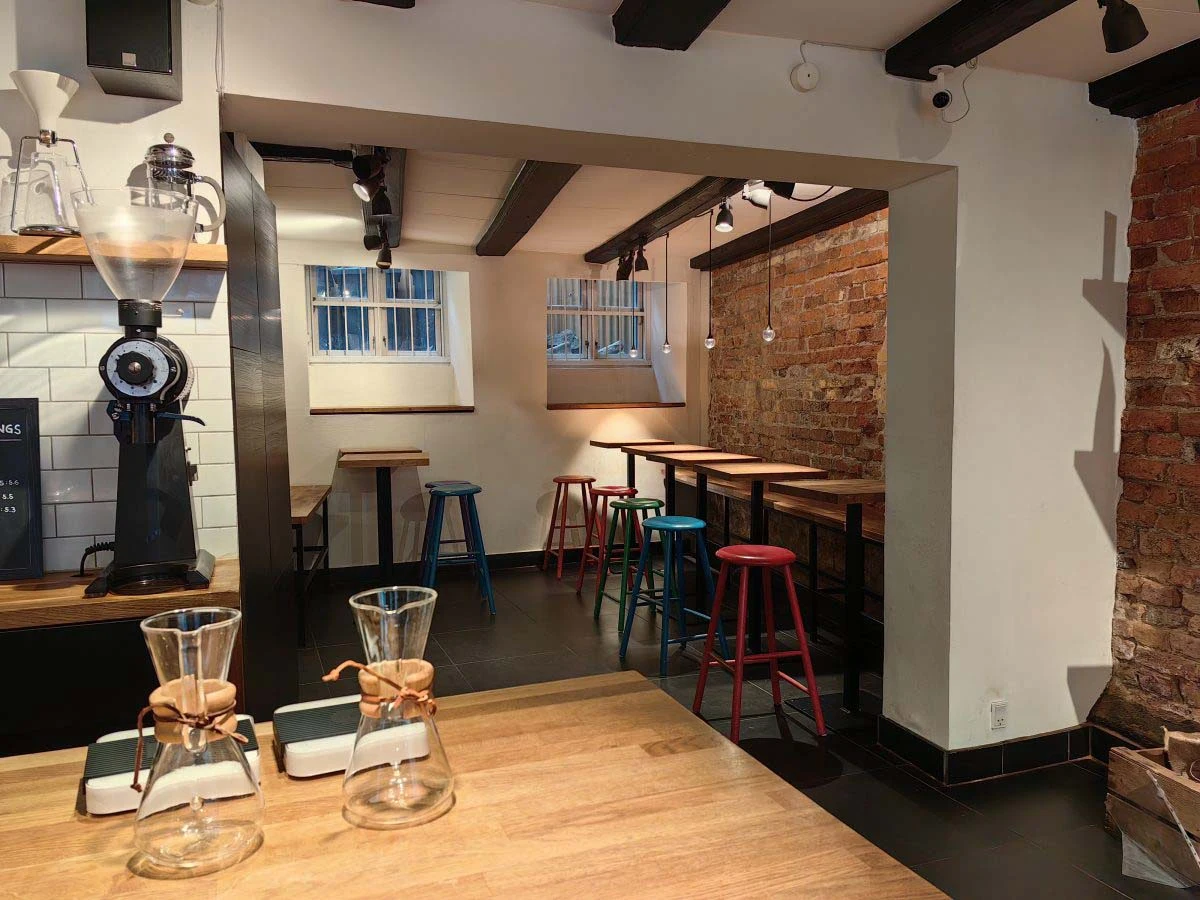
The room works well when treated as a roastery counter first and a café second. The descent into the café puts the beans at the centre of the visit, with roasting close enough to be seen and smelled rather than hidden behind a brand story. Staff are used to guiding people through the flame-roasted beans, which gives the bar a practical rhythm: a short conversation about roast and brew, then the pull or the pour. This is a neighbourhood coffee stop, not a ceremonial tasting room, and that is part of its use. Regulars come for a daily cup, but the better reason to walk over is the chance to connect the bag, the roast and the drink in one place. If the bar is busy, keep the question specific: espresso or filter, brighter or rounder, milk or black. The answer usually gets you further than scanning the whole shelf.
Order the cappuccino first, then take beans home
Start with the cappuccino if milk drinks are your measure of a roaster. It shows whether the espresso has enough structure to hold through milk without turning heavy, and it suits a counter built around roast guidance rather than decoration. If you drink black coffee, choose the pour over instead and let the staff point to the bean that fits the day’s lineup; with coffees from Kenya, Rwanda, Burundi, Brazil, Colombia and Guatemala in the wider programme, the filter side is where the range becomes clear. Espresso is the quick read, especially if you already know the kind of roast you like. Pastry belongs beside the coffee here, but the house does not make a named bake the reason to come. The quieter pointer is the retail shelf: if a cup lands well, buy the same coffee while the roast is fresh in memory.
Tags
Frequently asked questions
What should you order at ROAST Coffee?
The cappuccino, if milk drinks are your measure of a roaster: it shows whether the espresso holds structure through milk without turning heavy. If you drink it black, take the pour over instead and let the staff point you to the bean that fits the day’s line-up.
Does ROAST roast on site?
Yes, directly in the shop, close enough to be seen and smelled rather than hidden behind a brand story. Recent coffees have included lots from Guatemala, Peru, Burundi, Brazil, Rwanda, Indonesia, Kenya, Colombia and Costa Rica, so the useful question at the bar is what has just been roasted.
Compare nearby places
| Venue | Type | Area |
|---|---|---|
| Andersen Bakery | Bakery | Islands Brygge |
| Darcy’s Kaffe | Café | Nørrebro |
| La Cabra Coffee Roasters | Café | Møntergade / Copenhagen K |
| Kaf | Café | Nørrebro |
| Coffee Collective Jægersborggade | Café | Nørrebro |