Why go
One Canadian pastry, stretched by hand
The whole counter is built around a single item: the BeaverTail, or Queue de Castor, a piece of dough stretched by hand into the long flat shape that gives the pastry its name, then fried and finished warm. The dough is simple, close to flour, water, yeast, sugar and fat, and the technique is nothing like lamination or oven baking. Croissants, baguettes, sourdough loaves and tart cases are not part of the picture here.
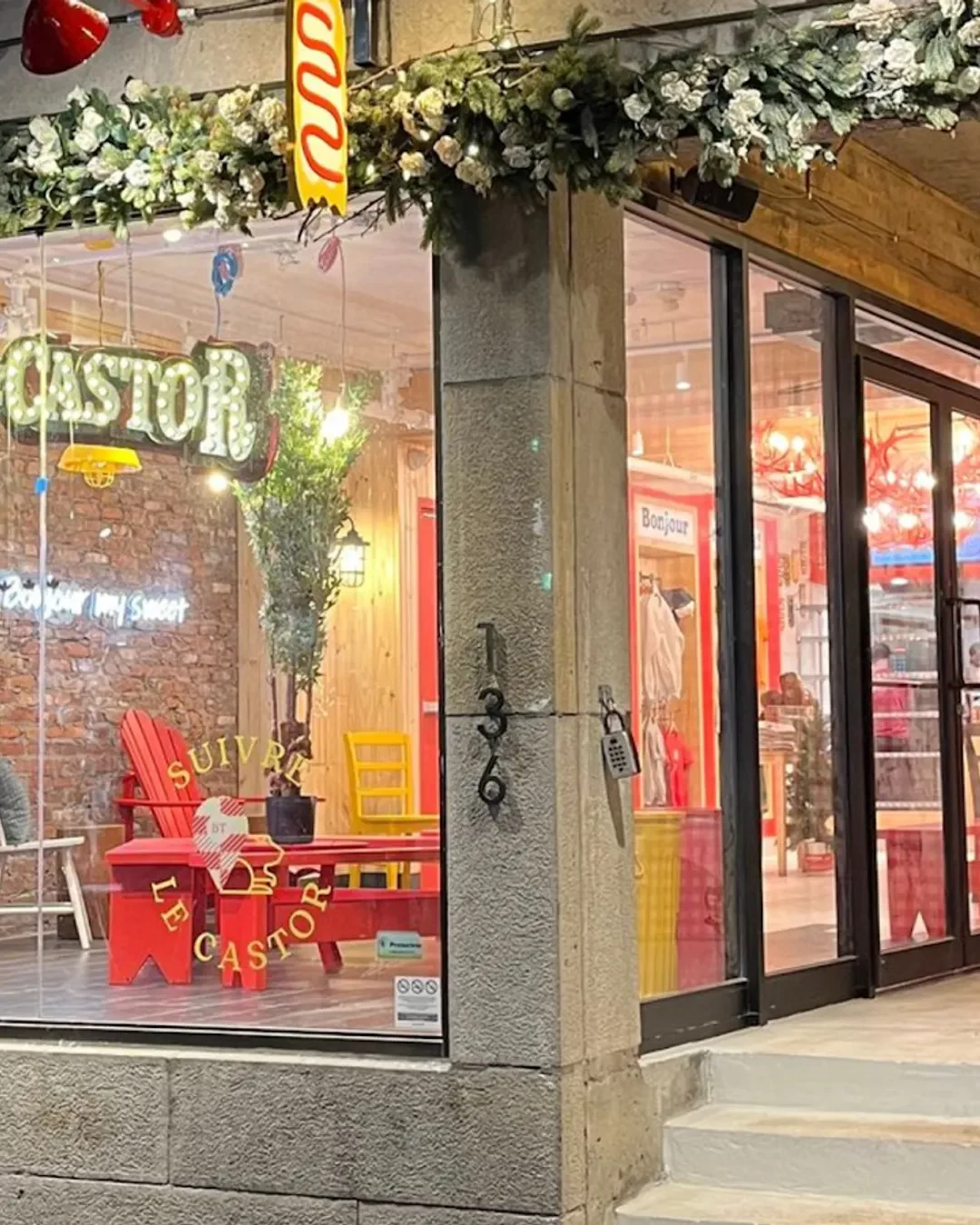
The brand started in 1978, when its founders began selling the pastry at Winterlude in Ottawa, and the festival-food character never left it. The Rue Saint-Paul Est branch of Queues de Castor carries that identity into Vieux-Montréal, among cobblestones, historic frontages and the steady movement of people up from the Old Port. The bilingual name, Queues de Castor in French and BeaverTails in English, sits naturally in Quebec.
Fast, warm and eaten on the move
The visit is short by design: read the board, choose a BeaverTail and a topping, and take it a moment after it leaves the oil. There is no dining room to settle into and no table service, and the wrapper is built for walking. That suits a street where the crowd thickens in summer and around large city events, and it explains why the pastry is finished to order rather than held in a case.
What consistency there is comes from the franchise method rather than a pastry chef's signature: stretch evenly, fry cleanly, top fast, hand it over warm. Judged as a neighbourhood bakery it would look thin. Judged as what it is, a fairground pastry given a permanent address in a historic quarter, it does one thing and does it in front of you.
Classic cinnamon and sugar first, then chocolate hazelnut
Order a classic cinnamon and sugar first. It is the most direct version of the original fairground pastry and the one that leaves the dough most exposed: the puff from the fryer, the crisp edge, and a sweet finish that does not hide behind a spread. It is also the fastest way to tell whether the piece in front of you was stretched thin enough.
The chocolate hazelnut is the richer second choice, where the same fried base turns into a proper dessert under a thick spread-style topping. Seasonal and limited toppings come and go across the wider brand, but this counter's identity does not move with them. One Canadian pastry, stretched by hand, fried to order, topped warm, and eaten in the flow of Old Montréal.
Frequently asked questions
What is a BeaverTail?
A BeaverTail, or Queue de Castor, is a Canadian fried-dough pastry: a simple yeasted dough hand-stretched into a long flat oval that roughly resembles a beaver's tail, fried until puffed and golden, then finished warm with sweet toppings. The pastry dates to 1978, when the brand began selling it at Winterlude in Ottawa.
What should I order at the Rue Saint-Paul Est counter?
Start with the classic cinnamon and sugar, which leaves the fried dough most exposed and gives the clearest read on how well it was stretched and fried. The chocolate hazelnut version is the richer follow-up, turning the same base into a fuller dessert. Toppings go on to order, so the pastry arrives warm.
Compare nearby places
| Venue | Type | Area |
|---|---|---|
| Cafeterra | Bakery | Old Montreal |
| bbagels | Bakery | Pointe-Saint-Charles |
| St-Viateur Bagel & Café | Bakery | Plateau Mont-Royal |
| Bagels Le Trou - Griffintown | Bakery | Griffintown |
| Tommy Café | Café | Old Montreal (Vieux-Montréal) |