Why go
Two espressos, four filters and a batch brew
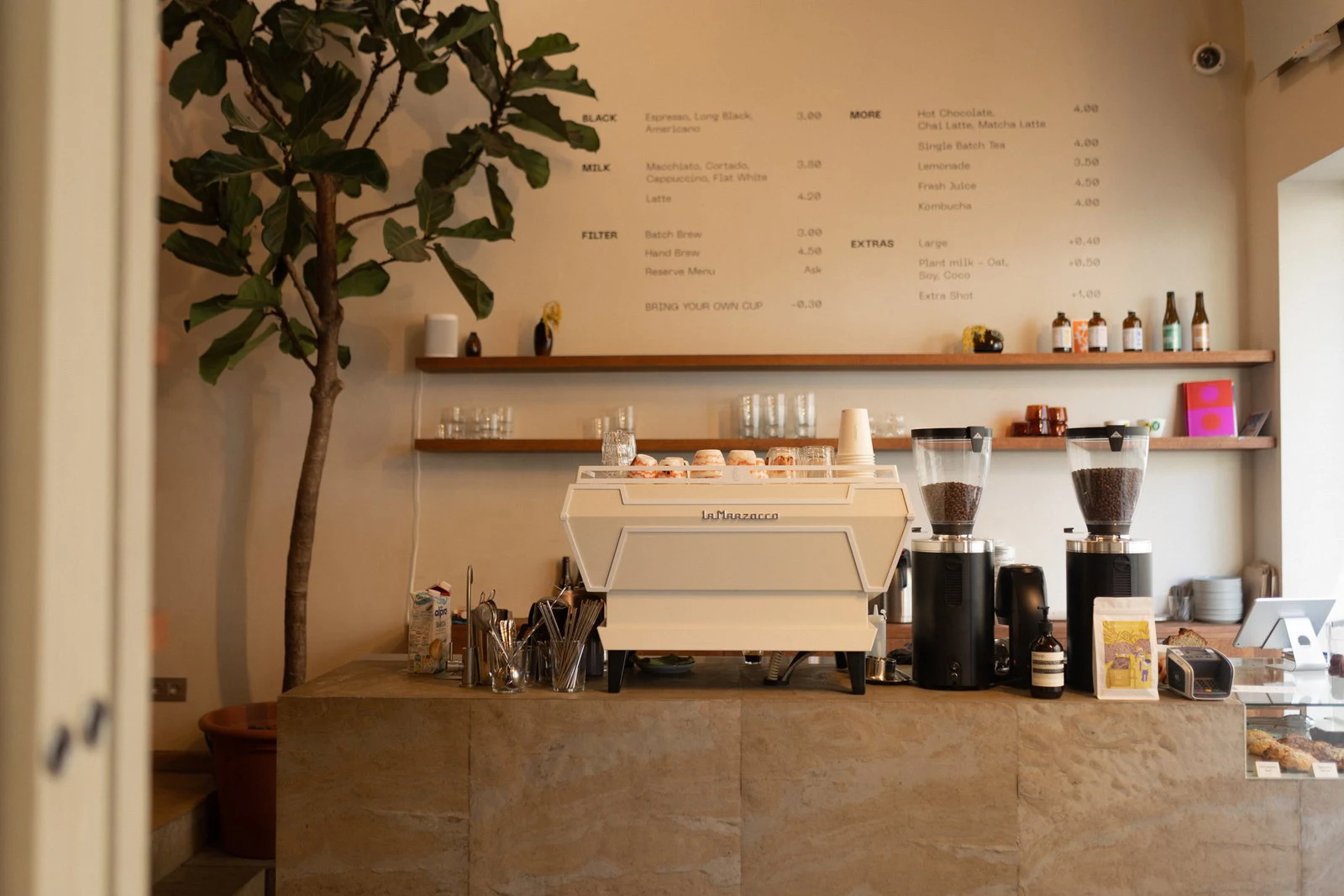
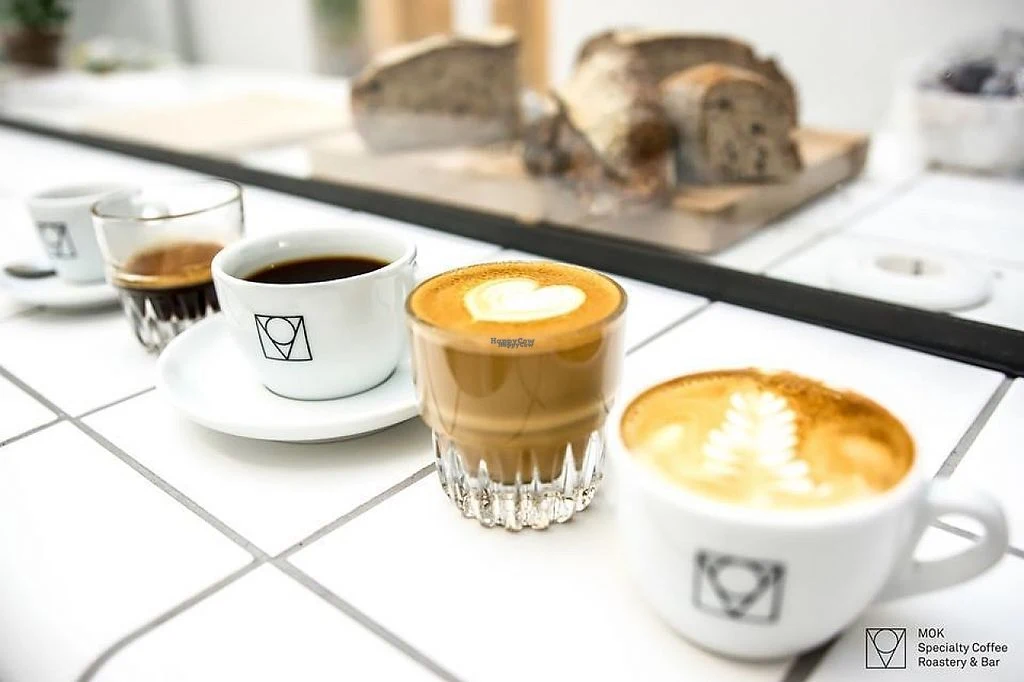
The menu is the argument here: two espresso options, four filter coffees and a rotating batch brew of the day, all from the same roastery. MOK roasts its own coffee, founded by Jens Crabbe in 2012, and this cafe is the flagship where that work meets a counter. Coffees are bought seasonally, kept traceable, and often come from producers the roastery returns to year after year, which is why the filter list changes while the character does not. The house talks about purity, integrity and quality; the useful version for a drinker is that the menu is built to show more than one expression of the same roasting mind. Roasting happens on a Probat UG22 with Cropster, and small batches are the constant. Past coffees have included a natural Ethiopian lot, a good clue to the fruit-forward, producer-led buying that suits both filter and espresso here.
The old gallery now works as a coffee room
The Brussels flagship took over a former art gallery at the end of 2016, and the space still makes sense as a long, open room rather than a cramped espresso stop. The bar is visible, the service is guided, and the retail shelves matter because beans are part of the visit rather than a souvenir by the till. Staff will steer the choice when four filters feel like too many, and that is usually the right way to use the counter. The back is set aside for laptops, so the front keeps the coffee-bar rhythm while the rear takes the longer stay. Custom-made speakers are part of the fit-out, which suits the polished but practical feel. It works for breakfast, for lunch, for beans and for a serious cup, all in the same flow.
Start with the batch brew, then look at the case
Order the batch brew of the day first if the aim is to understand MOK quickly. It changes with the coffees in rotation, it comes from the same seasonal buying as the slower filter menu, and it is the easiest way to taste the roastery without turning the counter into a consultation. If there is time, move to one of the four filters and let the bar choose by profile rather than by origin alone. Espresso drinkers get two options, which is useful here because lighter, traceable lots can pull very differently from one another. Food is not an afterthought: the cafe runs home-baked pastries alongside a seasonal vegetarian breakfast and lunch. Start with the coffee, then take whatever pastry is in the case that day, since the kitchen keeps the menu compact enough that the pairing stays clear.
Tags
Frequently asked questions
What should I order at MOK Coffee?
The batch brew of the day, which changes with the coffees in rotation and comes from the same seasonal buying as the slower filter menu. After that, choose one of the four filters and let the bar pick by profile rather than by origin. Two espresso options cover the rest.
Can you work there?
Yes. The back of the room is set aside for laptops, which keeps the front of the former gallery working as a coffee bar while the rear takes the longer stay. The room is long and open, the bar is visible, and beans and equipment are part of the visit rather than an afterthought.
Compare nearby places
| Venue | Type | Area |
|---|---|---|
| My Little Cup | Café | Madou / near Parc Royal |
| Wide Awake Coffee | Café | Brussels city centre |
| Bouche | Café | Upper Town |
| Kaffabar | Café | Place Rouppe / city center |
| Ducobu | Bakery | Waterloo |