Why go
Local grain, stone-milled, slowly fermented
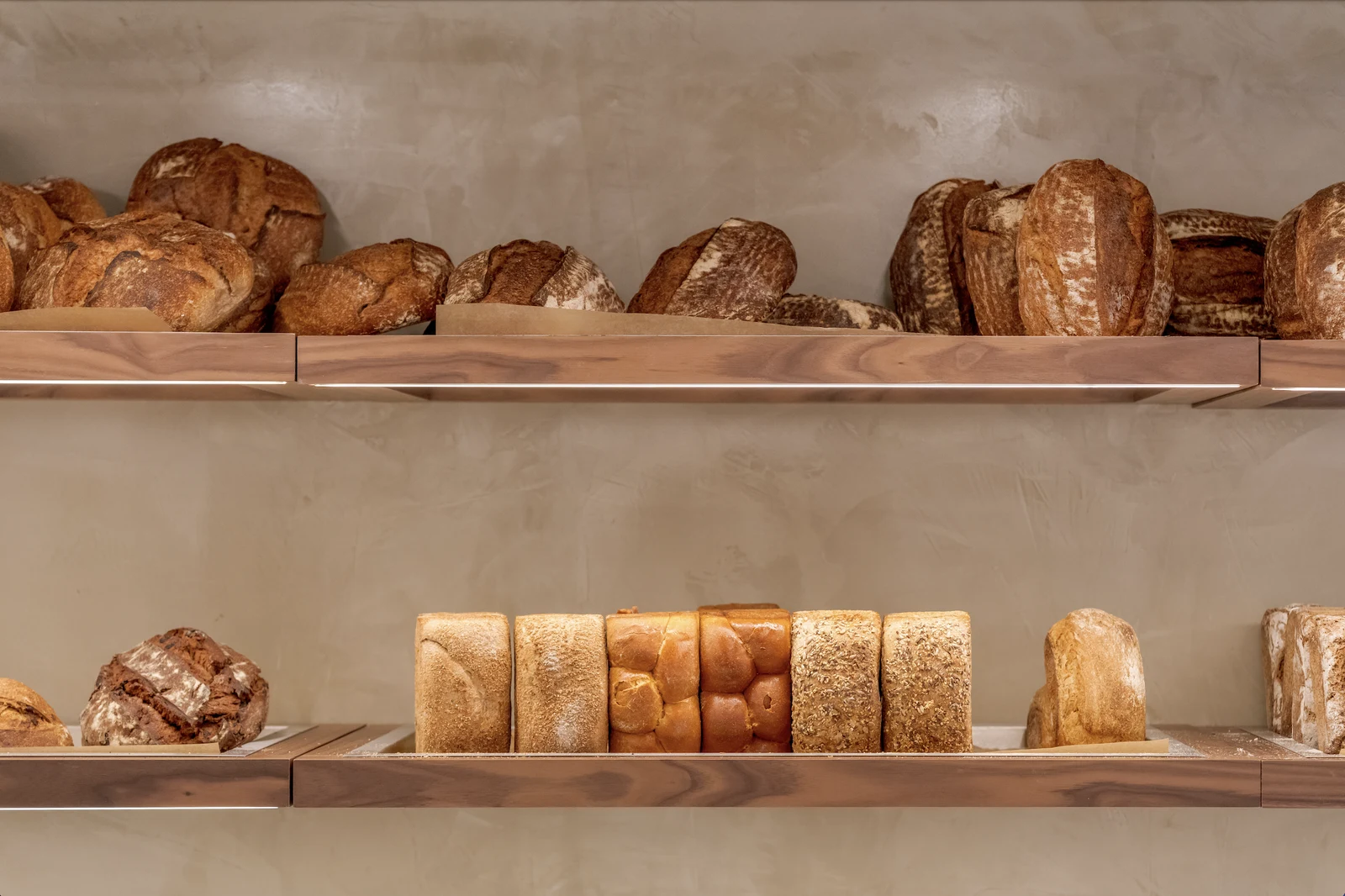
Bread comes first at Gleba, and the method is stated plainly: 100% local cereals, milled in house on stone millstones, then fermented slowly with massa velha for around 24 hours. The grain varieties are old ones chosen for how they grow in Portuguese soil, the milling happens on site, and the long fermentation is what gives the loaves their character. The name the bakery gives itself, Moagem e Padaria, mill and bakery, is accurate rather than decorative. That sequence is the whole argument of the place, and it is settled before you reach the pastry case, the coffee or the grocery shelves. Sourdough culture is the reputation the bakery rests on, and everything else in the shop follows from it.
A counter that works like a bakery, not a cafe
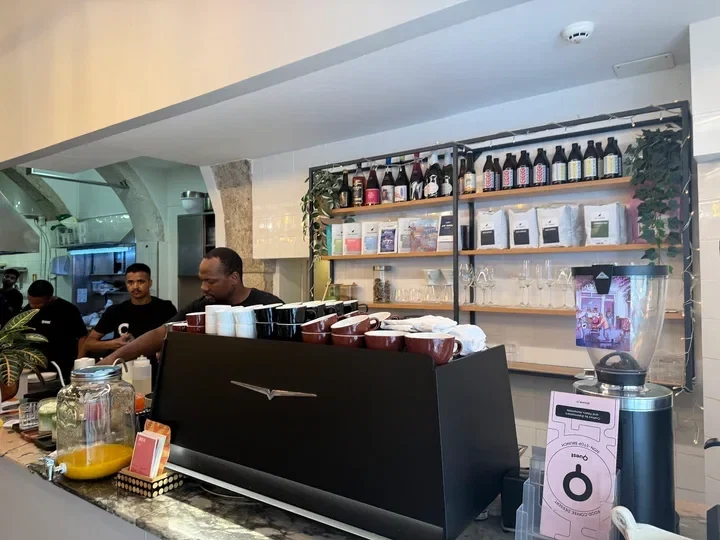
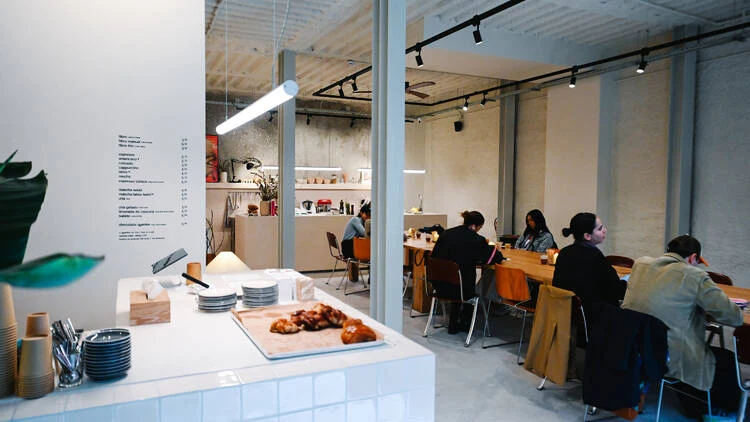
The visit is bakery retail with cafe extras rather than the other way round. Bread and pastry lead, a small mercearia of pantry goods sits alongside, specialty coffee, teas and infusions are there for anyone eating in, and toasts cover the prepared-food end. The pastry side is no afterthought either, with croissants, brioche, buns, cookies and cakes sharing the case with the loaves. The rhythm is counter-led: you look, you point, and you leave with more than you planned. It rewards a slow read of the shelves, because the range runs from large loaves and sliced breads through focaccias and croissants to honey, jams, preserves, cheeses, butters, oils and flours milled from the same grain that goes into the bread.
Start with the focaccia, then build the bag
Begin with the bread and let everything else follow. The named items worth looking for are the mini focaccia with olive oil and rosemary, the pao nordico de centeio, the milk bun, the pao de queijo, the biscoitos sable Breton and the granola multifrutos secos. A sensible order goes savoury first, so a rosemary and olive-oil focaccia or a pao de queijo to eat now, then a milk bun or a sable Breton biscuit for later, then a loaf of the sourdough that started the whole thing. If the visit is meant to stock a kitchen rather than a breakfast, the flours, jams and preserves on the mercearia shelves are a direct extension of the same milling and fermentation work.
Tags
Frequently asked questions
What makes the bread at Gleba different?
Three things, all of them stated by the bakery: 100% local cereals, stone milling done in house, and slow natural fermentation with massa velha over roughly 24 hours. The grain varieties are old ones grown in Portuguese soil, so the flour is milled on site rather than bought in, and the long ferment sets both crumb and flavour.
What should I order at Gleba?
Start savoury with the mini focaccia of olive oil and rosemary or a pao de queijo, then add something sweet such as the milk bun or a sable Breton biscuit. A loaf of the sourdough is the obvious take-home, and the pantry shelves add honey, jams, preserves and flours milled from the same grain.
Compare nearby places
| Venue | Type | Area |
|---|---|---|
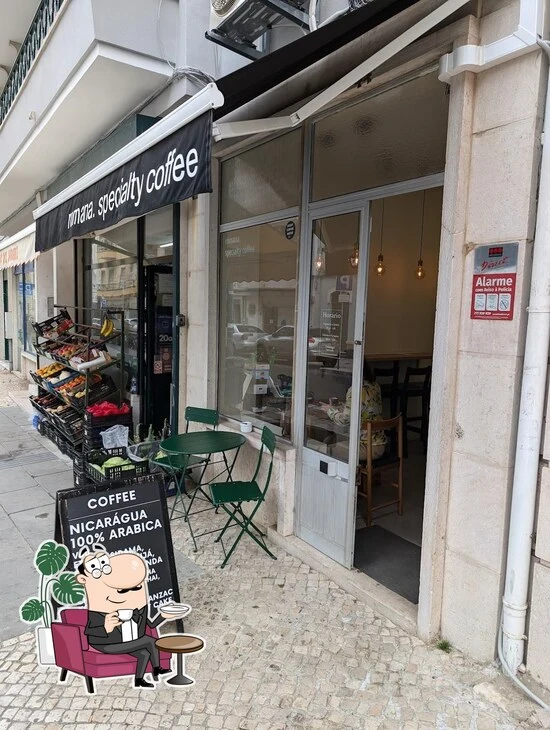
| romana. specialty coffee | Café | Entrecampos |
| LENA Specialty Coffee | Café | Saldanha |
| Lugar Nenhum | Café | Anjos |
| AMUN CAFÉ | Café | Santo António |
| Copenhagen Coffee Lab & Bakery | Café | Príncipe Real |