Why go
Ice cream made on the premises since 1937
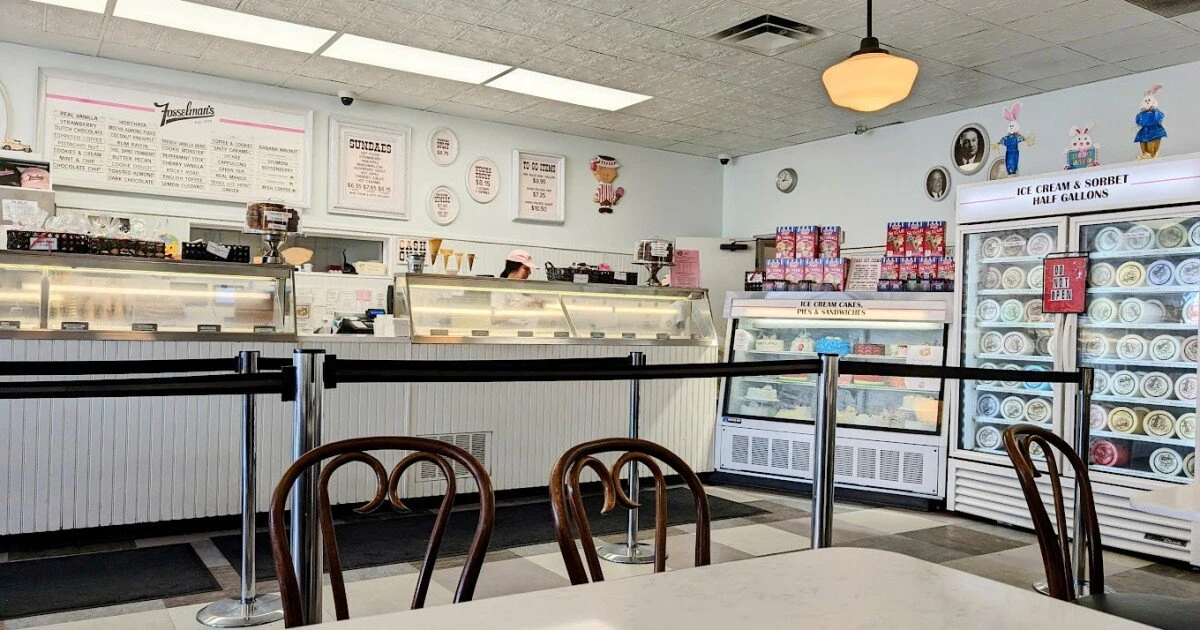
Everything in the freezer case at Fosselman’s is made in the building behind it. The company dates to 1937 and the family’s ice cream story runs back to 1919, which makes this a working ice cream plant with a shop attached rather than a scoop counter buying tubs in. The present company started in South Pasadena before settling in Alhambra, and it has stayed in the family for three generations, with two brothers running it since the 1980s. That production identity matters, because the Alhambra address is the home base of a manufacturer that also sells wholesale, so the counter is attached to the churns rather than supplied by them.
An old-fashioned counter that reads its neighborhood
The room is old-fashioned in the literal sense, a local dessert stop where the product, the counter, and the family name carry the visit without any theming. What makes it specific is the flavor list. Alongside the American classics of chocolate, vanilla, and strawberry, the company developed taro, lychee, and ube for Alhambra’s largely Asian population, and the case has also run to horchata, Oaxacan chocolate, red bean, black sesame, and matcha green tea. That is a historic business adjusting its freezer to the street outside, which is rarer than it sounds. Seasonal flavors widen it further, with fresh peach, sweet corn elote, and watermelon sorbet appearing when they make sense.
Order the milkshake, then compare a scoop
Milkshakes are the order Fosselman’s is best known for, and they are worth starting with because they show the ice cream at its plainest, thick enough to taste the dairy rather than the syrup. Then take a scoop and compare: a classic on one side, taro, ube, or lychee on the other, which is the fastest way to understand what this place actually is. Soft serve is the newer part of the lineup, added in 2015 along with soft serve custard, so it sits beside the traditional scoops rather than replacing them. If a seasonal flavor is up, take it over a standard; the fresh peach and the sweet corn elote are the ones worth changing your order for. A shake, a scoop, and something seasonal is the full picture of the place in three servings, and it is worth eating them in that order.
Tags
Frequently asked questions
What should you order at Fosselman’s Ice Cream?
A milkshake first, since it is what the shop is best known for and it shows the ice cream plainly. Then take a scoop and compare a classic with one of the Alhambra flavors: taro, ube, or lychee. Soft serve and frozen custard, added in 2015, sit beside the traditional scoops, and a seasonal flavor like fresh peach is worth switching for.
Does Fosselman’s make its own ice cream?
Yes, all of it, on the premises in Alhambra. The company dates to 1937, the family’s ice cream story reaches back to 1919, and it has stayed in family hands for three generations. It sells wholesale as well as over the counter, so the shop is the front of a working ice cream plant rather than a retail outlet buying tubs in.
Compare nearby places
| Venue | Type | Area |
|---|---|---|
| Modu Cafe | Bakery | Highland Park |
| Mandarin Coffee Stand | Café | South Lake District |
| Crepes de Paris | Bakery | — |
| Badash Bakes | Bakery | Old Pasadena |
| CAR Artisan Chocolate | Bakery | West Central |