Why go
Stone-milled grain, then everything else
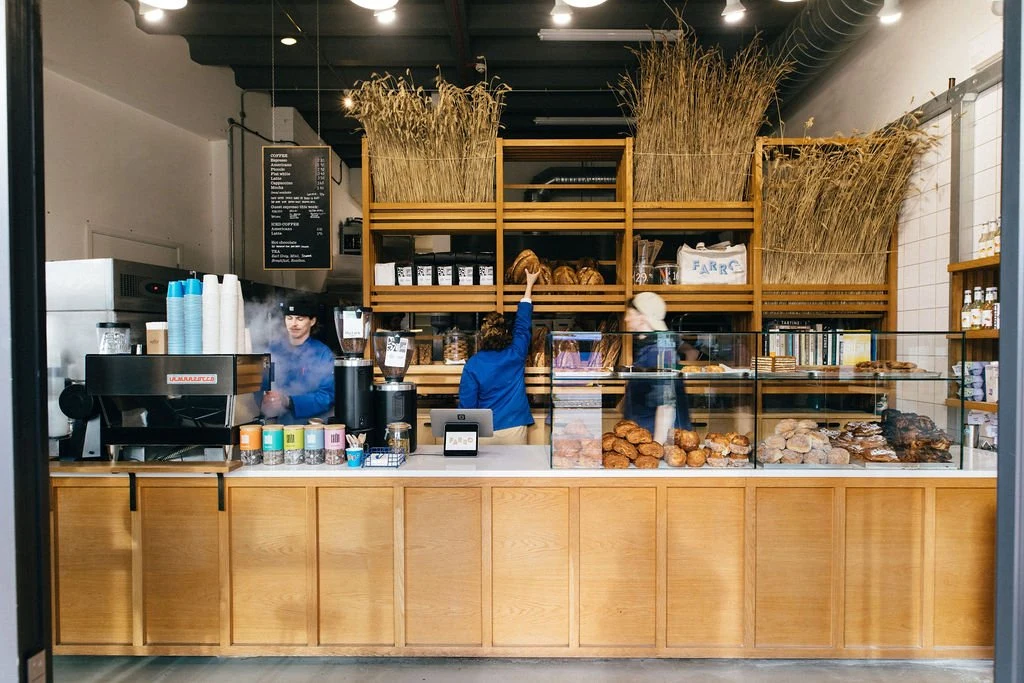
Farro mills its own flour, and that decision sits underneath everything the counter sells. Stone-milling keeps the germ and bran in the flour, carrying flavour, nutrition and character that roller-milled flour loses, and the grain comes mostly from South West farmers who work without chemicals and put soil health first. The bread is built on a natural sourdough culture, or small amounts of yeast, with long fermentation for flavour and keeping quality.
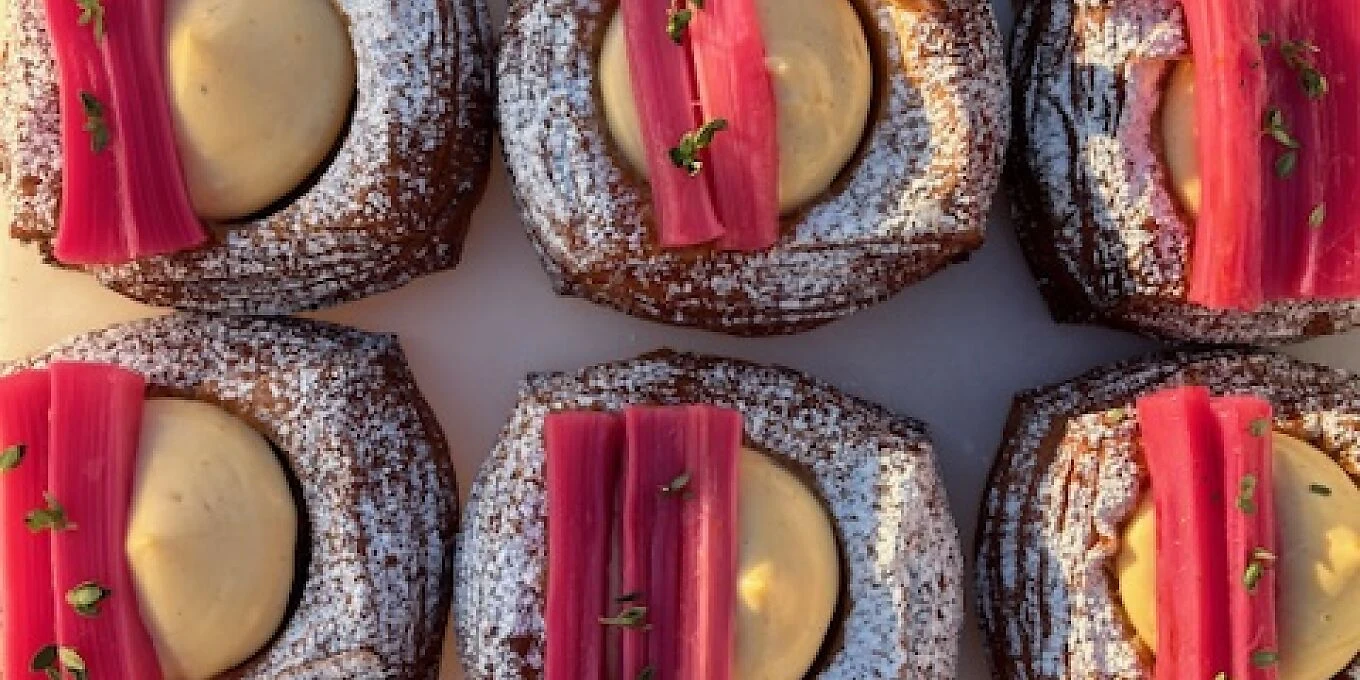
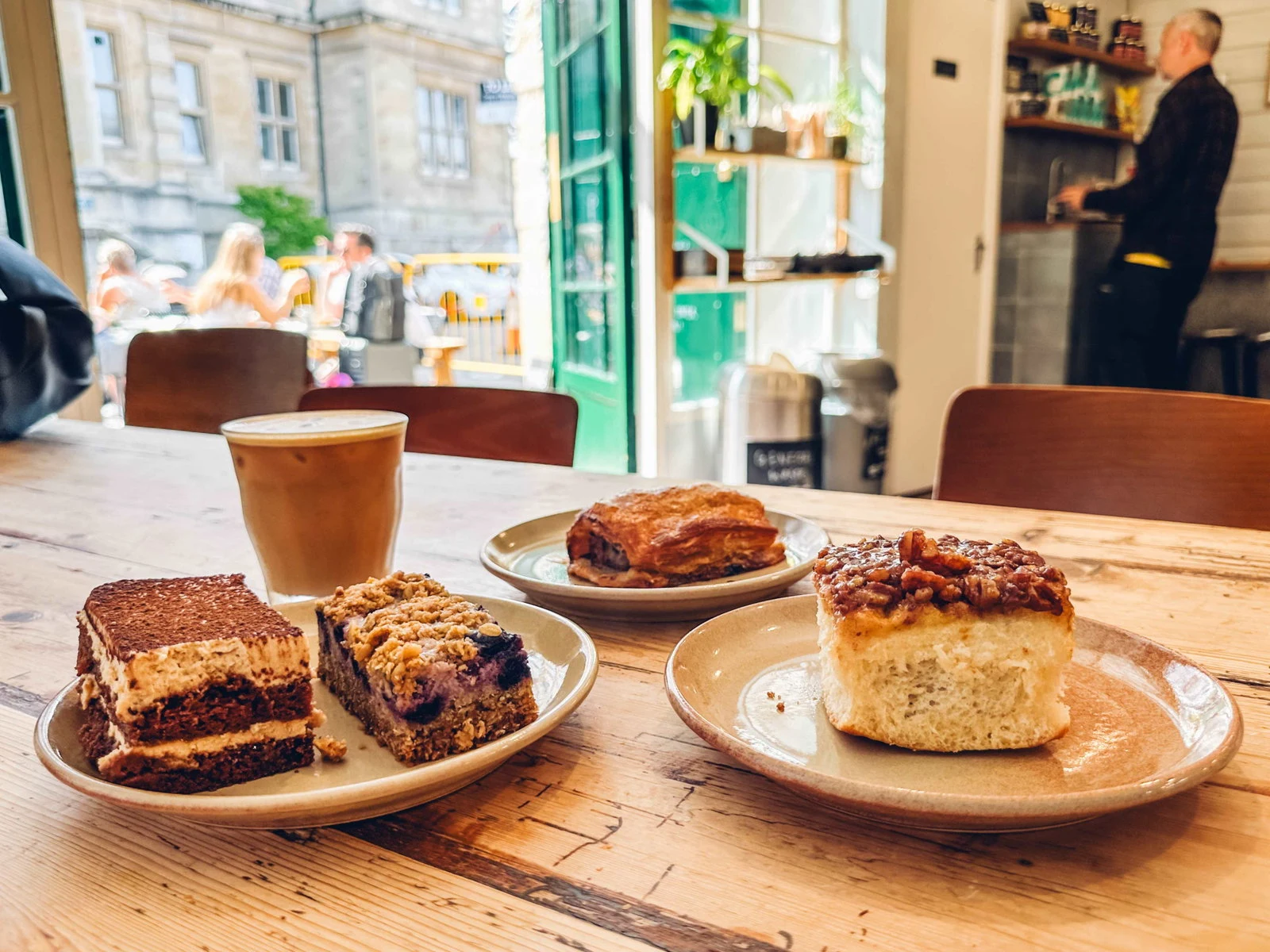
House White Bread and an Emmer Rosemary loaf show the range in plain terms. The pastry counter follows the same logic, changing with the season and leaning on local and regional produce: croissants laminated with 27 layers of cultured butter, pastel de nata made with freshly milled local grain and local organic dairy, plus babka buns, cinnamon buns, spiced buns, cheddar cheese scones, madeleines and canelé de Bordeaux.
A counter with a queue behind it
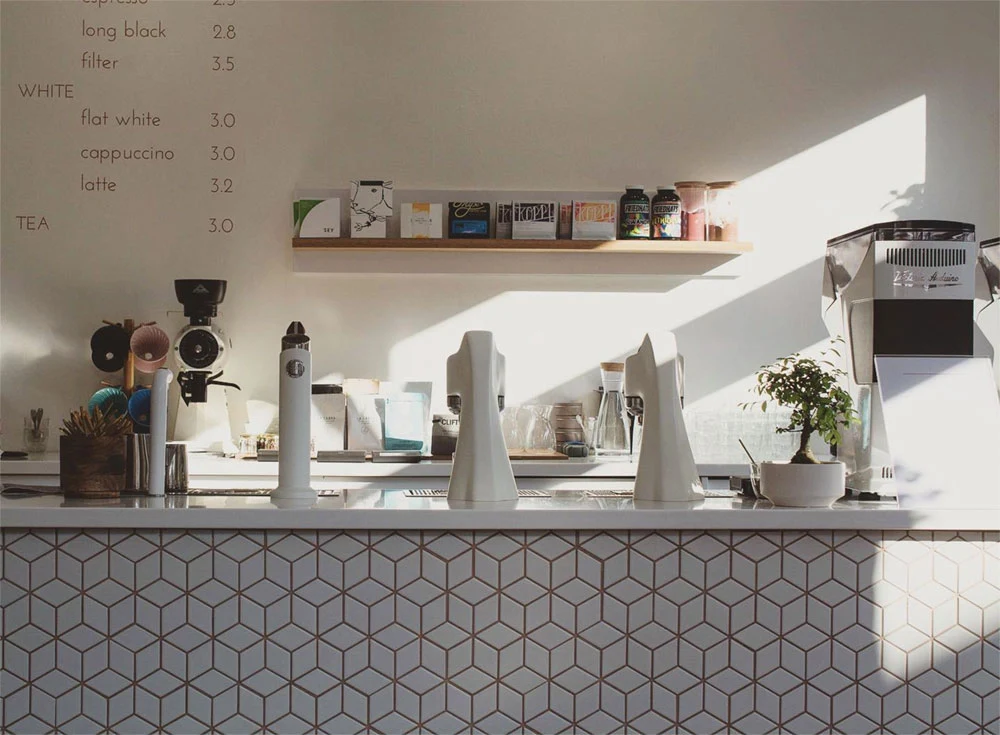
Farro works as a Bristol bakery-cafe with citywide pull rather than a corner shop, and the queue is part of the format. On weekend mornings people wait at the till while others eat pastries on the front steps outside, and the pastel de nata regularly runs out. Inside, the room is minimalist and suited to a coffee with a bun or a quick lunch rather than a long sitting.
Coffee is treated as craft rather than accompaniment. Farro works closely with Triple Co Roast to select and roast its house espresso, and the people serving it are trained in extraction, roast profiles, origin and production. The bakery also trades beyond the shopfront at a farmers market, which is a useful second route to the same bread.
Nata first, then think about bread
Begin with the pastel de nata if there is one left. Farro makes it more than a generic custard tart: freshly milled local grain in the pastry and local organic dairy in the custard, and a habit of selling out early enough that it doubles as a first-visit test. From there, the croissant is the clearest statement of the viennoiserie, with 27 layers of cultured butter behind its open texture.
For a second pastry, go denser or sweeter with babka, a cinnamon or spiced bun, a madeleine or a canelé de Bordeaux, and take a cheddar cheese scone if the order needs something savoury. Then buy bread on the way out, which is the part of the operation the milling actually exists for. A good order runs nata or croissant now, a second pastry to sit with, and a loaf to take home.
Frequently asked questions
What should I order at Farro?
The pastel de nata is the first order, made with freshly milled local grain and local organic dairy, and it often sells out. The croissant, laminated with 27 layers of cultured butter, is the other benchmark. Add a babka or a canele de Bordeaux as a second pastry, then buy a loaf to take home.
Who roasts the coffee at Farro?
Farro works with Triple Co Roast, which selects and roasts the house espresso to a custom brief rather than supplying a standard blend. Staff at the counter are trained in extraction, roast profiles, origin and production, so the coffee is treated as part of the craft rather than something to accompany the pastry.
Compare nearby places
| Venue | Type | Area |
|---|---|---|
| Hilda Bakery | Bakery | Whiteladies Road |
| Hart’s Bakery | Bakery | Temple Meads |
| Sweven Coffee | Café | Southville |
| Landrace Bakery | Bakery | Walcot Street |
| Pipit Bakery | Bakery | Bradford-on-Avon |