Why go
Piedmontese pastry from a village laboratory
The shop and the laboratory sit side by side in San Sebastiano Da Po, which tells you how Fabrizio Galla works: everything sold at the counter is made a few metres behind it. Galla was born in Chivasso in 1973 and grew up in the village, where his parents ran a restaurant for more than thirty years, and after a run of Italian laboratories he opened his own shop and adjoining lab here in 2010.
The identity is Piedmontese rather than generic. Traditional regional desserts, confectionery, chocolates, mignons, sweet and savoury pastries, gelato, cakes, leavened doughs, spreadable creams, cookies, preserves and panettone all sit within one range. The house holds Gambero Rosso's Tre Torte for 2026 and belongs to Relais Desserts, the Accademia Maestri Pasticceri Italiani and APEI.
A counter that runs on chocolate and cake
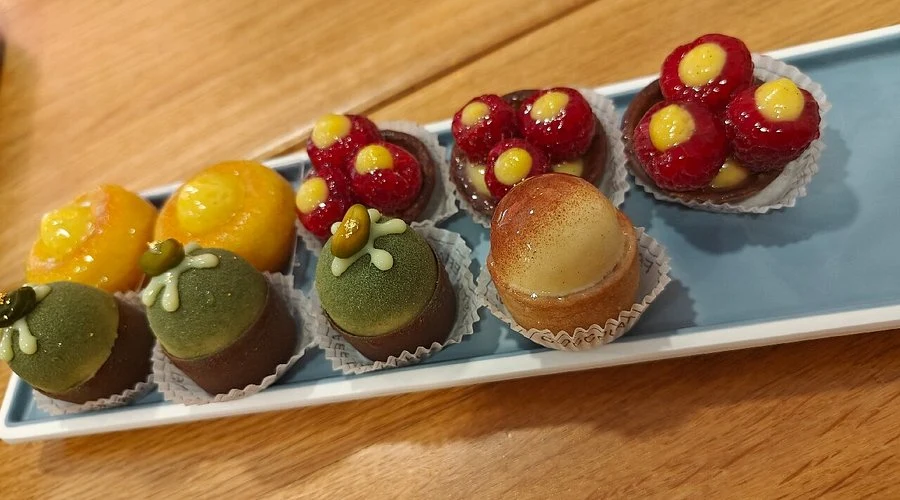
The counter is organised around pastry choices rather than a menu. Chocolate is the most visible thread, with tavolette in white, gianduia, milk, 70 per cent and 75 per cent dark, and the same chocolate work runs through the cakes and the mignons.
Torta Felicità shows the technical direction clearly: 70 per cent dark chocolate mousse, Santo Domingo chocolate sponge, Madagascar and Tahiti vanilla cream, gianduia cream and a chocolate crunch, assembled into one cake. Seasonal leavened work matters as much, with panettone at Christmas and colomba at Easter, the latter in a classic version and a pear-and-chocolate one. The shop is browsing territory: cakes, individual pastries, chocolates, gelato and giftable sweets in a single room.
Order the Jessica cake, then mignons
Start with the Jessica cake if you want one of the clearly named house cakes, then use mignons to taste more of the range in smaller formats. Between them they cover the two ways Galla works, the composed cake and the miniature.
From there, follow the Piedmontese thread: regional desserts, chocolates, gelato and whichever leavened dough the season is running. If chocolate is the reason for the visit, build around the gianduia, milk, white and dark tavolette, then add a spreadable cream or a jar of preserve to take home. The range is deep enough that a first visit works better as a small selection than as a single purchase, which is also how the counter is laid out.
Frequently asked questions
What should you order at Fabrizio Galla?
Start with the Jessica cake, one of the named house cakes, then take mignons to sample more of the range in small formats. If chocolate is the reason for the visit, the tavolette run from white and gianduia to 70 and 75 per cent dark, and panettone or colomba covers the season.
What is Fabrizio Galla known for?
Piedmontese pastry made in a laboratory attached to the shop in San Sebastiano Da Po, which Galla opened in 2010. The range covers regional desserts, chocolates, mignons, gelato, cakes and leavened doughs, and the house holds Gambero Rosso's Tre Torte for 2026 and membership of Relais Desserts.
Compare nearby places
| Venue | Type | Area |
|---|---|---|
| DAPPER Coffee | Café | Vanchiglia |
| Spoto Bakery | Bakery | Borgata Vittoria |
| Perino Vesco | Bakery | Centro |
| ARTIFACT | Café | Centro |
| Ficini | Bakery | San Salvario |