Why go
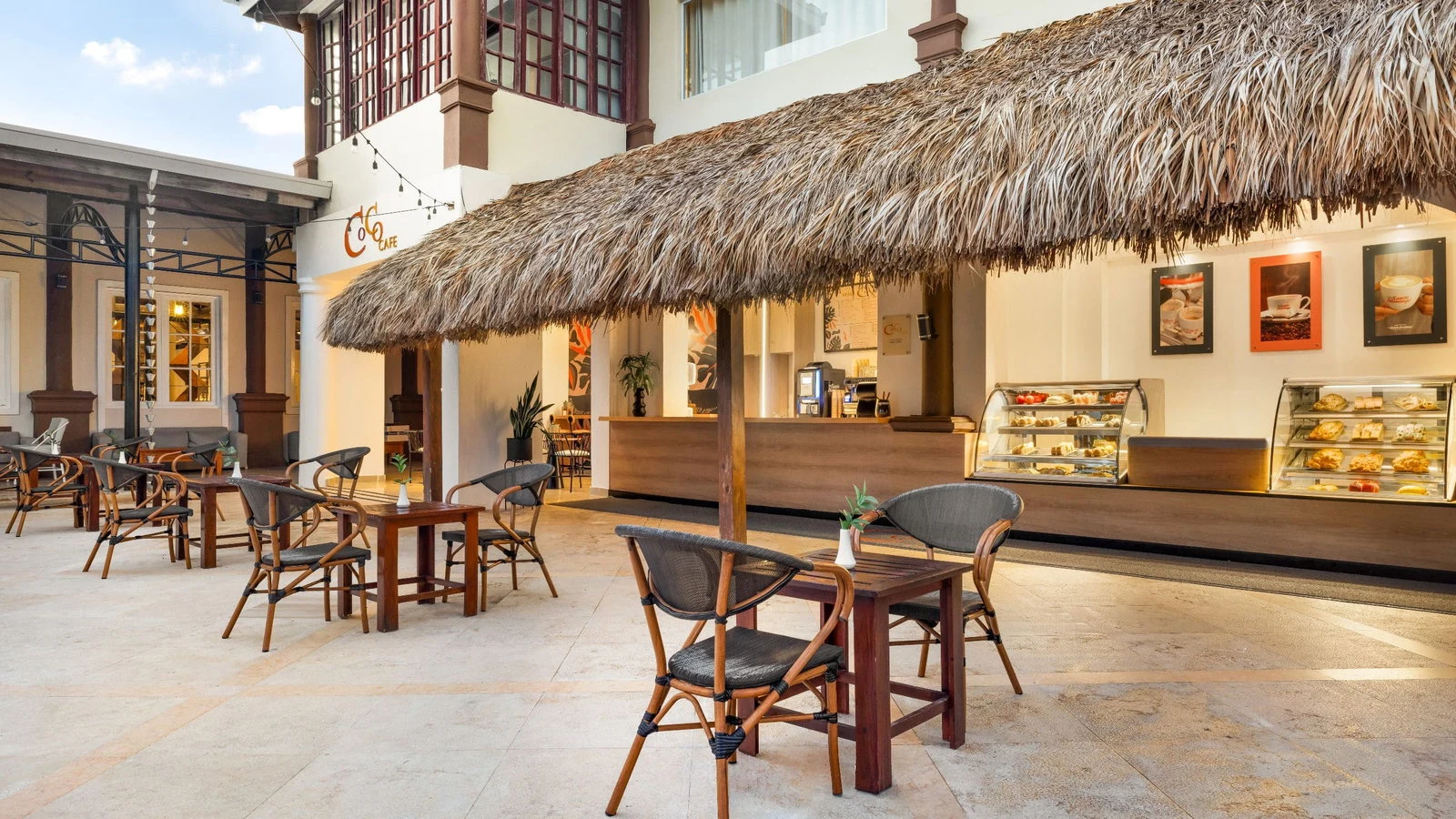
Lobby cafés in Punta Cana have a particular sound: suitcase wheels on polished floors, espresso machines cutting through the air-conditioning, families regrouping after the beach, and guests using a short pause as part of the day rather than a formal dining event. Coco Café belongs to that resort-café category, where the room has to work across many tempos: early coffee, mid-afternoon sugar, a quick plate before a car ride, or a quiet reset between pool and dinner.
That matters in a destination where many restaurants are built around evening theatre. Punta Cana’s resort dining scene often splits between à la carte specialty rooms, poolside grills, and casual all-day counters. In that mix, the café role is practical and revealing. It shows how a hotel handles the small intervals of travel, not just the staged dinner. For a broader read on the area’s dining spread, Our full Punta Cana restaurants guide maps the resort-heavy field, while Our full Punta Cana hotels guide gives the hospitality context that shapes these formats.
A resort café judged by rhythm, not ceremony
Coco Café is not the part of Punta Cana dining where awards, chef biographies, or tasting formats do the heavy lifting. Its usefulness comes from the category itself. A café in a resort lobby has to absorb uneven demand, serve mixed groups, and make sense at odd hours of a holiday schedule. That puts it closer to a hotel amenity with culinary consequences than to a destination restaurant competing for a single dinner booking.
The ingredient question here is about dependability rather than provenance theatre. In the Dominican Republic, coffee, tropical fruit, cacao, sugar, and bakery culture all sit close to daily life, but resort cafés often translate those raw materials into familiar international formats. The point is not to expect a forensic lesson in sourcing. It is to notice whether the café supports the day with credible basics: coffee service, sweets, light snacks, and grab-and-go convenience. In a city where many visitors dine within hotel grounds, those smaller choices shape the actual eating experience as much as the headline restaurants.
That separates it from Punta Cana venues built around a fuller meal. Bamboo at Tortuga Bay sits in a more composed hotel-restaurant lane, while Blue Grill + Bar in Cap Cana points toward the marina-and-grill side of the region. Bao Restaurant and comparison-room formats such as Himitsu or Portofino speak to the resort appetite for themed dinners. Coco Café occupies the lower-friction space between those moments.
Where Punta Cana's casual dining does the real work
Resort cafés are easy to underrate because they rarely produce the dramatic meal. Yet in Punta Cana, the casual tier often determines whether a stay feels smooth. A good lobby café reduces the need to over-plan: children can be fed without turning every snack into a reservation, coffee can anchor the morning, and late arrivals have a softer landing before the first proper dinner. That is a logistical function, but it has culinary weight when guests spend several days inside a large resort environment.
Nearby category comparisons clarify the role. Barefoot Grill represents the beach-and-poolside end of casual dining; Bamboo Restaurant suggests a more complete seated meal; Rosewater, Market Café, Oceana, Himitsu, and Portofino reflect how Punta Cana resorts often divide appetite by setting and cuisine cue. Coco Café is the interval format: less about a long table, more about access, speed, and repeat use.
That repeat-use quality is also why sourcing language should stay grounded. In the Caribbean, menus can lean on imported staples even when local agriculture is close at hand. The better resort cafés use regional signals without turning them into costume: coffee that feels connected to the island’s daily habit, fruit and pastry that suit the climate, and sweet formats that make sense after heat rather than heavy dining. Coco Café should be read through that lens: a café supporting the mechanics of a Punta Cana stay, not a restaurant asking for a night of its own.
How to place it within a Punta Cana itinerary
The sensible use case is daytime and transitional. Pair Coco Café with the rest of the resort schedule rather than treating it as the main event. For a fuller restaurant day, guests can compare it with ATL, Anani Restaurant in Higuey, or further Dominican dining references such as Ajualä in Santo Domingo, Aguají in Sosua, BLoved Restaurant in Bayahibe, and Carey in Samaná. Those links show how different Dominican destinations express dining through city kitchens, coastal hotels, and resort infrastructure.
Travelers building a complete Punta Cana plan should separate café utility from evening ambition. Drinks-focused nights belong in Our full Punta Cana bars guide; excursions and cultural formats sit in Our full Punta Cana experiences guide; wine planning, where relevant, belongs in Our full Punta Cana wineries guide. For international contrast, Jōdo Saké Bar in Los Angeles and Onigiri Time in Pasadena show how tightly defined specialist formats differ from the flexible, all-day logic of a Caribbean resort café.
The editorial verdict is simple: Coco Café makes sense when judged by frequency, convenience, and the way it supports a resort day. Do not ask it to carry the weight of Punta Cana’s dinner scene. Use it for the pauses, the coffee, the light bite, and the moment when the schedule needs less friction.