Why go
Piroshki do the daily work
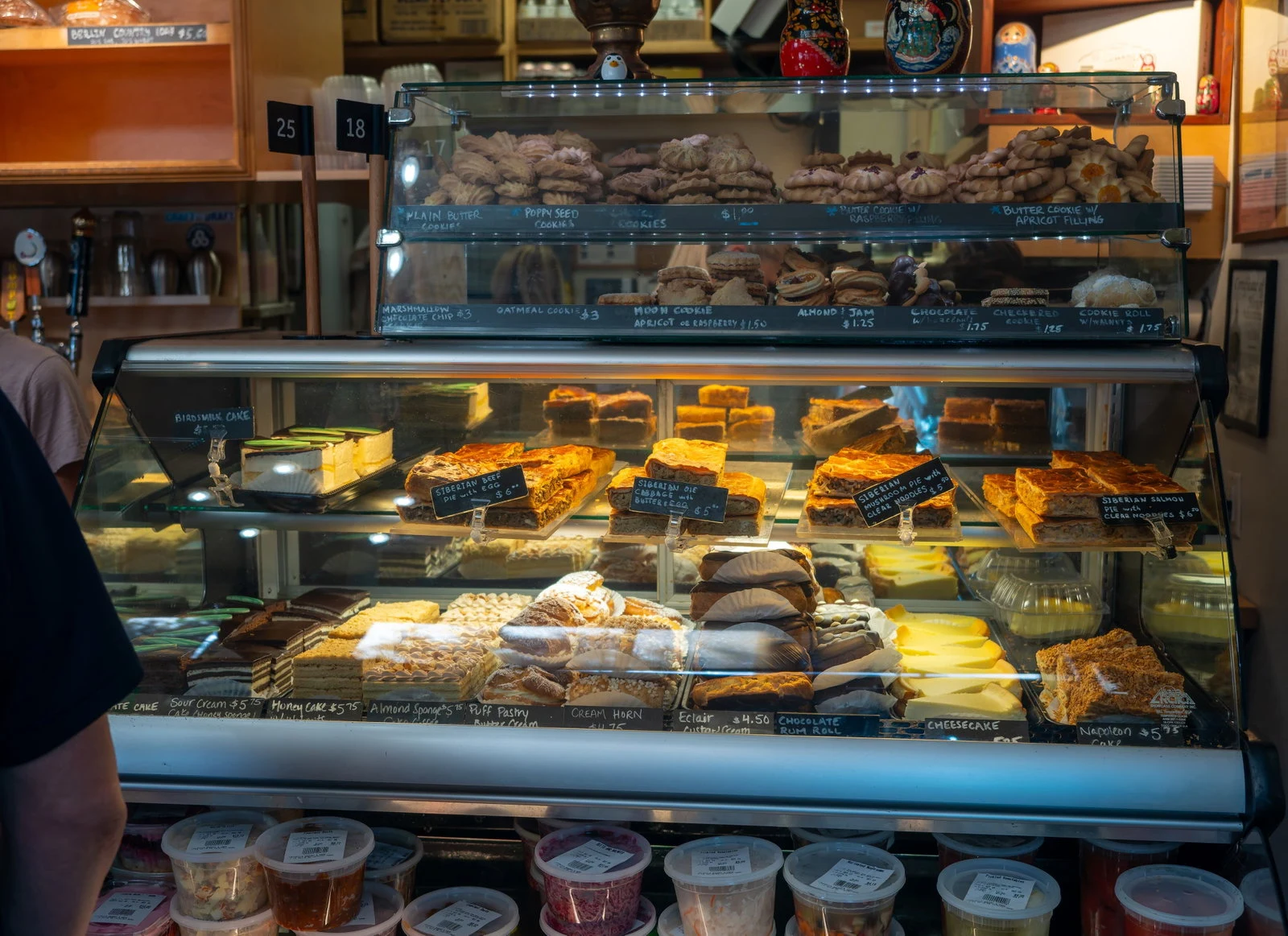
Piroshki anchor the counter here, which is what separates a Russian bakery from a cake shop. They sit beside Russian pies, Napoleon and honey cake as the core of the case, and they are the reason the place reads as savoury as it does sweet. Beef and Gorgonzola is the filling regulars name most often, and the Siberian pie with beef and egg runs in the same lane.
Around that, Cinderella’s range is breads, pastries and cakes made from scratch and baked daily, with Russian recipes kept going by the same family since 1953. Strawberry and cheese turnovers and a strawberry custard croissant show the laminated side of the case, so the shelves run from old-Russian cake traditions to filled pastry to substantial savoury bakes in one line.
Bakery counter, café menu, street-side tables
The café side extends past the case. There is a full menu of Russian appetisers, entrées, sides, soups and dumplings, eaten at street-side tables or carried home, and that hybrid is the point: bakery counter, casual café and off-premise meal source at once, with no dining-room formality attached.
The house describes what it does as honest, homestyle goodness, and a visit follows that rhythm. People come in for a pastry, order lunch, or pick up something to eat in Golden Gate Park a few blocks west. Nothing about the room asks for more ceremony than that. The same counter covers a pastry stop, a full lunch order and a box of baked goods to carry off, and the day moves through all three without changing gear.
Order the piroshki first
Start with piroshki, because everything else on the counter is easier to read once you have had one. Beef and Gorgonzola is the version to try first, and the Siberian pie with beef and egg is the natural follow-up for anyone who wants the filling-led side of the bakery rather than the sweet one.
For sweets, Napoleon and honey cake are the classic anchors, both the kind of layered, cream-set cakes the shop has been making longest. Add a strawberry and cheese turnover or the strawberry custard croissant if pastry is the focus. On the café side, pelmeni in chicken broth and lamb soup draw the most specific praise, and golubtsy and boiled dumplings round out the Russian comfort cooking that carries as much of this San Francisco bakery’s reputation as the cakes do.
Frequently asked questions
What should I order at Cinderella Bakery & Café?
Start with piroshki. The beef and Gorgonzola version is the one regulars return to, and the Siberian pie with beef and egg follows the same filling-led idea. For sweets, Napoleon and honey cake are the classic anchors, with strawberry and cheese turnovers if you want the laminated side of the case.
Is it a bakery or a café?
Both, and the two share one room. The case carries breads, pastries, cakes and piroshki baked from scratch daily, while the café menu adds Russian appetisers, entrées, sides, soups and dumplings such as pelmeni in chicken broth. Plenty of people order at the counter and eat at the street-side tables instead.
Compare nearby places
| Venue | Type | Area |
|---|---|---|
| Arsicault Bakery | Bakery | Richmond District |
| Joe's Ice Cream | Café | Richmond District |
| Hahdough | Bakery | NoPa |
| Pineapple King Bakery | Bakery | Inner Sunset |
| Jane The Bakery | Bakery | Lower Fillmore |