Why go
French pastry, built for a lobby counter
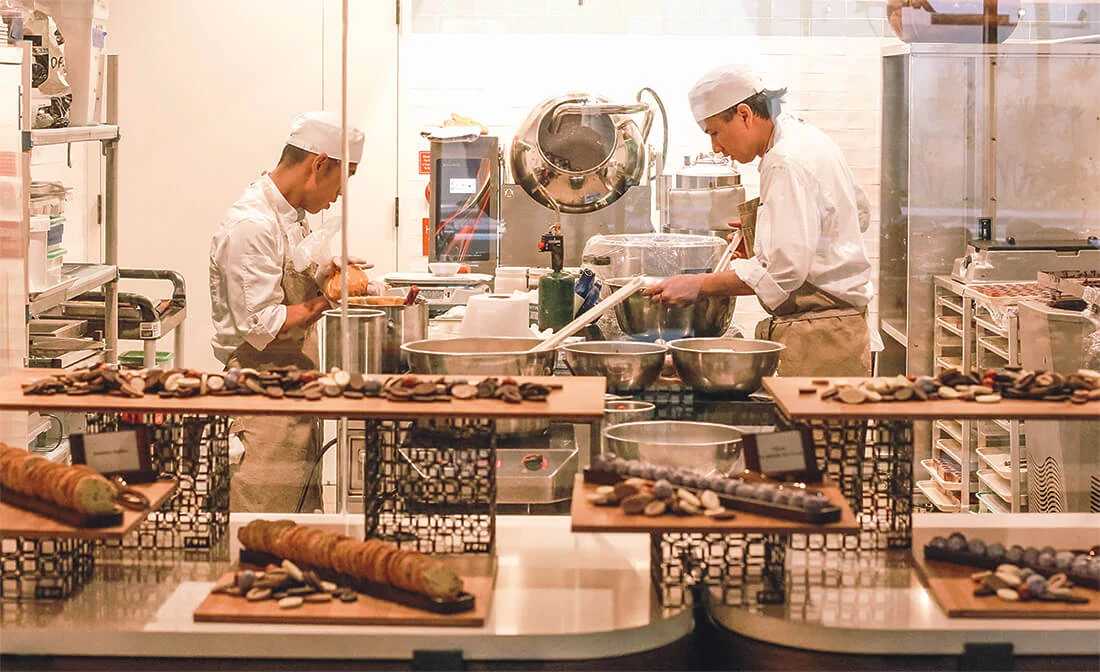
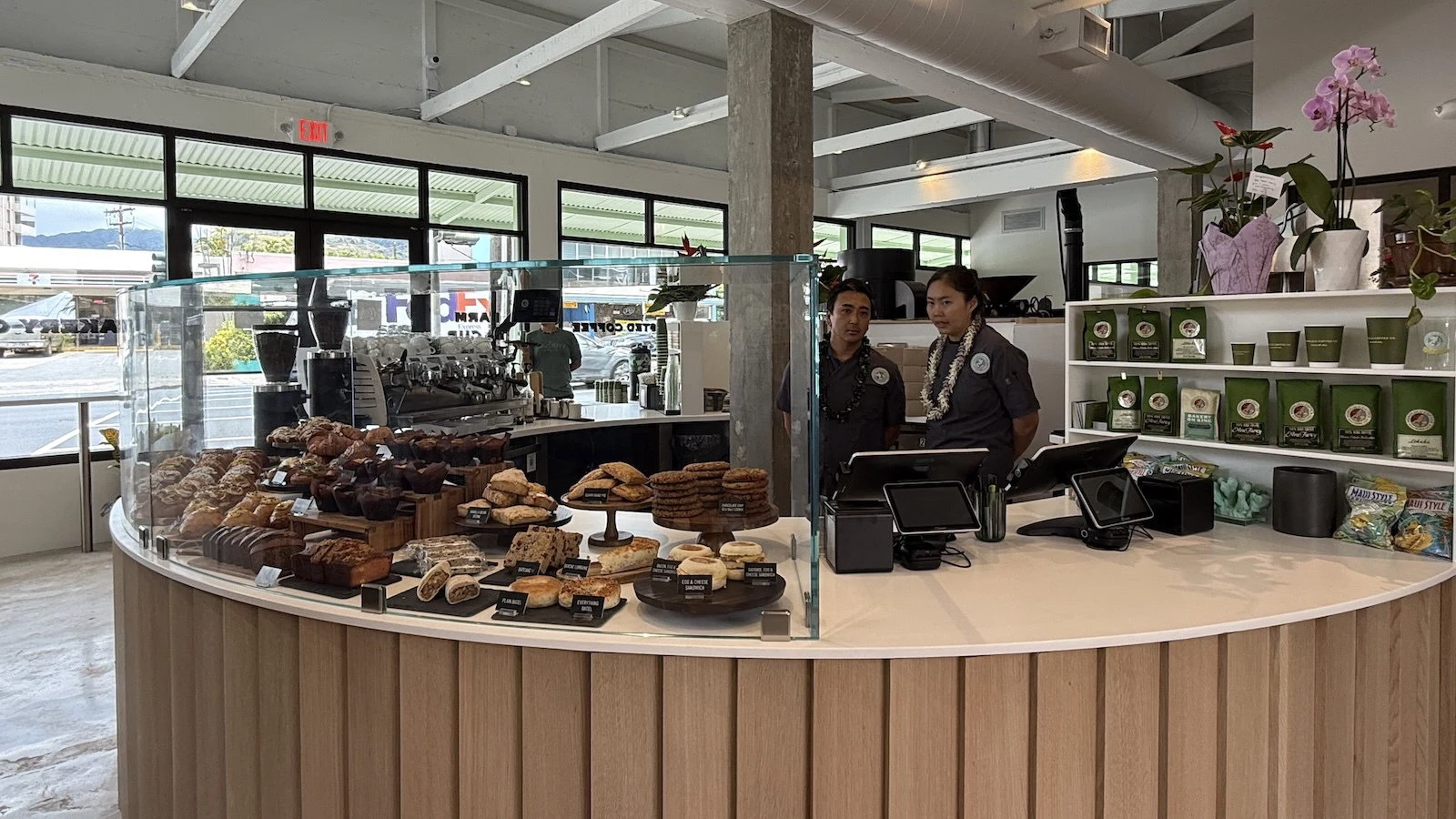
Croissants, chocolate cakes, sandwiches and coffee sit within a few steps of each other at Chee Hoo Patisserie, the French-inspired pastry counter in the main lobby of the Hilton Hawaiian Village in Honolulu. The programme runs on French sweet and savoury pastry rather than a long bread bench. Laminated work leads, croissants first, and the sweet side widens from there into chocolate cakes.
Sandwiches sit alongside them, which makes the counter more useful than a cake shop once the morning is already under way and a full sit-down meal is beside the point. Coffee completes it: a black coffee next to a sandwich is a common working order here, so the place reads as patisserie and quick brew stop at once. The scale is a compact case rather than a bakery with a public bench, so the craft is met where it is sold, in the lift of a croissant and the finish on a cake.
A counter made for the in-between hour
The room behaves like a hotel lobby bakery, which shapes a visit more than any decorative note. People pass through on the way to the beach, to a meeting point, to a room upstairs, or to the next part of the day, so the exchange stays direct: look into the case, choose pastry or sandwich, add coffee, move on.
Sitting inside the Hilton Hawaiian Village gives Chee Hoo a mixed audience. Hotel guests treat it as the near counter for breakfast pastry and coffee, while anyone else can use it as a practical Honolulu pastry stop when resort-side convenience is the point. Service is casual and quiet by design, with the case doing the main work.
Start with the croissant, then decide on cake
Order the croissant first. It is the clearest expression of the French-inspired side of the programme, and laminated pastry is where a counter like this has to show its hand: in the lift, the crumb and the way it eats beside coffee.
Later in the day, or when the order is for sharing, move to the chocolate cake. It gives the sweet side a richer, more dessert-led register, and it is the item to choose when pastry alone will not do. For something practical, a sandwich with black coffee is the working order, and it keeps Chee Hoo in its proper lane: a French-inspired patisserie counter where the right choice depends on the hour.
Frequently asked questions
What should I order first at Chee Hoo Patisserie?
Start with the croissant. Laminated pastry is where a French-inspired counter has to show its hand, and it eats well beside the coffee. Chocolate cake is the richer second choice, better later in the day or when the order is for sharing, and a sandwich with black coffee is the practical working order.
Does Chee Hoo Patisserie serve savoury food as well as pastry?
Yes. Alongside the sweet case of croissants and chocolate cakes, the counter carries sandwiches, which makes it useful once the morning is under way and a full sit-down meal is beside the point. Coffee sits with either route, so a sandwich and a black coffee works as a quick lobby lunch.
Compare nearby places
| Venue | Type | Area |
|---|---|---|
| Halekulani Bakery | Bakery | Waikiki |
| Royal Hawaiian Bakery | Bakery | Waikiki |
| Honolulu Coffee | Café | Waikiki |
| KAI COFFEE, HAWAII | Café | Waikiki |
| La Gelateria | Café | Ala Moana - Kakaako |