Why go
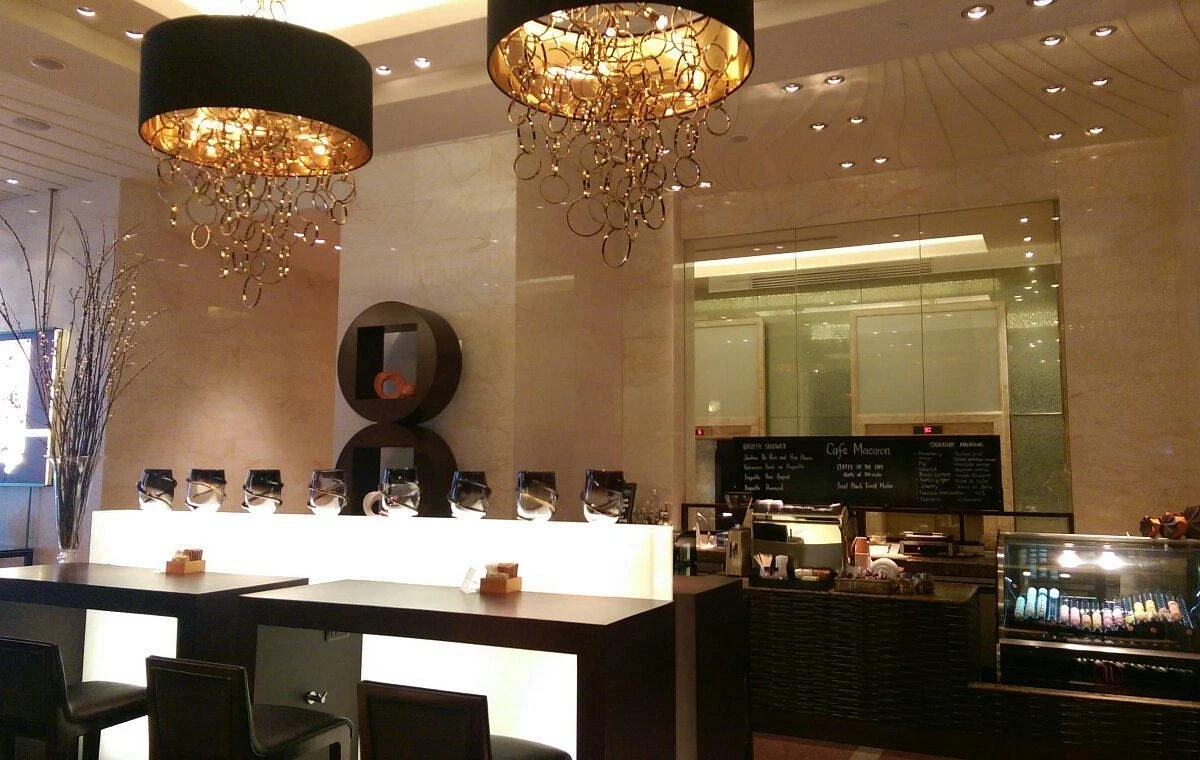
Macarons give the room its name, and at Fairmont Makati they come with a Filipino accent, French shells built around local flavours. The counter sits inside the hotel’s dining line-up as its patisserie and cafe: handcrafted pastries, homemade cakes, bakery items and gourmet sandwiches, ordered for a sweet pause or a light lunch rather than a full meal.
A pastry counter with a savoury half
Read the case as hotel patisserie rather than a standalone bakery. Homemade cakes carry the dessert weight, handcrafted pastries cover the smaller sweet order, and bakery items make the cafe useful for more than one signature. Gourmet sandwiches give the savoury structure, so the visit can go either way: a plate before the pastry, or straight to the sweet counter.
The macaron is the emblem the room is named for, and the Filipino-inspired versions are the reason to start there rather than with a cake. Everything else follows the hotel’s own categories, which run from light nosh to signature creations and sweet treats.
Where it sits inside Fairmont Makati
The hotel spreads its food and drink across several rooms. Spectrum handles the all-day dining, the Fairmont Lounge and the Long Bar cover the drinking and lounging, Mistral is the rooftop bar and Mirèio the Mediterranean kitchen. Café Macaron fills the cafe and patisserie slot, which is why the format is deliberately light: sandwiches, cakes, pastries and bakery items rather than a menu you sit down to for an hour.
The setting is contemporary and polished, closer to a modern hotel cafe than a rustic bakeshop. The kitchen draws on Filipino talent alongside international technique, and the macaron programme is where that meeting is most obvious.
How to order
Begin with a macaron, since the venue is named and positioned around it, then build outward. A homemade cake turns the stop into dessert; a handcrafted pastry or a bakery item keeps it small. If the visit needs something savoury first, a gourmet sandwich is core to the room rather than an afterthought, and it makes the cafe work as a light lunch.
The most useful order follows the counter’s own architecture: sandwich for the savoury, pastry or bakery item for the bite in between, cake and macarons for the patisserie centre. It is a stop rather than a destination, and it is best judged on the macarons.
Frequently asked questions
What should I order at Café Macaron?
Begin with a macaron, since the room is named and positioned around it, then build outward. A homemade cake turns the stop into dessert, while a handcrafted pastry or a bakery item keeps it small. A gourmet sandwich is core to the counter rather than an afterthought if the visit needs something savoury first.
What is Café Macaron known for?
Filipino-inspired French macarons, made at Fairmont Makati’s cafe and patisserie. Around them the counter runs handcrafted pastries, homemade cakes, bakery items and gourmet sandwiches, which makes the room a light lunch as easily as a sweet stop. It fills the cafe slot in a hotel that also runs Spectrum, Mirèio and the Long Bar.
Compare nearby places
| Venue | Type | Area |
|---|---|---|
| Yardstick | Café | Legazpi Village |
| Single Origin | Café | Bonifacio Global City |
| The Fat Seed Cafe + Roastery | Café | BGC |
| Oasis Garden Cafe | Café | Parañaque |
| Crema & Cream Coffee Roasters | Café | Diliman |