Ognissanti

Café Ginori at The St. Regis Florence

CafeHotel CafeAbout $45 a head
Café Ginori at The St. Regis Florence

Why go

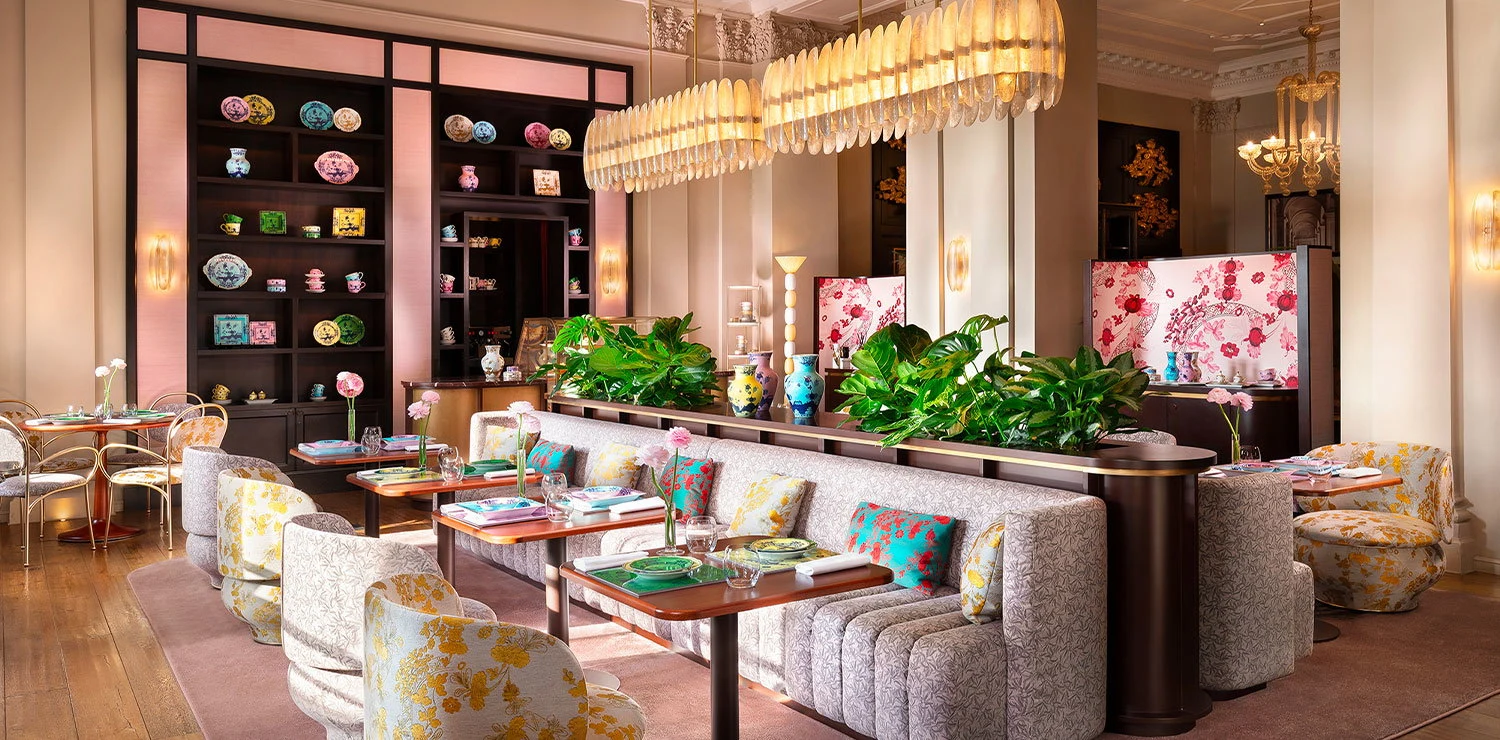
Florence does formal rooms differently from cities built around speed. Around Piazza Ognissanti, the pace shifts from museum queues and leather-market traffic to the older rhythm of hotel salons, riverfront palazzi and coffee taken as a small ceremony rather than a takeaway habit. Café Ginori at The St. Regis Florence belongs to that tradition: a polished café setting where the cultural reference is not the trattoria table but the Florentine habit of turning porcelain, pastry and conversation into a public ritual.

That distinction matters in a city where visitors often reduce dining to bistecca, ribollita and a glass of Chianti. Florence has always had another register: grand cafés, aristocratic drawing rooms, hotel lounges and pastry counters that served residents, diplomats, artists and travellers who wanted the city at a slower volume. The café format sits closer to that lineage than to the tasting-menu economy. It is built for an espresso with time attached, a sweet course taken without hurry, or a meeting that needs more composure than a bar counter can offer.

Florentine café culture, filtered through a hotel salon

The city’s restaurant conversation tends to split between rustic Tuscan cooking and international luxury. A hotel café in this setting occupies the middle ground. It has to feel local enough for Florence, but formal enough for a five-star hotel environment. That tension is the point. The room is not trying to compete with a neighbourhood trippaio, and it is not chasing the theatrical height of a rooftop restaurant; it trades instead on stillness, service rhythm and the visual language of the table.

Within Florence’s wider scene, that puts it beside hotel dining rooms such as Winter Garden Restaurant, the Mediterranean-leaning Winter Garden Florence, Cosimo Rooftop Restaurant and other in-house formats where setting carries as much weight as the plate. The difference is scale of occasion. Rooftops sell skyline drama. Grand dining rooms sell ceremony. A café salon sells duration: a pause between churches, shopping streets and the river, with enough formality to make the stop feel intentional.

The Ginori name adds a specific Florentine undertone. Porcelain is not a decorative footnote here; it is part of the city’s design history, a bridge between craft, table culture and aristocratic domestic life. In that context, a café framed through Ginori reads less like a generic hotel amenity and more like an extension of Florence’s long habit of making the table an object of visual discipline. The food and drink categories may be familiar, but the cultural signal is in how the café format treats them: measured, plated, served and paced.

Where it fits in a city of trattorie, rooftops and specialist counters

Florence rewards category discipline. For offal sandwiches and street-level Tuscan habit, l Trippaio di San Frediano explains the city more directly than any hotel room can. For vegetarian cooking with a neighbourhood point of view, 5ecinque sits in a different lane. For international contrast, Akira Back (Japanese-Korean fusion) shows how luxury hotels and global brands have widened the city’s dining vocabulary beyond Tuscan orthodoxy.

Café Ginori at The St. Regis Florence is strongest when judged against the right use case. It is not the address for a deep regional meal, nor the place to test a chef’s long-form argument through a dégustation. It is a controlled, central café experience for travellers who want Florence’s formal side without committing to a full restaurant sitting. That makes it useful in a city where timing often breaks the day: late museum exits, early evening gaps, and afternoons when a composed room matters more than culinary discovery.

The absence of listed awards or a named chef shifts the critical reading. Recognition-driven restaurants ask to be evaluated through rankings, stars, technique and authorship. A café like this is better judged through function, atmosphere and cultural fit. In Florence, that is a legitimate category. The city’s luxury hospitality is strongest when it does not pretend to be rustic; it can instead acknowledge that palazzo life, porcelain, pastry and service are also part of the local story.

How to place it within a Florence itinerary

Use this as a refined pause rather than the anchor meal of a trip. The surrounding quarter places it naturally between the Arno, Santa Maria Novella, the western edge of the historic centre and the hotel corridor that has long served international travellers. That geography gives it practical value: it works when the day calls for a quieter room before dinner, a polished coffee meeting, or a seated break after moving through the centre on foot.

For a broader read on the city, start with Our full Florence restaurants guide, then map the hotel context through Our full Florence hotels guide. Drinking and late-evening planning sit in Our full Florence bars guide, while producers and countryside context belong in Our full Florence wineries guide. For guided culture around the table, Our full Florence experiences guide is the cleaner starting point.

Travellers building an Italy-wide dining route can widen the frame through Al Fresco Dining, Alassio (Mediterranean), 'E Curti Ristorante Tipico di Angela Ceriello & Co SAS in Sant Anastasia, ‘O Fiore Mio in Faenza, ‘O Scugnizzo in Arezzo, [àbitat] in San Fermo della Battaglia, [bu:r] in Milan and /gu.stà.re/ oltrecucina in Rome. For contrast beyond Italy, Jōdo Saké Bar in Los Angeles and Onigiri Time in Pasadena show how specific formats travel when the point is precision rather than scale.

Tags

ElegantSophisticatedOpulentClassicScenicRomanticSoloBrunchHistoric BuildingDesign Destination