Why go
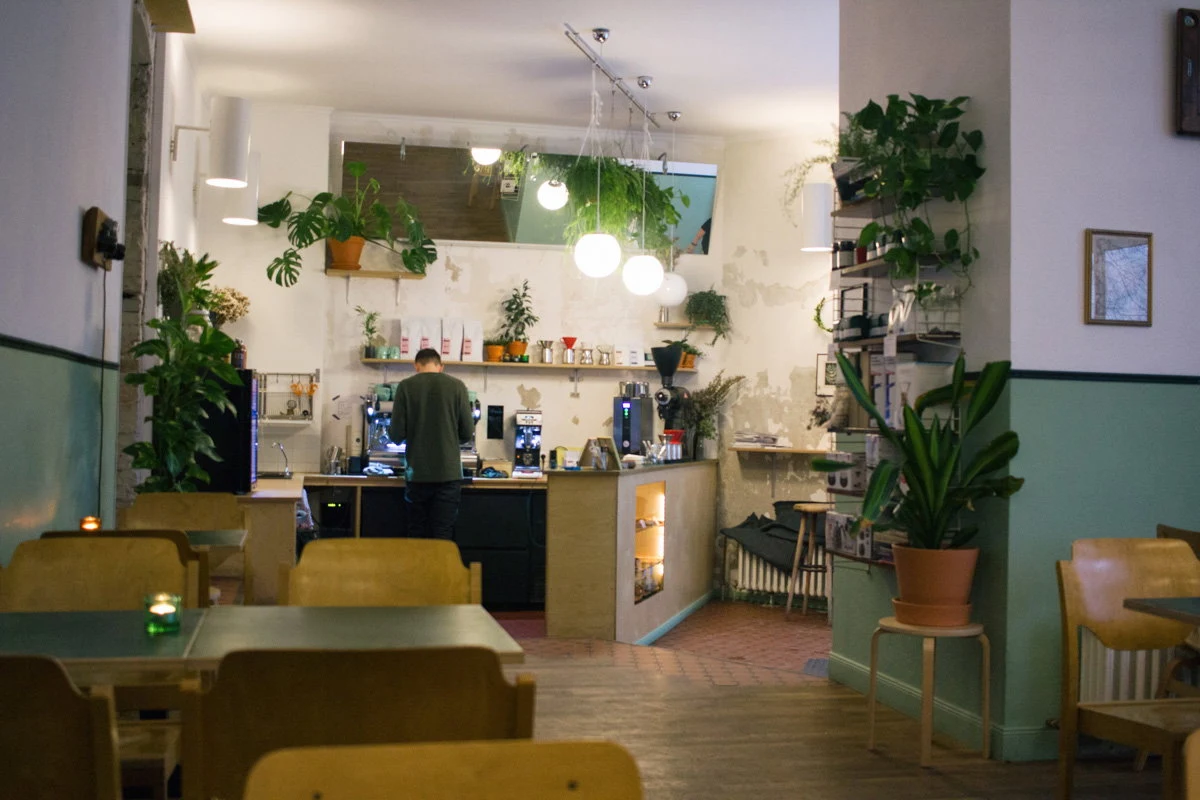
Weinmeisterstraße has the particular Berlin tempo of trams, shopping bags, gallery footfall and office spillover. Around this part of Mitte, a café is rarely just a pause between plans; it often becomes the day’s anchor, absorbing breakfast meetings, late lunches, solo laptop hours and pre-dinner appetite. Cafe Camaleon sits inside that central-city pattern, where the room has to work harder than a destination dining room because its audience changes by the hour.
The useful lens here is sourcing rather than spectacle. Berlin’s stronger casual addresses increasingly depend on the same questions that once belonged mainly to restaurants: where the coffee is roasted, how bread is selected, whether vegetables and dairy are treated as cost lines or as the spine of the plate. Cafe Camaleon has no public award trail attached to it, so the editorial read should stay grounded: this is a Mitte café to judge by ingredient clarity, consistency and the way the kitchen handles everyday food without dressing it up as a grand statement.
Mitte café culture has moved from convenience to ingredient accountability
Central Berlin has a large supply of cafés, but the better ones now compete on decisions that are visible before anything theatrical happens. Coffee quality, bread texture, produce condition and portion logic define the experience faster than décor. This shift matters because Berlin’s casual dining scene has become more international without losing its pragmatic streak: a plate has to suit a quick stop, but it also has to justify itself against the city’s increasingly serious lunch and brunch options.
In that context, Cafe Camaleon belongs to a category that is easier to underrate than to assess. It does not need the formality of a tasting menu or the credential pressure of a starred room. Its test is narrower and more unforgiving: can a central café make ordinary formats feel considered without turning them into performance? That is where ingredient sourcing becomes more than a background virtue. In a city where vegan Vietnamese plates, third-wave coffee counters and regional German cooking can sit within a few tram stops, casual rooms are judged by how clearly they choose their lane.
For a wider read on that spread, compare the daytime register with 1990 Vegan Living, the coffee-led pull of 19grams Alex, or the more tour-driven framing of the "Inside Berlin" Food & Culture Tour. Those references show how Berlin’s casual scene now ranges from plant-based specialization to guided cultural eating, with cafés occupying the space where routine and taste overlap.
The better comparison is not luxury dining, but Berlin's flexible all-day rooms
Cafe Camaleon should not be measured against Berlin’s high-ceremony counters. A more useful comparison is the city’s adaptable central rooms, places that can absorb visitors without losing local function. Nearby Berlin references such as Bar Basta, Restaurant Hackescher Hof, Oxymoron and Restauration 1840 point to the same neighbourhood pressure: central locations have to serve different audiences without becoming generic. Shiori, by contrast, represents the reservation-led end of the spectrum, where format discipline and scarcity do more of the storytelling.
This distinction helps set expectations. A café in Mitte is less about the single career-defining plate and more about how reliably it handles sourcing, pace and atmosphere across the day. The city rewards precision in small decisions: bread that has structure, coffee that is not an afterthought, vegetables that taste selected rather than emptied from a supply chain. When those basics align, the room earns repeat use from Berliners as well as passing visitors.
Readers building a broader Berlin itinerary should place Cafe Camaleon alongside the city’s many mid-weight eating options rather than above or below them by category. 12 Apostel Berlin speaks to the durable Italian lane, 136 (Fusion) to cross-cultural casual cooking, and Our full Berlin restaurants guide gives the wider field. For travellers extending the night beyond dinner, Our full Berlin bars guide is the cleaner next step; for those mapping the city by stay rather than meal, Our full Berlin hotels guide keeps the geography honest.
How to use Cafe Camaleon in a Berlin day
The strongest use case is daytime: a central pause with enough neighbourhood texture to feel anchored in Mitte rather than interchangeable with a station café. Because no public price range, hours or booking method is listed, the sensible approach is to treat it as a flexible stop rather than the fixed point of a special-occasion itinerary. That matters in Berlin, where the difference between a useful address and a frustrating one often comes down to whether it fits the pace of the day.
The ingredient-sourcing angle also makes it a better fit for travellers who pay attention to fundamentals. Berlin has plenty of theatrical dining, but its everyday food culture is built on bakeries, markets, immigrant-run kitchens, coffee counters and low-friction rooms that serve regular life. Cafe Camaleon belongs to that broader ecology. The question is not whether it competes with destination restaurants; the question is whether it gives central Berlin a café that treats simple food with enough seriousness to merit a stop.
For a Germany-wide comparison, EP Club’s restaurant map stretches from [CANTINACCIA] in Heidelberg and [KOOK] 36 in Deggendorf to [m]eatery in Hamburg, [m]eatery in Dresden, [maki:'dan] im Ritter in Durbach and [w]einklang in Nuremberg. Those addresses sit in different regional traditions, but they underline the same editorial point: casual, mid-range and specialist rooms now reveal as much about contemporary German eating as formal restaurants do.
Berlin itineraries rarely stay in one category. A café stop can sit between gallery time, a hotel check-in, a bar-led evening or a cultural booking. For that wider planning layer, use Our full Berlin experiences guide, Our full Berlin wineries guide, and the broader city guides above. Travellers comparing how casual Japanese formats read outside Germany may also find useful contrast in Jōdo Saké Bar in Los Angeles and Onigiri Time in Pasadena, where narrow formats shape the whole visit.