Why go
Chocolate and cake set the programme
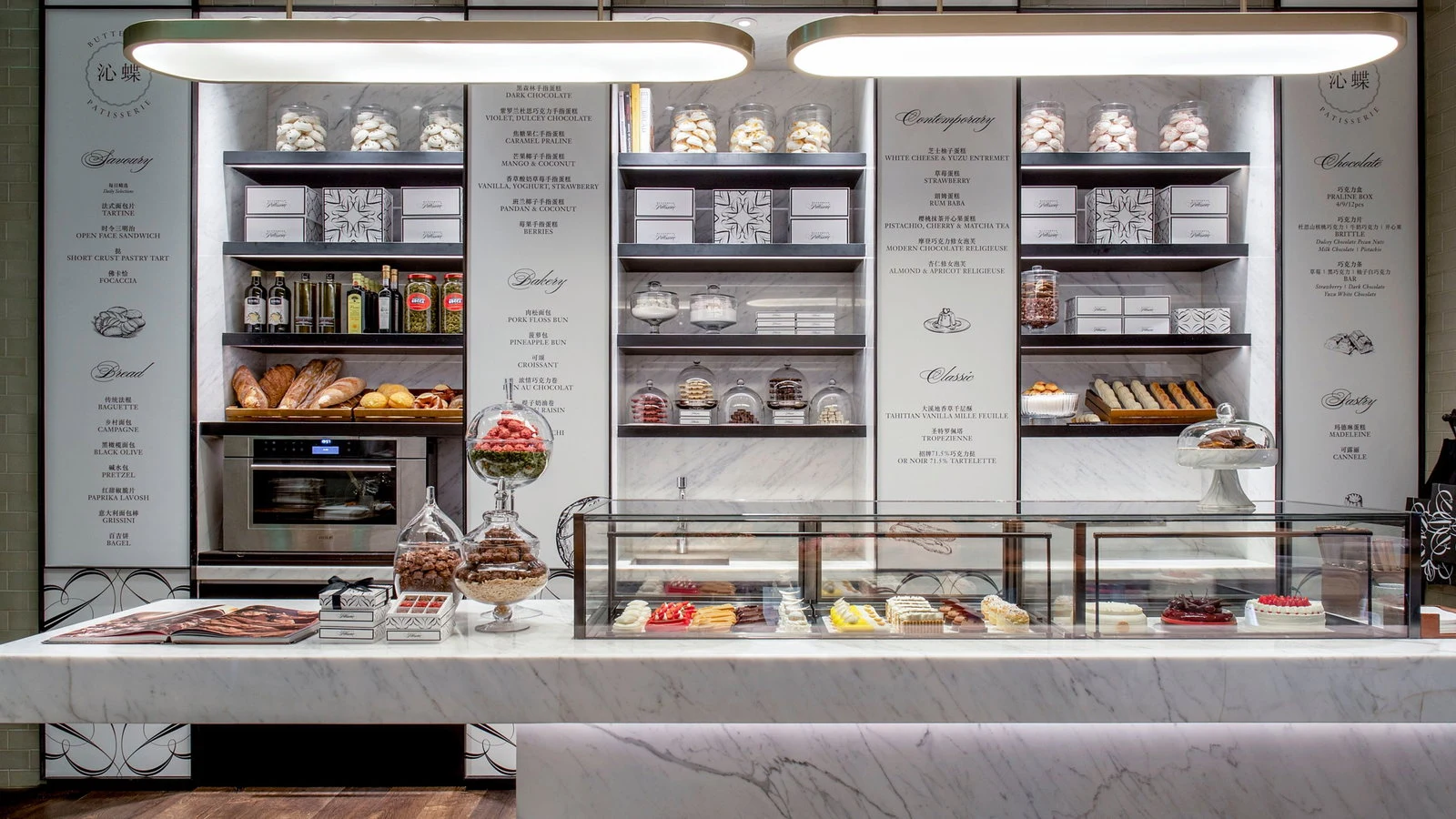
House chocolates are the anchor at this dessert counter inside Rosewood Guangzhou, with seasonal cakes beside them and flaky pastry filling the gap between the two. Butterfly Patisserie opened in June 2021 as the hotel's French-style dessert boutique, and its shape has stayed narrow since: signature house chocolates, seasonal cakes, laminated pastry and afternoon tea.
This is not a broad cafe menu or a bread-led bakery case but a polished pastry counter working at hotel standard, where finish and presentation are part of the product. Sweets are wrapped like jewels, which tells you how much of the work is aimed at gifting and display. Chocolate is the clearest anchor, and the cakes keep the range turning through the year. That seasonal side shows most in festival programming: mooncake collections in autumn, Easter pastries in spring. Set against the city's independent bakeries, the difference is scale and intent: fewer items, finished more carefully, and packaged as though every one of them is leaving as a present.
A hotel pastry counter, not a neighbourhood bakery
Butterfly Patisserie sits within the hotel's own dining collection alongside its restaurants and bars, so a visit runs at a different pace from an independent bakery. Rosewood uses the Butterfly Patisserie name across several of its hotels, and the Guangzhou counter is the local expression of it. The tone is indulgent and gift-oriented, and the room is arranged for choosing carefully rather than queueing quickly.
Most visits are a daytime dessert or tea stop. Afternoon tea is part of the offer, which connects the cakes and pastries to a composed lounge occasion rather than a takeaway. The same polish carries into the packaging, which matters if the reason for the visit is a boxed set of chocolates or a cake going somewhere else.
Order the house chocolates first
Start with the signature house chocolates. They are the most defined thing the boutique makes and they show its small-format thinking: finished pieces, careful wrapping, ready to be given away.
Then move to the seasonal cakes, the other major anchor and the reason to come back at different points in the year. Flaky pastry is the next order when the visit is lighter and more pastry-led than cake-led. For the fullest version of the place, pair the sweets with afternoon tea, which is where the chocolates, cakes and pastries are meant to be seen together.
Frequently asked questions
What is Butterfly Patisserie known for?
Signature house chocolates first, then seasonal cakes and flaky pastry. It is the French-style dessert boutique inside Rosewood Guangzhou, opened in June 2021, and the work is finished for gifting as much as for eating: individually wrapped pieces, boxed sets and cakes made to be looked at before they are cut.
Is there afternoon tea at Butterfly Patisserie?
Yes, afternoon tea sits alongside the pastry counter and is the easiest way to see the range together: house chocolates, seasonal cakes and laminated pastry in one sitting rather than chosen piece by piece from the case. It is a composed daytime occasion rather than a quick takeaway stop.
Compare nearby places
| Venue | Type | Area |
|---|---|---|
| KONOMI COFFEE | Café | Zhongxin Road area |
| Raffles Patisserie | Bakery | Nanshan District |
| Old Wu Coffee | Café | — |
| Lord Stow's Bakery (Rua do Tassara) | Bakery | Coloane |
| Le Salon de Thé de Joël Robuchon Elements | Café | West Kowloon |