Downtown Denver

Brown Palace Coffee & Tea Co.

CafeCoffee Bar
Brown Palace Coffee & Tea Co.

Why go

Approaching Brown Palace Coffee & Tea Co. means entering a downtown Denver rhythm shaped by hotel corridors, polished service habits, and the morning-to-afternoon traffic of guests moving between meetings, checkouts, and longer lunches. This is not the city’s new-wave coffee-bar model of single-origin minimalism and laptop rows. Its usefulness lies in the older hotel-café tradition: coffee, tea, and light food as a pause inside a larger house of hospitality.

Denver’s dining conversation often leans toward open-fire cooking, steakhouse polish, and neighborhood restaurants with regional sourcing written plainly onto the menu. A coffee-and-tea counter inside a historic hotel sits in a different lane. Ingredient sourcing matters here less as a manifesto and more as a question of format: tea service depends on leaf quality, coffee service depends on freshness and turnover, and pastry or breakfast-adjacent food succeeds only when it can hold its place beside the hotel’s more formal rooms. That makes the venue useful for readers who want a low-commitment look at the Brown Palace ecosystem before choosing between Ship Tavern, Palace Arms, The Grand Atrium at The Brown Palace, BEZEL, or Ellyngton’s.

Hotel coffee culture, not third-wave theater

Denver has plenty of cafés built around origin stories, roast profiles, and barista performance. Brown Palace Coffee & Tea Co. belongs to the hotel lineage instead, where the room’s function is social pacing. The category rewards consistency over novelty: a reliable cup before a downtown appointment, tea in a setting that does not feel improvised, and food that supports the break rather than turning it into a long meal.

That distinction matters because hotel cafés are often judged by the wrong yardstick. A destination espresso bar lives or dies by technical coffee detail. A hotel coffee room has to serve mixed needs at once: solo guests, couples between reservations, families passing through, and locals using the building as neutral ground. In that context, ingredient sourcing should be read through steadiness and suitability. Tea needs clean brewing discipline. Coffee needs enough freshness to avoid the stale banquet-hall problem. Food needs to travel from kitchen to counter without losing the plot.

The broader Denver comparison is useful. For a heavier downtown meal, 801 Chophouse, A5 Steakhouse (Steakhouse), and 3 Margaritas - Downtown Denver operate in clearer lunch-or-dinner categories. For a hotel breakfast register, AC Kitchen offers a different corporate-hotel idiom. For a more casual social meal, Ace Eat Serve points toward Denver’s neighborhood dining energy. Brown Palace Coffee & Tea Co. is for a narrower decision: a composed downtown stop where the building carries much of the context.

Why sourcing reads differently in a hotel setting

In restaurants, sourcing is often announced through farms, ranches, fisheries, and seasonal produce. In coffee and tea service, the same question becomes quieter but no less important. Tea programs depend on storage, brewing temperature, and leaf selection. Coffee depends on roast handling, grind discipline, and daily volume. Pastry and breakfast items depend on whether the operation treats them as incidental or as part of the room’s identity.

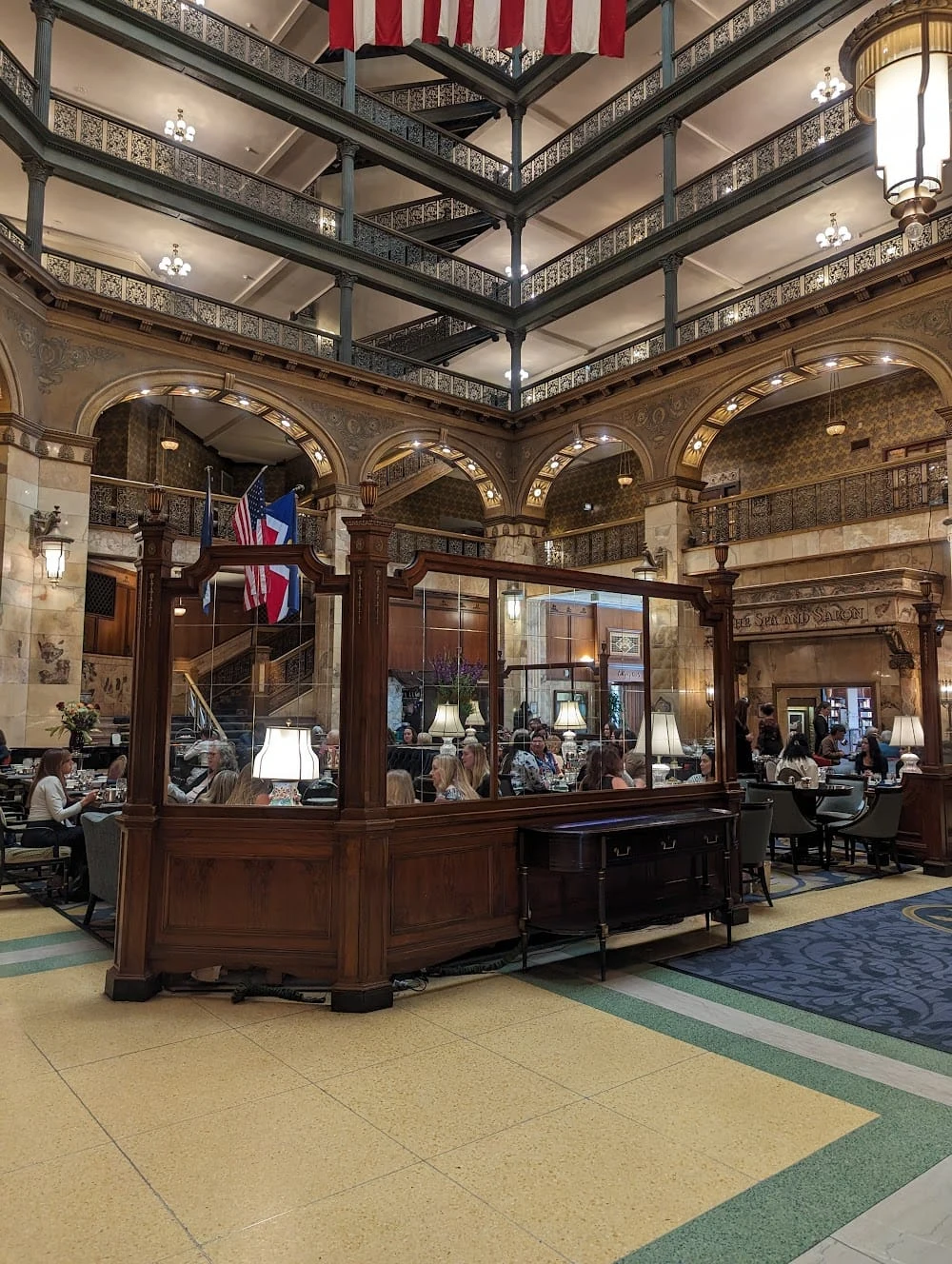
Because the venue sits within a multi-outlet hotel environment, the more interesting editorial point is not a single product claim. It is how a downtown hotel turns food and drink into different levels of commitment. The Grand Atrium at The Brown Palace carries the more ceremonial tea-room association. Ship Tavern and Palace Arms push toward fuller meals. BEZEL moves the conversation toward the bar. Ellyngton’s occupies another part of the hotel’s dining map. Brown Palace Coffee & Tea Co. is the shorter, lighter format in that sequence, and that makes it practical when a full reservation feels excessive.

Denver visitors often underestimate how much geography shapes dining decisions downtown. The city’s better-known restaurant energy is spread across several neighborhoods, while the central business district rewards venues that solve timing. A polished coffee-and-tea stop can matter more at 10 a.m. than a more ambitious dinner room does at 8 p.m., especially when the itinerary includes hotels, museums, meetings, or transit between neighborhoods. For broader planning, compare it with our full Denver restaurants guide, then widen the trip through our full Denver hotels guide, our full Denver bars guide, our full Denver wineries guide, and our full Denver experiences guide.

How to use it in a Denver itinerary

The smart use case is a shorter stop rather than a destination meal. It suits a morning meeting, a tea break, or a reset between downtown plans. Readers seeking a chef-led dinner, a long wine pairing, or a tasting-menu arc should look elsewhere; the value here is in controlled pace and hotel setting. That is a legitimate lane, especially in a city where many stronger dining experiences require neighborhood movement and firmer scheduling.

For travelers comparing coffee and light-food formats across cities, the contrast is instructive. Jōdo Saké Bar in Los Angeles and Onigiri Time in Pasadena show how tight specialty formats can define a visit around a narrow product category. ¿Por Qué No? in Portland, 'Ai Love Nalo in Waimanalo Beach, 'āina in San Francisco, 'Ama 'Ama in Kapolei, -Grilled beef Sukiyaki- KAMAKURA TANUKIAN 鎌倉 たぬき庵 in Kamakura, and ¡Salud! in Los Angeles each frame sourcing through a different cultural lens. In Denver, this address frames it through hotel ritual: not a market-driven thesis, but a test of whether coffee, tea, and light food can hold their own inside a formal hospitality machine.

Tags

ClassicCozyQuietHistoricElegantSoloCasual HangoutAfter WorkHistoric BuildingHotel Restaurant