Why go
A rebuilt house given over to tea
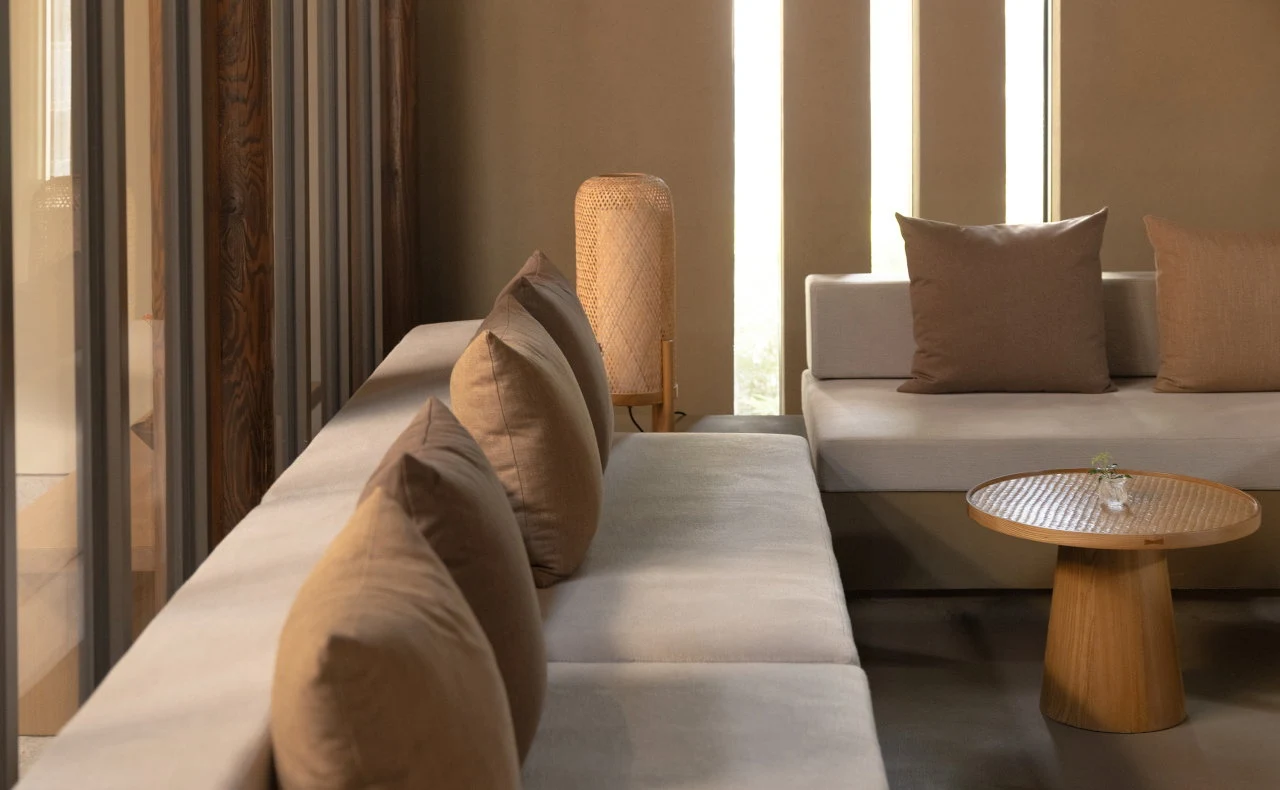
The building comes first at Bei TeaHouse, which sits on the southwestern edge of Shanghai in Minhang rather than anywhere near the Bund. It occupies a century-old dwelling that was taken apart, moved and rebuilt, then reworked by Kerry Hill Architects into something that holds contemporary and traditional Chinese lines at once, largely through what it does with light and shadow. An enclosed courtyard sits at its centre, and the whole plan is arranged so that the room quiets down around whatever is being poured.
That is not incidental. Amanyangyun, the resort it belongs to, was assembled from historic houses and ancient camphor trees relocated from Jiangxi province, and the tearoom is the piece of that project where the salvage work is most directly in service of a ritual. A tearoom is the one room on the property where an old house and a slow ceremony are doing the same job.
Ceremony rather than a drinks list
What is presented here is Chinese tea ceremony, with seasonal tastings and the explanation that goes with them, rather than a menu of dishes or a list of blends to pick from. The preparation, the pacing and the way the cup is set down are the substance of the visit. Tea is brewed with the care the tradition asks for, and the room is built to make that attention easy to give.
The practical consequence is that you orient the visit around the tea and the season rather than around an order, and you let the pacing of the service decide how long you stay. There is no chef-led menu attached and no list of signature plates; the pour is the programme.
One of five rooms, and open beyond the resort
Bei is one of five places to eat and drink at Amanyangyun, alongside the Italian kitchen Arva, the Chinese restaurant Lazhu, the Lounge and the hotpot room Yinlu. It stands apart from all of them by being the only one where the drink is the entire event.
It also sits slightly apart on the ground, in the Yangyun community a short ride from the main resort, which reinforces the sense of going somewhere rather than stepping next door. Amanyangyun's restaurants take non-residents as well as guests, so a tea sitting here does not require a room.
Tags
Frequently asked questions
Can non-residents visit Bei TeaHouse?
Yes. Amanyangyun's restaurants take non-residents as well as guests staying at the resort, so a tea sitting here does not depend on having a room. Bei sits slightly apart from the main property, in the Yangyun community a short ride away, which makes it feel like a destination rather than a hotel amenity.
What happens at Bei TeaHouse?
Chinese tea ceremony, presented as the event itself rather than as an accompaniment to food. Seasonal tastings come with the explanation that goes with them, and the preparation, pacing and presentation are the substance of the visit. The setting is a century-old house rebuilt around an enclosed courtyard and reworked by Kerry Hill Architects.
Compare nearby places
| Venue | Type | Area |
|---|---|---|
| Victor's Café | Café | East Nanjing Road |
| La Boulangerie | Bakery | Xuhui |
| O’mills Bakery & Bistro | Bakery | Xuhui District |
| Fritz Coffee Company Jeju Seongsan | Café | Seongsan-eup |
| Moment Cafe | Bakery | — |