Why go
Bread as a Starting Point, Not a Supporting Act
Surry Hills has spent the better part of two decades sorting itself into distinct dining tiers. The loud, high-rotation dinner spots cluster around Crown Street and its offshoots, while a smaller, less theatrical group of daytime operators has taken root along Commonwealth Street and the quieter blocks feeding into it. A.P House by All Purpose Bakery belongs firmly to the latter category: a second-floor address at 80 Commonwealth Street that asks you to climb a flight of stairs before it reveals itself, which already signals something about its intended audience. This is not a venue chasing foot traffic.
All Purpose Bakery has built a reputation in Sydney's bread-conscious community over several years, operating in a city where the gap between serious fermentation-led baking and decorative loaves sold at a premium has become increasingly legible to regular café-goers. A.P House is the sit-down expression of that project, a space where the sourcing logic underpinning the bakery program gets room to extend into a fuller café and food offering. In that sense, it sits within a broader Australian pattern: the specialist producer opening a hospitality arm not to scale up, but to give context to what they were already doing. Brae in Birregurra and Attica in Melbourne operate that logic at the fine-dining end; A.P House applies it to the daytime café register.
The Sourcing Argument
What distinguishes the serious end of Sydney's café scene from its mid-market competition is rarely technique alone. It is usually the specificity of where ingredients come from and whether that specificity is legible on the plate. Grain sourcing, in particular, has become a marker of seriousness in Australian bread culture over the past decade, with a handful of mills and small-scale grain growers supplying the bakeries whose work gets discussed in any sustained way. A.P House, as the front-of-house expression of All Purpose Bakery, operates inside that conversation.
The relevance of this to a diner is not abstract. Bread that has been made with identifiable, traceable grain from a specific growing region behaves differently from commodity flour bread: the crust carries more character, the crumb holds moisture differently, and the flavour has a place-based quality that commercial baking cannot replicate at speed. When a café's kitchen is anchored by that kind of bread program, the rest of the food tends to be held to a comparable standard. Produce sourcing, dairy selection, and seasonal availability become decision-making criteria rather than marketing language. This is the operative logic of A.P House's position in Surry Hills' daytime tier.
For comparison, the neighbourhood already offers a range of daytime options at different points on the sourcing-and-seriousness spectrum. bills on Crown Street set the template for the relaxed, produce-aware Sydney breakfast for a generation of diners. Gildas operates in the Basque-inflected wine-bar register. El Loco at Excelsior pitches at a louder, more casual frequency. A.P House sits apart from all three: quieter in format, more technically specific in its food proposition, and oriented around the morning-to-afternoon window rather than the dinner trade.
The Room and the Register
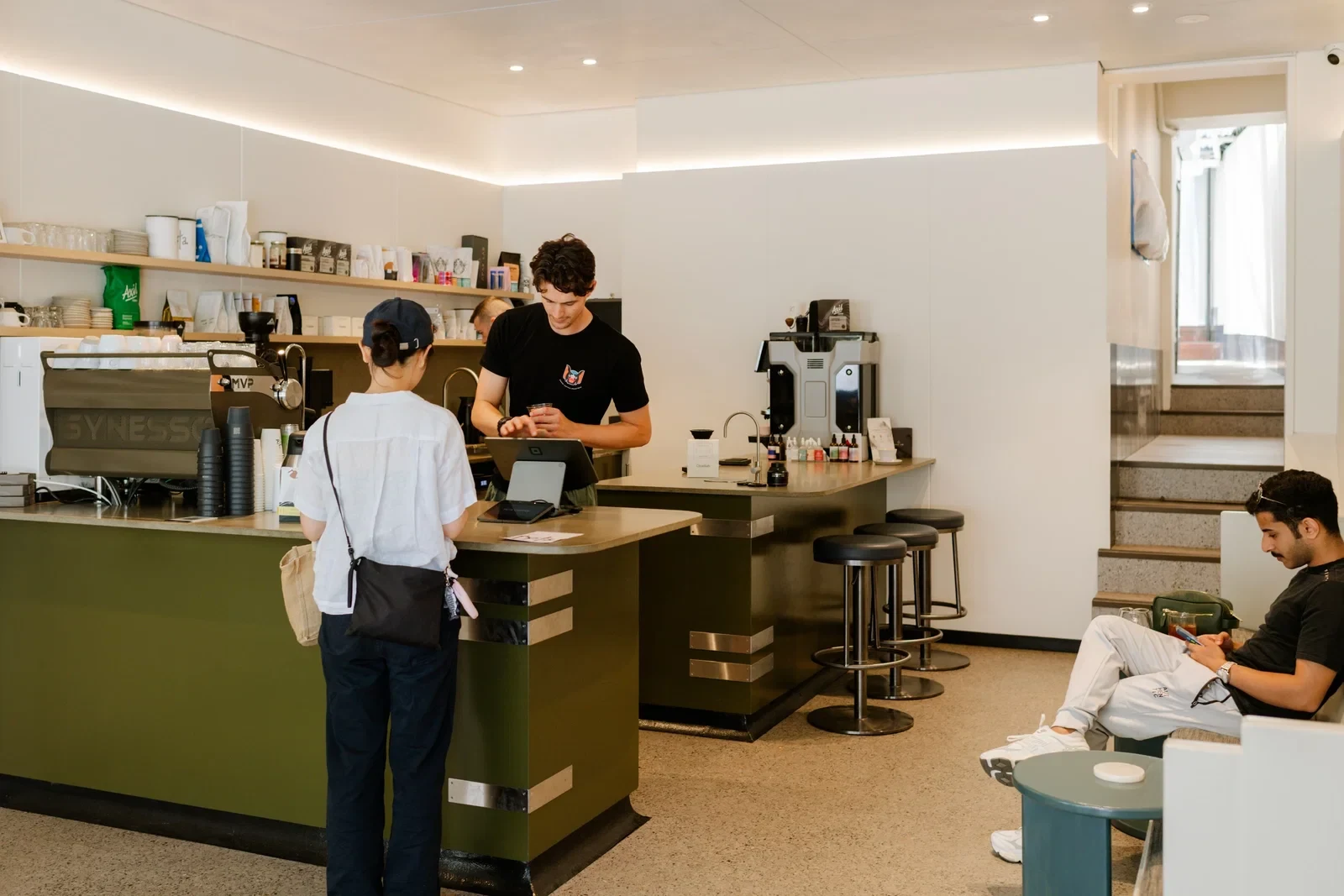
Second-floor cafés in inner Sydney carry a particular quality of light and remove that ground-floor operators cannot replicate. The climb filters the clientele somewhat: people who find A.P House are there with some intention rather than arriving on impulse from the street. The result is a room that tends toward the focused and unhurried rather than the transactional. In a neighbourhood where several of the most-discussed venues run on tight turns and high covers, that pacing is itself a considered choice.
The physical environment matters here because it frames how the food is received. A bread-led café that doubles as a casual drop-in space and a bread-led café with a dedicated room that encourages you to sit with the food are different propositions, even if the sourcing standards are identical. A.P House has made the second choice, and that shapes what the visit delivers. It is closer in spirit to the producer-hospitality model found at the more restrained end of the Australian food scene than to the high-volume Sydney café operating on thirty-minute breakfast covers.
Within Sydney's wider dining conversation, A.P House occupies a niche that Rockpool and the city's fine-dining tier do not address, and which the standard neighbourhood café does not reach. It is the kind of place that matters to the city's food culture without necessarily being visible to anyone who is not already paying attention to where their bread comes from. That is not a critique; it is a description of the audience this kind of operation is built for.
Surry Hills in Context
Surry Hills' dining identity has always been more layered than its reputation as a casual-dining destination suggests. Firedoor on Mary Street operates at the technical and reputational level of any serious fire-focused restaurant globally, and its presence in the neighbourhood has helped anchor Surry Hills as a place where ambition and craft coexist alongside the neighbourhood's more relaxed formats. A.P House sits in a different register but belongs to the same impulse: the idea that Surry Hills can support venues defined by genuine technical seriousness rather than atmosphere alone.
For visitors to Sydney approaching the neighbourhood as part of a wider Australian food trip, the daytime slot at A.P House functions as a useful calibration point for the city's bread and produce culture before moving to dinner-format venues. Across Australia, producers-turned-operators like Wildflower in Perth and region-specific operators such as Lenzerheide in Adelaide demonstrate that the producer-hospitality model is not a Sydney idiosyncrasy but a national pattern. A.P House is Surry Hills' version of that argument, made in bread.
Our full Surry Hills restaurants guide covers the neighbourhood's full range, from the daytime operators to the evening-focused wine bars and higher-end kitchens.
Planning Your Visit
A.P House by All Purpose Bakery is located on the second floor at 80 Commonwealth Street, Surry Hills. The second-floor position means it is worth confirming hours before visiting, as daytime bakery-café operations in Sydney frequently run morning-to-mid-afternoon windows that do not extend into the evening. The format suits solo visitors, pairs, and small groups more naturally than large bookings; the daytime café register does not typically carry the cover pressures of dinner restaurants, but arriving early on weekends in Surry Hills is generally advisable across the neighbourhood's most-visited spots. For the rest of the Sydney region and beyond, related venues worth knowing include Supernormal Brisbane, The Boat House in Canberra, and Kulcha Restaurant Wollongong for readers building a broader eastern-seaboard itinerary.
Frequently Asked Questions
- Is A.P House by All Purpose Bakery a family-friendly restaurant?
- The daytime café format and relaxed pace make it accessible to families, particularly outside peak morning hours when the room is quieter. Surry Hills cafés in this register tend to be less formal than dinner venues, but parents should note the second-floor location at 80 Commonwealth Street, which requires stair access. The unhurried atmosphere suits adults and older children more naturally than high-energy environments designed for quick turnover.
- What is the overall feel of A.P House by All Purpose Bakery?
- A.P House runs on a quieter, more considered frequency than much of Surry Hills' daytime trade. The second-floor remove from the street, the bread-centred food program, and the producer-hospitality format place it closer to a specialist daytime destination than a neighbourhood drop-in café. It is not a venue with the awards profile of a Michelin-starred room or the city-wide name recognition of some larger Sydney operators, but within the bread-conscious and produce-aware segment of Sydney's café culture, it carries clear credibility.
- What dish is A.P House by All Purpose Bakery famous for?
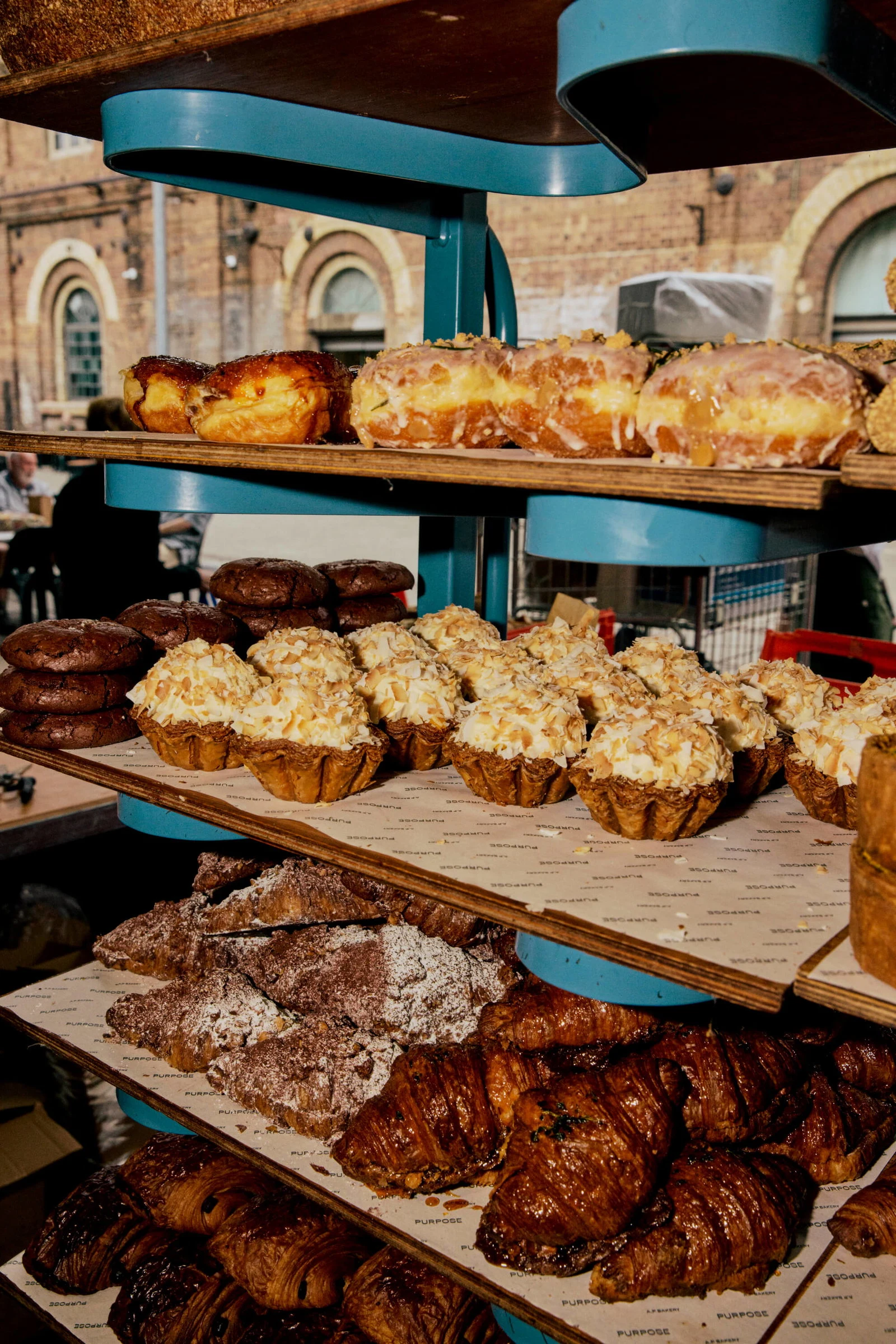
- The bakery program anchoring All Purpose Bakery is the clearest point of distinction, and A.P House extends that into its café format. Because the kitchen's identity is built around fermentation-led bread made with traceable grain, the bread itself functions as the signature rather than any single composed dish. Sydney's serious café tier increasingly positions the bread course as the measure of intent, and A.P House sits at that end of the argument.
- Do I need a reservation for A.P House by All Purpose Bakery?
- Daytime café operations in Surry Hills at this level generally operate on a walk-in basis rather than a reservations model, though demand on weekend mornings across the neighbourhood is consistent enough to make early arrival worthwhile. Given the second-floor location and the specialist audience the venue draws, midweek visits tend to offer a more relaxed experience than Saturday mornings, when Surry Hills' most-discussed cafés across all price points fill quickly.
- How does A.P House relate to All Purpose Bakery, and why does that matter for what ends up on the table?
- A.P House is the sit-down hospitality arm of All Purpose Bakery, which means the sourcing decisions made at the wholesale and retail bakery level carry directly into the café kitchen. In practical terms, this means the grain provenance, fermentation approach, and baking standards that define the bakery's wholesale reputation are the same inputs shaping what arrives at the table. For diners who treat ingredient traceability as a meaningful criterion, that vertical connection between producer and café is the operative reason to seek A.P House out over a Surry Hills café with no equivalent production backstory.