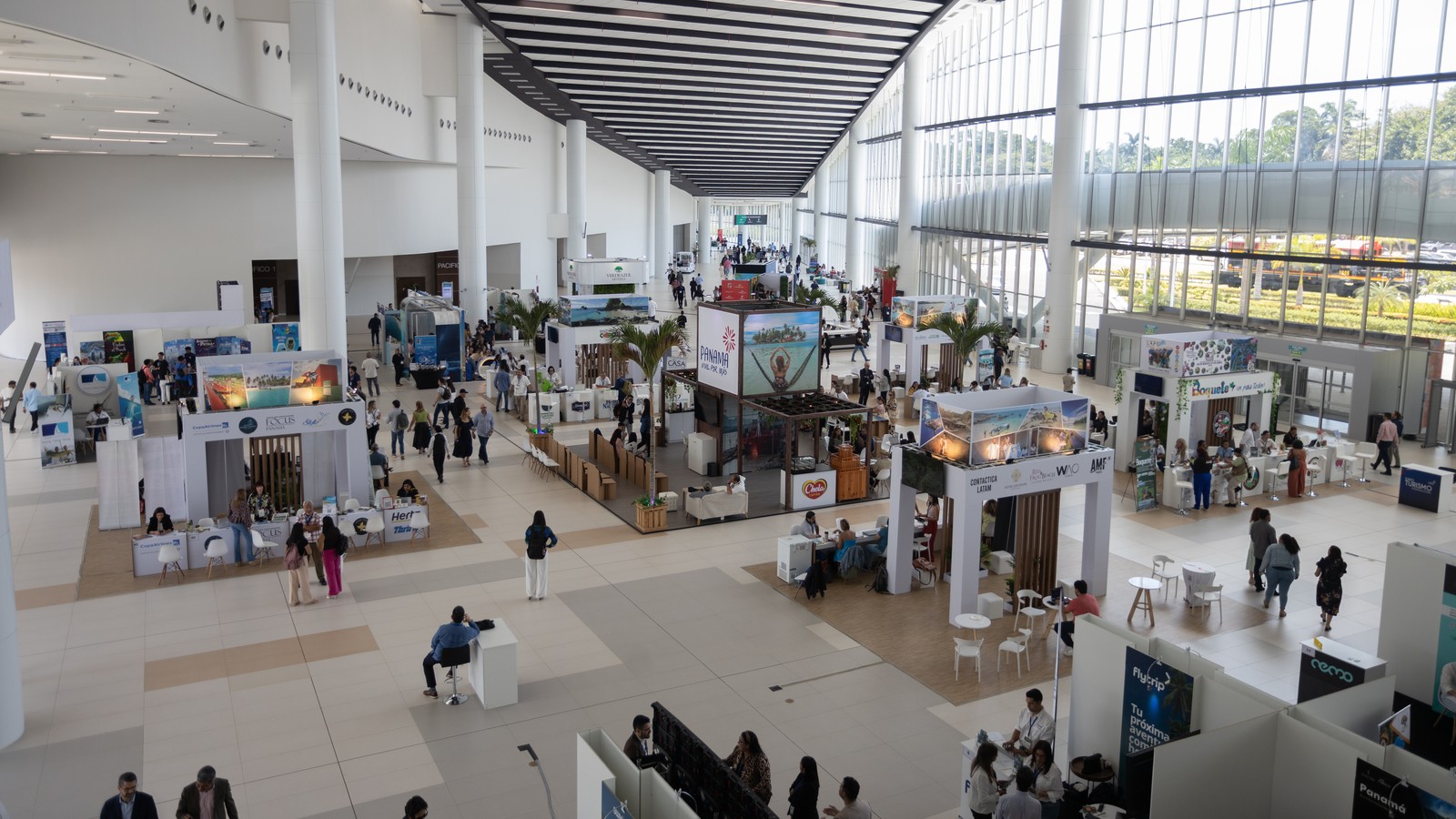
The first timer starts on October 22, one day before the trade floor opens, when national barista champions begin competing in Panama City. World of Coffee Panama will run October 23-25, 2026, at the Panama Convention Center, making it the first World of Coffee held in Latin America and placing the global specialty coffee crowd inside a Central American coffee-producing country (Baristamagazine).
That calendar matters. The exhibition opens on October 23, but the World Barista Championship begins on October 22 and runs through October 25, bringing national champions representing more than 60 countries to Panama. By the time the first full day of World of Coffee Panama begins, competitors, coaches, roasters, importers, producers, equipment makers, and cafe owners will already be moving through the same city (Baristamagazine).
The scale is already set: 13,000 domestic and international participants are expected, with more than 320 exhibitors from over 30 countries. More than 90 Panamanian producers are expected to participate, joined by producers from more than 15 countries. For a cafe owner who follows lots from Boquete, a roaster looking for the next relationship coffee, or a traveler who plans mornings around a specific origin on a brew bar, this is not just another convention stop. The event moves the industry conversation closer to the farms, families, processors, and regional associations that give Panama coffee its name (Baristamagazine).
Why World of Coffee Panama changes the route to origin
World of Coffee Panama changes the usual direction of travel. Coffee often leaves origin before it gets discussed at trade scale. It is roasted elsewhere, judged elsewhere, sold elsewhere, then retold on cafe menus in cities far from the place where it grew. In October 2026, the show floor moves to Panama instead.
The point is not that every meeting becomes direct trade overnight. The confirmed facts are more precise and more useful: 13,000 expected participants, more than 320 exhibitors, more than 30 represented countries, and more than 90 Panamanian producers in the host country. That puts people who usually meet across email threads, importer offers, auction catalogues, and cupping notes into the same physical room (Baristamagazine).
For roasters, that changes the rhythm of discovery. A coffee does not arrive only as a green sample with a farm name and a process line attached. The producer may be across the aisle. The regional context is outside the convention center, not abstracted into a slide deck. The question can move from, what does this lot score, to who grew it, where in Chiriquí it came from, and how it fits into the producer’s work over time.
For cafe people, the shift is just as practical. A good cafe menu has to translate origin without flattening it. Panama is often reduced to Geisha or Gesha, depending on the spelling a roaster uses, because the variety has carried so much of the country’s international reputation. World of Coffee Panama gives buyers and baristas a wider room: producers, processes, technologies, competitions, and brewing conversations gathered in the same marketplace.
The venue, the Panama Convention Center in Panama City, gives the event a city address rather than a remote farm setting. That also matters. Trade shows need access, movement, loading bays, meeting rooms, and enough floor space for equipment and cupping tables. Origin needs producers in the room. World of Coffee Panama has to hold both demands at once.
The World Barista Championship starts one day earlier
The World Barista Championship will run October 22-25, 2026, overlapping with World of Coffee Panama and starting one day before the exhibition opens. National champions from more than 60 countries will compete. That is the headline for competitors, but it also changes the temperature of the whole week.
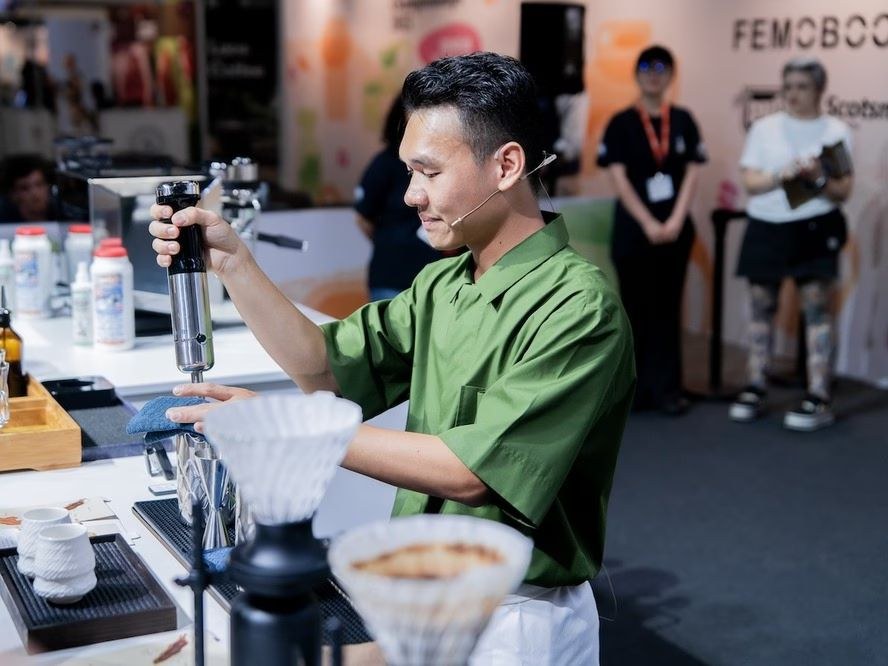
Barista competitions can sometimes make coffee feel like a polished final service detached from the long chain behind it. In Panama, the competition lands in a country where coffee is cultivated, processed, cupped, sold, brewed, and discussed. The stage sits closer to the material. Producers are not a footnote to the routine. Origin is part of the room.
That proximity will matter most to the people who pay attention to the details behind a competition coffee: variety, processing, roast profile, extraction target, service order, and the producer’s name. A champion’s routine compresses months of decisions into a short performance. When the championship takes place in Panama, those decisions sit beside a larger conversation about how coffee from the region reaches roasters, cafes, and drinkers.
For attendees who do not compete, the championship gives the week a second clock. The trade show runs October 23-25. The competition runs October 22-25. If you are planning travel around both, arrive before the exhibition opens. The first useful day is October 22, especially for anyone who wants to watch national champions begin before the main floor fills.
The barista stage also gives producers a different kind of audience. A producer on a trade floor may speak to buyers in terms of lot availability, process, export logistics, and sample roasting. A barista routine translates coffee through service. The two languages need each other. Panama will host both in the same week.
The 90-plus Panamanian producers on the floor
More than 90 Panamanian producers are expected at World of Coffee Panama. The individual producer list is not public yet, so the number does the work for now. It is large enough to make the event more than a symbolic hosting role. Panama is not only lending its convention center and city name. Its producers are expected to stand inside the event.
That producer presence should be the first stop for roasters and cafe buyers. Start with Panama before you scan the whole international floor. Ask which region the coffee comes from. Ask how the producer wants the coffee brewed. Ask what changed between lots. If a producer is pouring Geisha or Gesha, taste it, then taste another Panamanian coffee that is not built around the same expectation. Let the contrast do the teaching.
Panama’s primary coffee-growing regions are Boquete, Volcán, and Renacimiento, all in Chiriquí Province. Those names deserve more attention than they often receive on retail bags. A menu that says Panama is useful. A menu that says Boquete, Volcán, or Renacimiento gives the drinker a better map. World of Coffee Panama gives cafe owners a reason to sharpen that language before the event, not after.
The country’s reputation is closely tied to Geisha/Gesha, the variety that made many coffee drinkers learn to look for Panama on a shelf or brew menu. But an event floor with more than 90 Panamanian producers should resist becoming a single-variety parade. The better approach is to treat Geisha/Gesha as the door, then walk through it. Ask producers what else they are growing, how they sort lots, what they want roasters to understand, and how they talk about quality when they are not speaking through auction language.
There is also a practical reason to meet producers in person. Coffee travels with paperwork, contracts, samples, and timelines. A conversation at origin can put those pieces into a human order. The producer can explain what a lot represents. The roaster can explain how it will be roasted and served. The cafe buyer can imagine the sign on the bar, the brew recipe on the training sheet, and the first regular who asks why this cup costs more.
Panama’s coffee timeline behind the 2026 event
World of Coffee Panama arrives with a local specialty coffee timeline behind it. The Specialty Coffee Association of Panama, known as SCAP, was founded in 1997. The Best of Panama competition started in 1998. Panama held its first international online auction of coffee beans in 2001. Those dates matter because they show how the country built a quality-facing coffee identity before hosting a global event of this size.
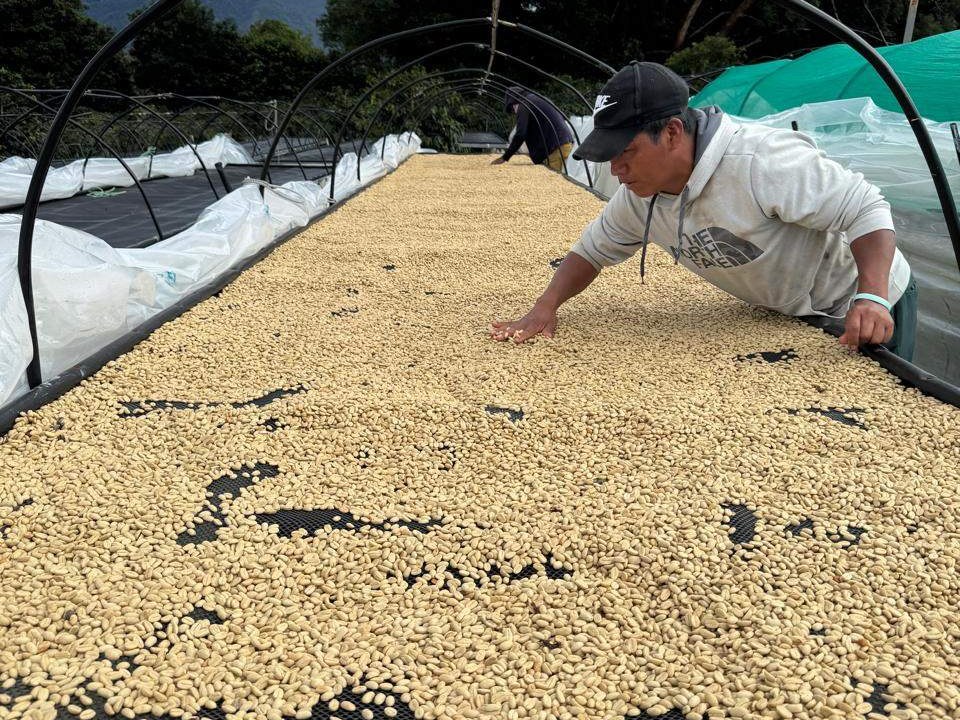
The Best of Panama name already means something to roasters and buyers who follow the country closely. Even without naming individual farms here, the competition itself gives context for why Panama carries weight beyond production volume. The country is not a high-volume origin in the way larger producing nations are. Panama’s coffee production is approximately 100,000-150,000 bags of 60kg annually. Its influence in specialty coffee has come through quality signals, competition visibility, and the international attention around rare lots.
That smaller production scale changes how buyers should approach the event. Do not walk the floor as if every good conversation will lead to a large, repeatable container-scale supply. Some of the most useful meetings may be about limited lots, future harvests, or how a producer prefers to build relationships with roasters over more than one season. Scarcity is not a slogan here. It is part of the country’s production reality.
Coffee also sits inside Panama’s working economy, not just its specialty export story. U.S. government trade reporting has put coffee-related employment at more than 70,000 jobs. That figure should stay in the mind of any attendee treating the event as a tasting trip. A cup on a cupping table has labor behind it: farm work, processing, sorting, milling, export coordination, roasting, brewing, and service.
The 2026 event brings those layers into one city. SCAP’s founding in 1997, Best of Panama’s start in 1998, and the 2001 online auction form one part of the story. The Panama Convention Center floor in 2026 forms another. The through line is exposure: first through association building and competition, then through online auctions, now through a global trade event held in Latin America for the first time.
How cafe owners and roasters should use the week
If you run a cafe, treat World of Coffee Panama as a sourcing week and a language week. The sourcing part is obvious: more than 90 Panamanian producers, more than 320 exhibitors, and producers from more than 15 countries. The language part is easier to miss. The way you describe coffee after a trip like this will shape how your staff sells it and how your regulars understand it.
Before you go, make a short list of what your cafe actually needs. A filter coffee that can hold a higher menu price because the story and cup both support it. A Panamanian lot for a reserve program. A producer relationship your staff can learn over time. A coffee that can sit on espresso without needing a lecture at the till. A competition-style coffee for a short feature. Those are different needs, and they lead to different conversations.
Bring your own reference points. If your shop brews filter at a 1:16 ratio, know how that shapes the coffees you taste. If your espresso program trains to a narrow extraction window, know how a dense, high-value coffee will behave on your bar before you promise it a permanent slot. The producer cannot answer the questions you have not asked yourself.
For roasters, the producer floor should come before the equipment aisle. Machines and tools matter, and a trade show with more than 320 exhibitors will offer plenty of them. But the first value of World of Coffee Panama is the chance to speak with producers in the host country. Ask about lot separation, processing choices, shipment timing, and how the producer wants the coffee represented. Then go look at the tools that help you roast, brew, and serve it properly.
For travelers, the week asks for a different plan than a normal city break. The event runs October 23-25, with the barista championship beginning October 22. Do not arrive on the afternoon of October 23 and expect to understand the room. Get there early enough to watch the event open, find the Panamanian producers, and return to the same booths after you have tasted more widely.
The most useful question at a booth may be simple: what should I taste first? It gives the producer control of the first impression. It also keeps the conversation grounded in the cup, where it belongs.
What to taste first at World of Coffee Panama
Start with Panama. That sounds obvious, but a trade floor can scatter attention quickly. More than 30 countries will be represented among exhibitors, and producers from more than 15 countries are expected alongside the Panamanian contingent. Give the host origin the first morning.
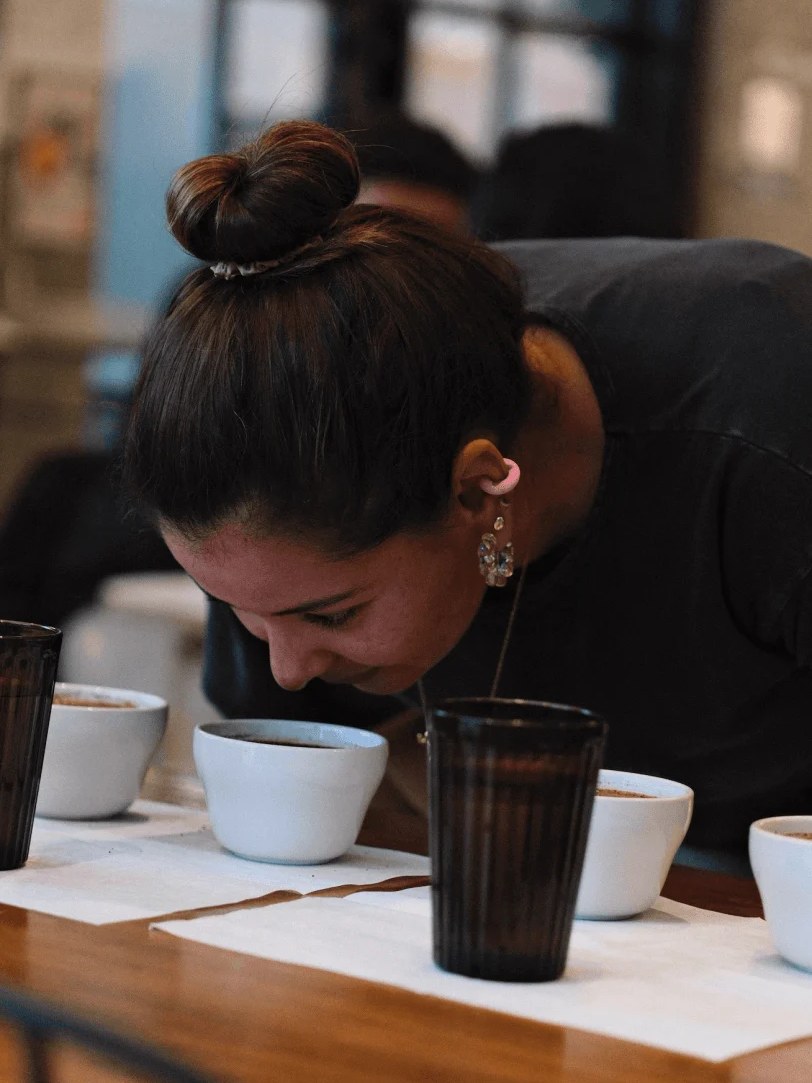
If a producer offers Geisha or Gesha, taste it early, while your palate is still fresh. The variety carries Panama’s most familiar signal in specialty coffee, and it will be the reference point many visitors bring with them. But do not stop there. Follow it with coffees from Boquete, Volcán, and Renacimiento when you can find them. Write down the producer, region, variety if given, process if given, and the brewing method used at the booth. A tasting note without those anchors turns thin by the time you get home.
For cafe buyers, the thing to order after the event is the coffee you can explain without leaning on hype. A Panamanian Geisha/Gesha may be the right call if the cup, price, and allocation fit your bar. A coffee from one of the Chiriquí regions may be better if it lets your staff tell a fuller story about place and producer. The best order is the one your team can brew consistently and talk about clearly at 8:30 on a busy morning.
For roasters, the first purchase should come after a second conversation, not only a first taste. Return to the producer. Ask how the lot should be handled. Ask what the producer wants from a roasting partner. Ask whether the coffee you loved on the table can be bought, shipped, and served in the way your business needs. The event gives access. It does not replace diligence.
For baristas, watch the World Barista Championship with the producer floor in mind. The competition starts October 22, the trade show starts October 23, and both end October 25. A routine can sharpen your sense of service, but the producer floor can sharpen your sense of responsibility. The two belong together in Panama.
If you can attend only one day, make it October 23 and arrive when the trade show opens. If you can attend the full run, arrive by October 22 for the start of the World Barista Championship, then use October 23-25 for producer meetings, tastings, and return visits to the booths that stayed with you. World of Coffee Panama will be measured first by its attendance numbers, but its real trace will appear later, on cafe menus that name the producer, the region, and the reason the coffee made it onto the bar.
Frequently Asked Questions
When does World of Coffee Panama take place?
World of Coffee Panama will run October 23-25, 2026, at the Panama Convention Center in Panama City. The World Barista Championship begins one day earlier on October 22 and runs through October 25, overlapping with the main exhibition.
How many people are expected to attend World of Coffee Panama?
The event expects 13,000 domestic and international participants, with more than 320 exhibitors from over 30 countries. More than 90 Panamanian producers are expected to participate, joined by producers from more than 15 countries.
Why is World of Coffee Panama significant for the specialty coffee industry?
It marks the first World of Coffee held in Latin America and places the global specialty coffee crowd inside a Central American coffee-producing country. This reverses the usual direction of travel by bringing the trade show to origin, allowing roasters, buyers, and cafe owners to meet producers directly in the host country rather than only encountering coffee after it has left origin.
What makes the timing of World of Coffee Panama unique?
The World Barista Championship begins October 22, one day before the trade floor opens, bringing national champions from more than 60 countries to Panama City. This overlap means competitors, coaches, roasters, importers, producers, and cafe owners will all be moving through the same city during the same week, creating concentrated industry interaction.