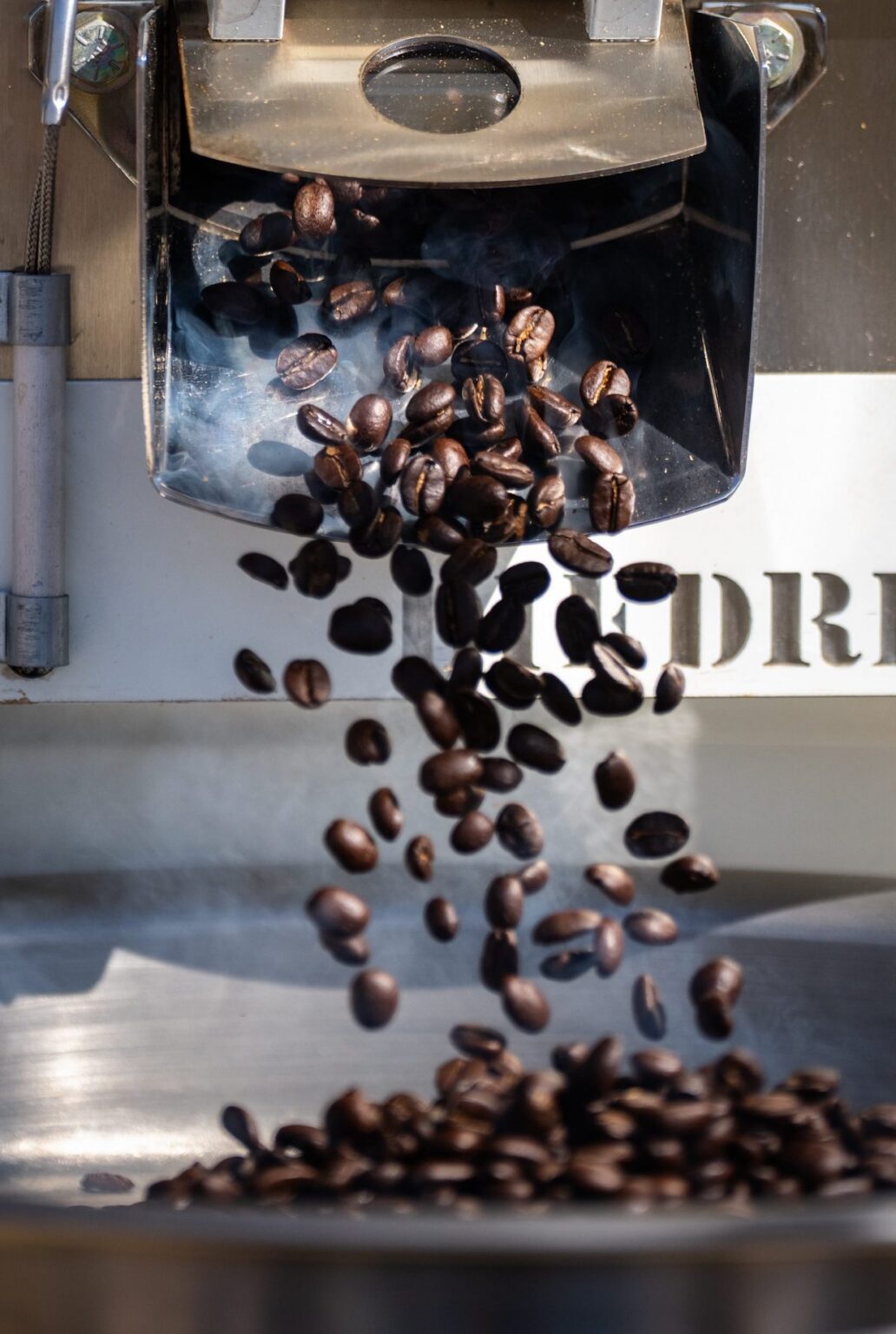
At Sandia National Laboratories' National Solar Thermal Test Facility, Michael Sweeney watched coffee tumble in a drum heated by energy that had first been stored in rocks. Solar powered coffee roasting at Sandia National Laboratories uses photovoltaic energy stored as heat in a rock bed, then releases that heat into a drum roaster. The test with Michael Thomas Coffee in Albuquerque reached temperatures as high as 600 degrees Celsius and roasted coffee to light, medium, and dark levels.
That is the part worth separating from the usual equipment pitch. This is not a new roaster wearing a solar label. Sandia's work points toward a retrofit, a way to adapt existing natural gas-fueled drum roasters so the operator keeps the machine they already know and changes the source of heat. For a craft built on repeatable curves, batch memory, and small sensory corrections, that distinction matters more than the panel array.
Why solar powered coffee roasting matters now
Roasting has always been a heat craft before it is a flavor craft. Green coffee enters the drum cold, dense, and grassy. The roaster's job is to move heat into that seed at a controlled pace, then stop the process before sweetness turns flat or roast flavor takes over the cup. The fuel source sits behind every decision about charge temperature, airflow, development, and color.
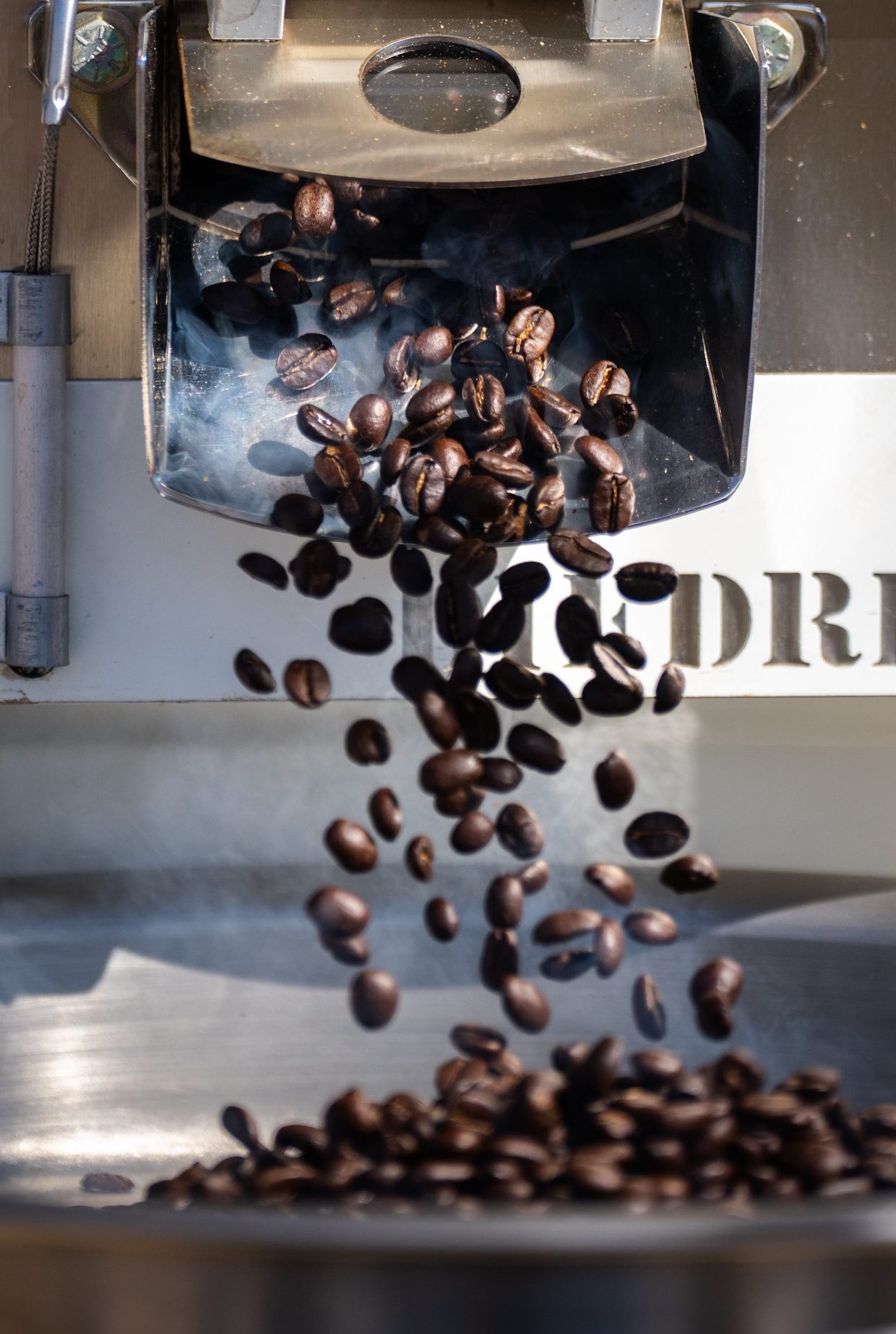
Sandia's solar powered coffee roasting experiment puts the heat source back in view. The project tested whether stored solar energy could supply usable heat inside a drum. It produced light, medium, and dark roasts. It reached temperatures as high as 600 degrees Celsius. It also cut the roasting time by a few minutes for the dark roast, and the system allowed faster preheating and cooling between batches.
The Albuquerque setting is part of the method. The city has approximately 300 sunny days per year, which gives a solar heat project more daily chances to charge storage. The work is funded through New Mexico's Technology Readiness Gross Receipts Initiative, or TRGR, a state program that supports New Mexico businesses moving lab technologies toward commercial use. Michael Thomas Coffee gives the project a roasting partner with working-batch experience rather than a purely academic test load.
For cafe people, the promise is not a vague green halo around a bag of beans. It is a question at the back of the roastery: can a drum that already has muscle memory, seasoning, and staff training accept stored solar heat without forcing the roaster to start again? Michael Sweeney, owner of Michael Thomas Coffee, is the artisan in this experiment because he knows what a roast curve feels like when it behaves. Sandia supplies the thermal system. Sweeney supplies the craft test.
How the Sandia rock-bed system works for solar powered coffee roasting
Ken Armijo, the Sandia systems engineer helping lead the solar heating project, described the concept as indirect solar heating. Photovoltaic panels generate electricity. That electricity is converted into heat and stored in a radial packed-bed energy storage system filled with rocks. When the roaster needs heat, the system discharges stored energy into the drum.
It's not learning a new roasting machine. It's working with your current roaster that you know extremely well and just adapting to a different energy source1
Michael Sweeney, Owner, Michael Thomas Coffee
That shifts the roaster's problem. The question is no longer only whether sunlight is available at the moment of roasting. It is whether the stored heat can be released with the control a coffee drum demands. Roasting does not reward blunt heat. A batch needs enough energy to dry the coffee, carry it through browning, and finish at the intended roast level without running away. Sandia mechanical engineer Luke McLaughlin controlled how much heat was released from the bed of rocks during the test, while Sweeney read the behavior of the beans in the drum.
The system reached temperatures as high as 600 degrees Celsius, a number that matters because coffee roasting needs intense, responsive heat rather than low-grade warmth. A lab test at the National Solar Thermal Test Facility is still a proof-of-concept. But 600 degrees Celsius puts the test in the temperature range where a roaster can ask craft questions instead of merely asking whether the system gets hot.
The process sequence is simple to describe and harder to control: panels produce electricity, the energy becomes stored heat in rock, the rock bed releases heat into the drum, and the operator evaluates the batch. Each step inserts a control point. Charging the bed sets up the day's thermal reserve. Discharging the bed governs the drum's energy input. The roaster still watches time, temperature, color, and aroma, but the flame has been replaced by stored heat.
Michael Sweeney's Albuquerque pilot at Michael Thomas Coffee
Michael Sweeney owns and operates Michael Thomas Coffee in Albuquerque, and his role in the Sandia test is practical. He is not there to bless a technology from a distance. He is the person asking whether a batch behaves like coffee roasting, whether the drum responds, whether the roast levels land in recognizable territory.
During the test, Sandia and Michael Thomas Coffee roasted coffee to light, medium, and dark levels. That range matters because one roast level can hide problems another exposes. A light roast can reveal whether heat application carried enough energy through drying and browning without flattening the coffee too soon. A medium roast tests repeatability in the zone many cafes rely on for milk and filter service. A dark roast asks whether the system can keep driving heat deep enough into the batch, then stop before the profile runs past its mark.
Sandia said the system cut roasting time by a few minutes for the dark roast. The solar system also allowed the roaster to be preheated and cooled more quickly between batches. For a production roaster, those minutes count. Batch pacing shapes a roasting day. Faster preheating can change how soon the first batch begins. Faster cooling between batches can shorten the gap before the next charge. Sweeney noted that this could increase daily output, and that is the operational detail roasters will read before they read the word solar.
The most important part of the pilot may be what it did not ask Sweeney to abandon. Drum roasters become familiar through repetition. Operators know their machines by lag, heat carryover, airflow response, and the way a particular batch size behaves when the roaster is already warm. Sandia's stated aim is a bolt-on solution for existing machines, which keeps that acquired knowledge in play. Solar powered coffee roasting becomes less disruptive if it lets a roaster keep the drum, the workflow, and the sensory checkpoints.
From green chile to coffee drums
Sandia's coffee test followed earlier work on green chile roasting in 2022. In that experiment, concentrated sunlight cut green chile roasting time in half and produced more uniform roasts than traditional gas-fired roasting. Coffee is a different material, with different stakes. Chile roasting rewards blistering and even surface heat. Coffee roasting is a sequence of internal changes where too much heat at the wrong moment can mark the cup.
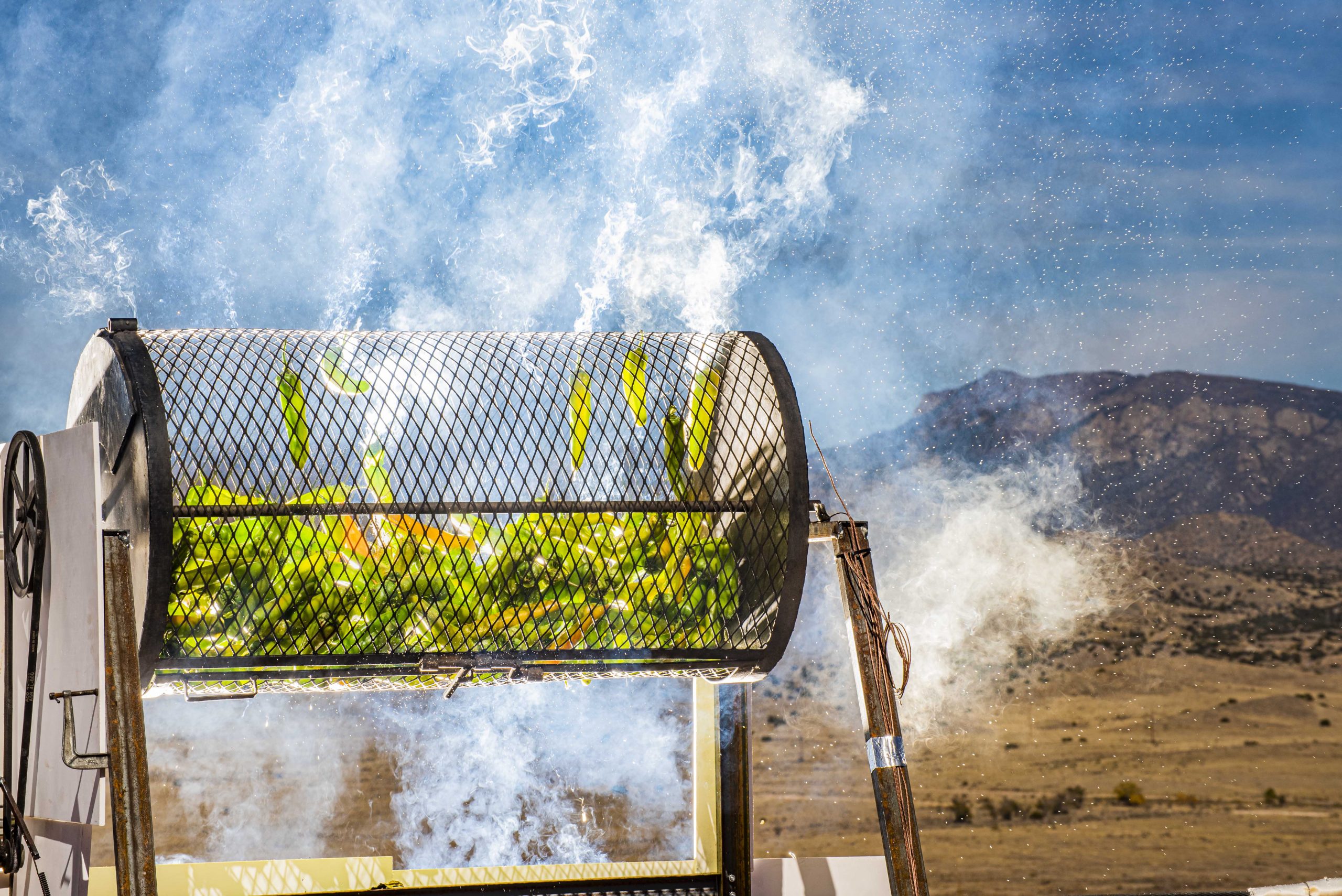
The connection between the two tests is industrial heat. Both chiles and coffee need controlled, high-temperature roasting. Both usually depend on combustion in familiar machines. Sandia's move from chile to coffee shows the same thermal-storage idea meeting a craft with a tighter sensory feedback loop. A coffee roast is judged later in the cup, after grinding, brewing, and tasting. The test brief does not provide tasting notes, so the responsible reading stays with the process evidence: the system roasted to light, medium, and dark levels, reached as high as 600 degrees Celsius, and changed batch timing in the dark roast.
Coffee people should resist turning this into a flavor claim before there is public cup data. The useful question is narrower and better: can stored solar heat provide a controllable heat source for a drum roaster? The Sandia and Michael Thomas Coffee test says that question now has a working demonstration.
The chile background also explains why New Mexico is a logical proving ground. Albuquerque's approximately 300 sunny days per year create a favorable condition for charging solar thermal storage. The regional food craft already has a public relationship with roasting heat, from green chile season to coffee production. Sandia brings the energy-storage research environment. Michael Thomas Coffee brings the roastery context.
Retrofitting existing drums, not replacing the roaster
The retrofit claim is the practical hinge of the project. Sandia's work aims to develop a bolt-on solution for existing natural gas-fueled roasting machines. That is a different proposition from asking a small roaster to buy a new machine, retrain staff, rebuild profiles, and reorganize production around unfamiliar equipment.
Roast profiles are institutional memory. A cafe's house espresso may depend on a profile that has been nudged over months by extraction, milk behavior, and customer response. A filter roast may carry decisions about solubility, sweetness, and how the coffee behaves through a pour-over or batch brewer. Change the roaster, and every one of those decisions may need to be tested again. Change the heat source while keeping the drum, and the work still changes, but the operator begins from a known machine.
For roasters watching solar powered coffee roasting from outside New Mexico, the checklist is mechanical and operational. Can the existing drum accept an external thermal input from a storage system? Can the roaster control heat release with enough precision for different roast levels? Can the rock bed charge on a schedule that matches production? Can preheat and between-batch timing improve without squeezing out the sensory decisions that keep batches consistent?
The Sandia project does not answer every shop-level question yet. It does establish the intended direction: stored solar heat as an addition to the equipment roasters already use. That direction makes the technology easier to imagine in a working roastery, where floor space, training time, and daily production do not bend easily around a new machine.
The legal and commercialization pieces are already present. The thermal-storage technology used in the coffee experiment is covered by U.S. Patent No. 11,549,761. The Michael Thomas Coffee project is part of a Cooperative Research and Development Agreement, the formal structure Sandia uses to work with private companies. TRGR funding ties the experiment to New Mexico's effort to move lab technology toward business use.
What roasters should watch next
The next useful data will not be a slogan. Roasters will want repeat batches, clear profile comparisons, and cup evaluation across roast levels. They will want to know how the system behaves at the start of the day, after several batches, and when stored heat has been held beyond the immediate charging period. They will want to know how quickly an operator can adjust heat release when the coffee asks for correction.
They will also watch the fit of the retrofit. A bolt-on system has to meet the roastery where it already works. That means the installation cannot be judged only by peak temperature. It has to be judged by batch rhythm, operator control, maintenance burden, and whether the machine still feels readable to the person at the controls. Sweeney's involvement is useful because the craft test is not abstract. The coffee has to tumble, brown, and finish in a way a roaster recognizes.
For drinkers, the practical pointer is to follow the names attached to the work rather than hunt for a solar-roasted bag before one is offered. The names are Michael Sweeney and Michael Thomas Coffee in Albuquerque, Ken Armijo and Luke McLaughlin at Sandia, and Bob Sleeper on the licensing side.
The order, if a public release exists, should be the roast level that lets the method show its control: taste a light or medium roast beside the shop's familiar profile, then ask what changed in the drum. The time to show up is when Michael Thomas Coffee or Sandia announces the next public step, not before the test has been turned into a commercial offering.
The craft question ahead is direct. If a roaster can keep the drum it knows, charge a bed of rocks with Albuquerque sun, and release that heat with enough control for light, medium, and dark batches, solar powered coffee roasting moves from demonstration toward a tool a working roastery can evaluate on its own terms.