Before One Bryant Park serves its first October 15 kaiseki menu, Daichi Ebato has a clay vessel to load with stone-ground whole wheat and Hokkaido brown mochi rice. The One Bryant Park restaurant opens at 1111 Avenue of the Americas, between 42nd and 43rd Streets, with a 10,000-square-foot kaiseki floor and a bread program built into the meal from the start (Wikipedia).
That floor, diagonally opposite Bryant Park, holds three separate dining rooms and a bread basket that reads like a baker’s bench after a long conversation between New York and Japan: kabocha brioche à tête, sesame ginger raisin pain d’epi, koji petit baguette, a scallion-poppy seed cube, and, soon after opening, a seaweed naruto croissant. The bread is part of the kaiseki sequence.
Why the One Bryant Park restaurant starts with bread
Kaiseki usually organizes itself around seasonality and five cooking techniques: raw, simmering, grilling, steaming, and frying. Baking sits outside that traditional frame. One Bryant Park places bread inside the meal anyway, with Ebato working alongside Culinary Director Tadaaki Ishizaki and Executive Chef Shuji Furukawa.
The restaurant prices its kaiseki menus at $175 per person for five courses and $265 per person for 11 courses. Ebato’s bread course is part of each menu, so the bread program reaches both diners choosing the shorter path and those sitting for the longer progression.
The menu includes dry-aged Wagyu beef jerky and guinea fowl prepared four ways on the nontraditional kaiseki menu. The bread has to carry carbohydrate, aroma, and texture without flattening the rest of the meal. Ebato’s breads enter that sequence as small bites, much as rice or noodles might appear in another kaiseki context.
It includes the bread course at the lower listed price. The kitchen places that basket inside the 11-course menu’s longer seasonal arc.
I really wanted that perfect balance of 'It's bread but it's also rice,'1
Daichi Ebato, In-house Baker
Daichi Ebato’s basket: kabocha, koji, mochi rice
It is served with komekouji-laced butter. The rice bread was developed with Ishizaki, and its crumb is described as moist and squishy because the mochi rice enters the dough in generous quantities.
In Grub Street’s report on the opening, Daichi Ebato said, “I really wanted that perfect balance of ‘It’s bread but it’s also rice.’” The bread carries wheat structure and rice texture at once, and the clay vessel turns the serving piece into part of the bake.
The koji petit baguette adds another layer of process. Ebato uses rice inoculated with koji spores. After fermentation, the koji converts starches into sugars. He roasts the prepared koji until it becomes deeply toasted and aromatic, then folds it into the baguette dough as a dry, porridge-like inclusion.
The seaweed naruto croissant is slated for soon after opening.
A baker’s route through New York kitchens
Daichi Ebato has 17-plus years in the baking industry. He was born in New York and is Japanese American, and he has described the recipes at One Bryant Park as a way to explore that heritage through bread. His mother is visual artist Akemi Takeda. His brother is musician, artist, and poet Taiyo Ebato.
Ebato fell into cooking during college while working at a Japanese restaurant, then enrolled at the now-closed French Culinary Institute. The bread-baking program at the now-closed French Culinary Institute set his path. His résumé since then has moved across New York’s bread map and its adjacent kitchens: Runner & Stone, Hot Bread Kitchen, Daniel Boulud’s Dinex, ALF Bakery, the Japanese chain I’m donut? in Times Square, and Le Pain Quotidien.
Brioche à tête needs enriched-dough control. Pain d’epi comes from French bread shaping. A croissant, especially one carrying seaweed and naruto references, depends on lamination discipline before any flavor idea can hold. The koji petit baguette needs fermentation knowledge. The mochi rice loaf needs a baker comfortable with porridge bread and rice texture inside a wheat dough.
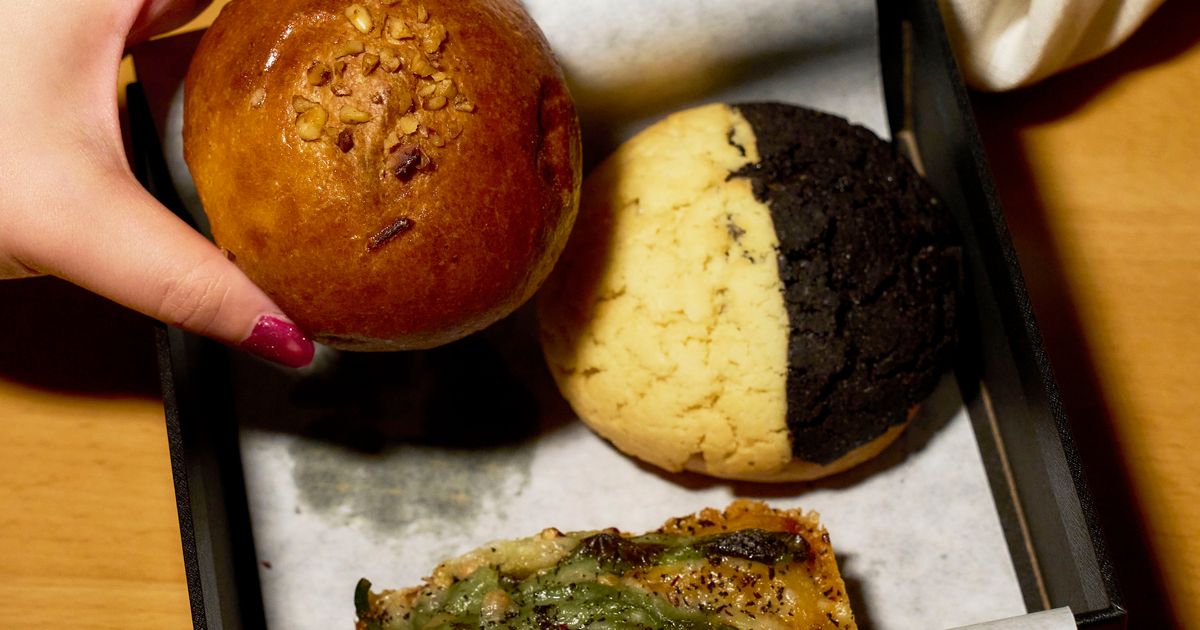
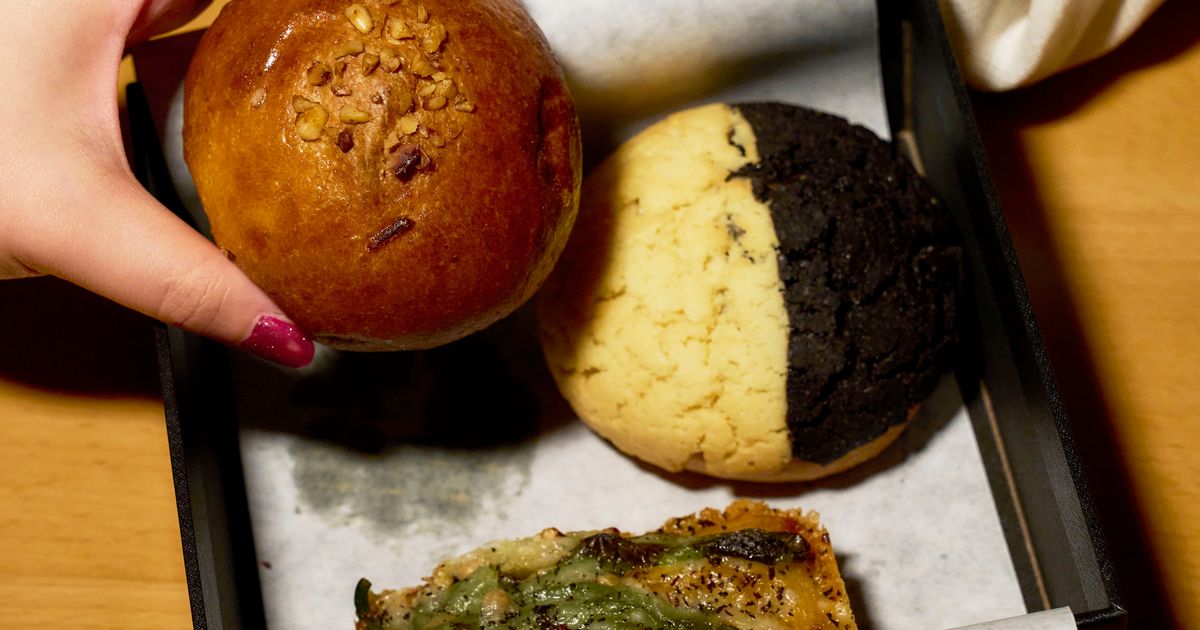
Ebato’s parting gift box includes walnut-and-red-bean-stuffed anpan, black-and-white melon pan that nods to New York’s famous cookie, and mini buckwheat focaccia topped with shishito peppers. The box gives the baker one last word after the kaiseki sequence ends, a small parcel of red bean, melon pan, buckwheat, and shishito that carries the meal back out to Sixth Avenue.
Three dining rooms on a 10,000-square-foot floor
One Bryant Park occupies a 10,000-square-foot floor with three separate dining rooms. The address is also known as 1 Bryant Park, inside the Bank of America Tower at 1111 Avenue of the Americas. The tower was the first commercial high-rise in the United States to earn LEED Platinum certification from the US Green Building Council.
The dining rooms divide the project into distinct experiences. Kumiko Room is a 14-seat sushi counter helmed by chef Yoshihiko Kousaka. Kappo Sono is the relocated kaiseki restaurant from chef Chikara Sono, formerly based in the East Village. The largest dining space carries the One Bryant Park name.
That 14-seat counter gives Kumiko Room the tightest access point in the building. The main One Bryant Park room gives bread-focused diners the clearest route to Ebato’s basket. Kappo Sono gives Chikara Sono’s East Village kaiseki a new Midtown address.
The neighborhood scale is precise: Sixth Avenue, 42nd to 43rd Streets, with Bryant Park across the diagonal. For a Midtown lunch or dinner crowd, that location puts the restaurant between office towers, theater traffic, hotel guests, and commuters. The kaiseki reservation is the route to Ebato’s basket.
What to order around the October 15 opening
Its process is the most explicit: rice inoculated with koji spores, fermented until starches convert into sugars, roasted until toasted and aromatic, then added to the dough. That sequence gives the loaf its umami-forward character.
The first named set does not include the seaweed naruto croissant, which arrives soon after opening. Croissants are unforgiving even before a baker introduces ingredients that carry salt, ocean flavor, and visual expectation.
The longer menu places the bread in the restaurant’s wider seasonal structure, which is organized around eight seasonal menus under Ishizaki’s direction (Onebryantparknyc).
One Bryant Park’s opening will be judged at the table, loaf by loaf, as Ebato’s clay-vessel bread, koji baguette, and parting box move from opening-week curiosity into nightly repetition.