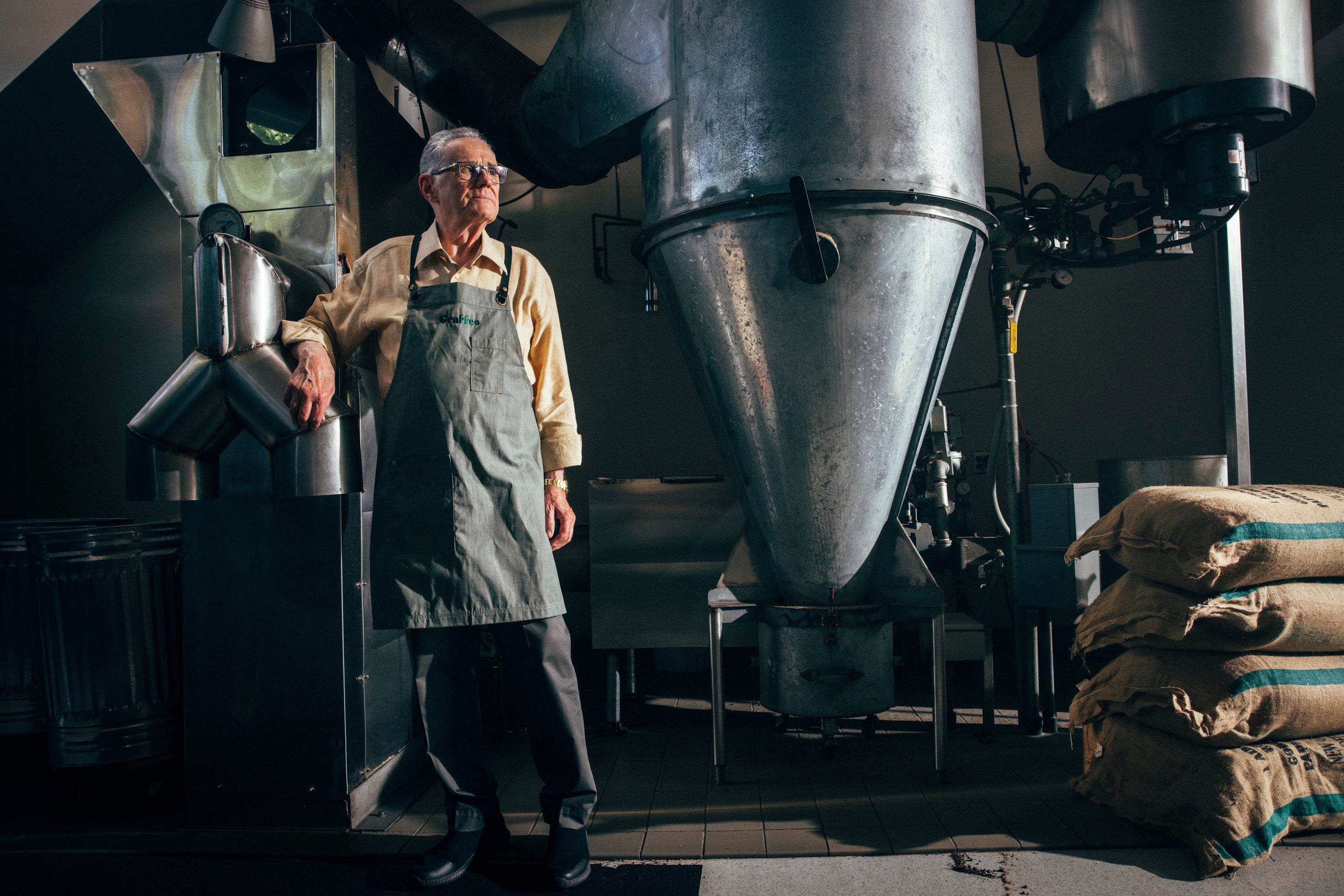
The counter at 735 Columbus Avenue sells beans, including one blend from Colombia, Costa Rica’s Tarrazu region and Papua New Guinea, roasted light or dark, with Swiss Water decaf beside it. Luciano Repetto of Graffeo Coffee, 81, has 47 years of roasting work in San Francisco’s North Beach (Pacificsun).
Graffeo Coffee has operated in North Beach since 1935, and the shop still reads as a roastery first. The business remains focused exclusively on roasting, with no brewed coffee service. Graffeo still asks customers to choose light or dark at the counter. Graffeo still offers a simple choice at the counter: light or dark.
Repetto started at sixteen, sweeping floors in his father’s shop, took over the family business in 1978, learned fluid-bed roasting in his thirties from Mike Sivetz in Oregon, and adapted and re-tooled the roaster at least nine times over the years (Dailycoffeenews).
Luciano Repetto's Graffeo Coffee legacy on Columbus Avenue
Luciano Repetto’s career starts with a broom. At sixteen, his first coffee job was sweeping floors in his father’s shop. His early work started below the counter in his father’s shop. Repetto’s early work started below the counter, before the roaster, before the customer praise, before the Sprudge Twenty class of 2026.
Repetto came to the United States as a boy from Liguria, Italy, and grew up inside the family coffee business. Walter A. Haas III bought Graffeo from Repetto and kept him involved as an owner.
"Luciano Repetto is one of the last true old-world coffee craftsmen in America. An immigrant from Liguria, Italy, he came to the United States as a boy, grew up in his father's shop, and devoted his life to a singular vision of coffee."1
Walter Haas, co-owner
Haas leads the company now, with a background that includes a B.A. From Harvard, a B.A. From Harvard, and marketing roles at Levi Strauss and Enjoy Technology Inc. Repetto remains a partner, co-owner, shareholder and owner of the Graffeo building in North Beach.
From Liguria to the 1978 handoff
Repetto took over Graffeo after his father retired. Before that, he had watched his father’s work ethic at close range. In the Sprudge interview, Repetto described his father as his first mentor and said that ten-hour days, six days a week, were routine for him.
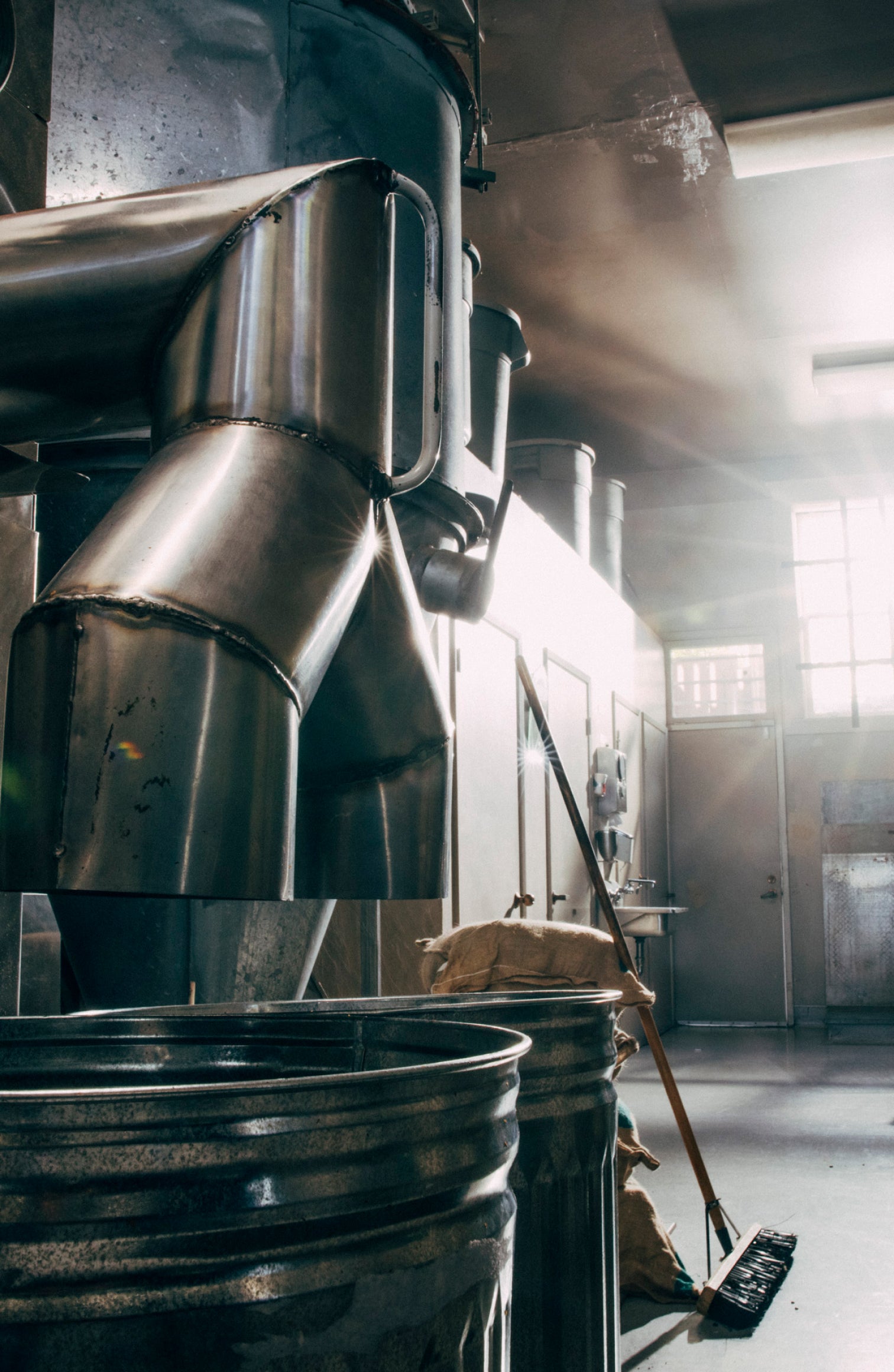
Repetto inherited a working shop. He inherited a working shop. Floors needed sweeping. Beans needed roasting. Customers needed a standard they could return to the next week and the week after that. At sixteen, coffee meant labor, schedule and repetition for him. It was labor, schedule and repetition.
The 1978 handoff also puts Repetto’s career across several eras of American coffee. He ran Graffeo before the current language of specialty coffee settled into menus. He kept running it as younger drinkers began to take origin, roast level and brewing more seriously. Repetto said younger people now take coffee seriously.
Graffeo’s place in San Francisco food culture grew through that long middle stretch. Michelin-starred restaurants, Bay Area institutions and admirers including Ruth Reichl of The New York Times kept buying Graffeo. A dining room can change menus nightly; the coffee at the end of service still has to land in the same register for repeat customers. Restaurant loyalty depends on repeatability in the cup.
At 81, Repetto still comes to work every day and fills in where he can with current management. He still comes to work every day, Haas has said. Graffeo still asks him to touch the system he spent decades building.
Fluid-bed roasting and the Mike Sivetz line
Repetto has named fluid-bed roasting as the turning point in his coffee life. He found it in his thirties. Pacific Sun reported that he learned the temperature-controlled fluid bed technique from Mike Sivetz in Oregon, a chemical engineer who specialized in coffee processing. Mike Sivetz in Oregon opened the door to the science of coffee roasting.
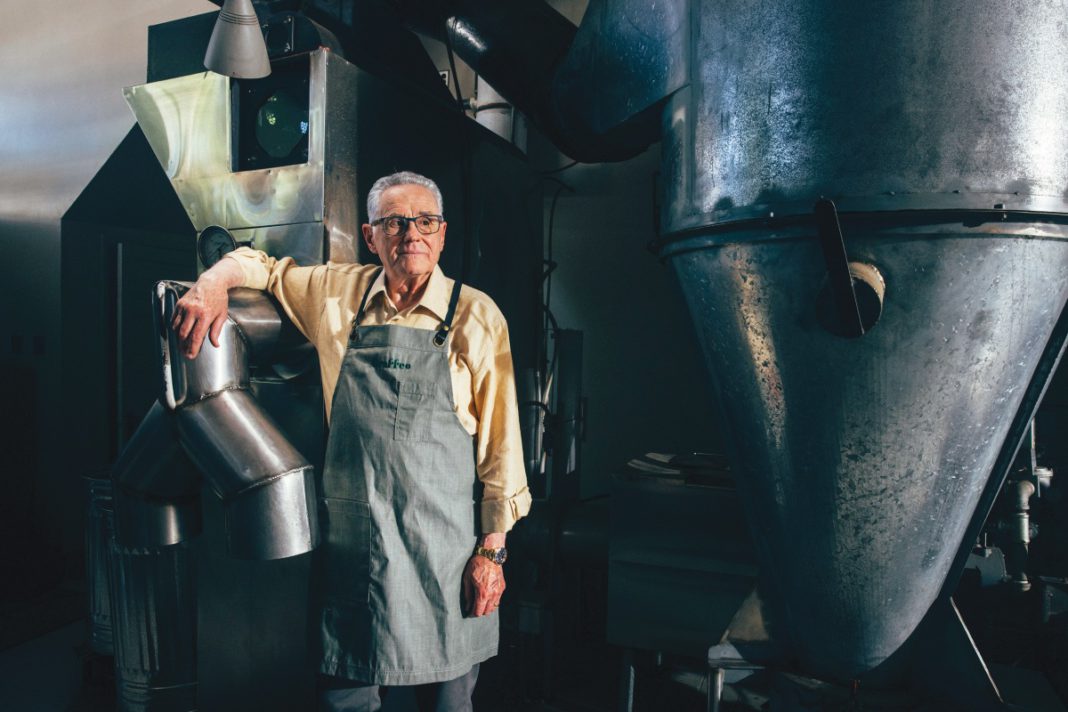
A fluid-bed roaster uses hot air to move and roast the coffee, with temperature control at the center of the process. Graffeo valued the method for its accuracy, repeatability and a way to connect craft judgment with equipment control.
Repetto’s work with the machine did not stop at adoption. Daily Coffee News reported that he adapted and re-tooled the roaster at least nine times over the years. He did not buy a machine and let it define the house style. He kept altering the tool until it served the roast he wanted.
The old-world apprenticeship and the engineering decision sit beside each other. Repetto learned work rhythm from his father, then learned roast science from Sivetz. His father gave him the rule of showing up. Sivetz gave him a method for controlling heat.
That combination shaped Luciano Repetto into a counterexample to coffee’s habit of expanding through options. Repetto used a specific technology to narrow the promise. The same blend and two roasts keep the result steady enough that restaurants, local customers and mail-order loyalists understand what they are buying without a lecture.
One blend, two roasts, and no brewed coffee service
Graffeo’s menu is small enough to remember after one visit. The signature blend uses coffees from Colombia, Costa Rica’s Tarrazu region and Papua New Guinea. Customers choose Light Roast or Dark Roast. Swiss Water decaf sits alongside those two roasts.
The order matters because it is the whole philosophy in retail form. The Dark Roast is most tied to Repetto’s reputation, the fluid-bed roasted dark beans that Haas has called famed. The Light Roast is the same blend handled with less roast weight. There is no brewed coffee service. The bag is the product.
That focus gives Graffeo its scarcity without theatrical limited releases. The limit is not a numbered drop or a queue engineered for social media. The limit is the house decision to keep working inside one blend and two roast expressions. In an era when many cafes rotate coffees by country, farm, processing method and producer, Graffeo’s counter repeats a shorter sentence.
Pacific Sun reported that Graffeo roasts a small selection of beans, 350 to 450 pounds daily, and sells everything it roasts. The quantity places the shop in a working scale: too much to treat as a hobby, too focused to blur into a broad catalogue. The daily sell-through also clarifies why consistency matters. If everything roasted is sold, each batch enters someone’s kitchen, restaurant service or office ritual quickly (Pacificsun).
He uses a drip system with a metal filter only, and he also loves the Moka pot. The metal filter detail sounds like a roaster speaking through domestic equipment. No paper filter. The oils and body remain in the cup. With a Moka pot, he watches the brew. With drip, he lets it go by itself.
Why restaurants and regulars kept returning
Restaurant loyalty does not come from sentiment alone. Graffeo’s coffee has earned loyalty from Michelin-starred restaurants, Bay Area institutions and Ruth Reichl, and the connective tissue is control. A restaurant coffee program needs a roast that behaves across service, staff changes and equipment variables. A regular at home needs the same thing on a smaller counter.
Graffeo’s discipline gives those customers a stable reference point. A kitchen can reorder without learning a new origin sheet. A home drinker can adjust grind and ratio around a blend that does not shift every few weeks.
It also makes the visit cleaner. The Dark Roast has the strongest connection to Repetto’s public reputation; the Light Roast gives the same blend a different roast expression.
Go for the counter, the bag, the chance of seeing Repetto at the register, and the North Beach address that has held the roasting identity since 1935.
The shop’s restraint also resists the pressure to turn every craft business into a classroom. Repetto has said new coffee workers need training in every part of the business, from roasting to green coffee to retail. At Graffeo, the lesson sits in the product line. Fewer choices can demand more responsibility from the roaster.
The Sprudge Twenty 2026 recognition at 81
Sprudge named Luciano Repetto to The Sprudge Twenty class of 2026, an annual initiative presented with Pacific Barista Series that honors leaders in the global specialty coffee community. Repetto’s interview was conducted on July 10, 2025, at Graffeo Coffee on Columbus Avenue.
The timing gives the recognition weight. He had been owner and primary roaster of Graffeo Coffee for 47 years. Many coffee awards focus on new projects, new cafes and new processing stories. Repetto’s inclusion turns attention to duration: the person who kept returning to the same roaster, the same blend structure and the same neighborhood counter (Dailycoffeenews).
His answers in the Sprudge interview also show where he thinks the industry still has work to do. Repetto wants more serious training. He has said many people in the industry have never been properly trained. That line lands differently from someone who started with sweeping, learned from his father, studied under Sivetz and then spent decades reworking a machine.
The personal details in the interview do not feel ornamental. His favorite coffee-related song is “The Coffee Song” from the 1940s, especially Frank Sinatra’s rendition. If he could drink coffee with anyone, he would choose Dante Alighieri. Those answers track back to Italy, language, memory and the full span of human behavior that Repetto sees in Dante. They also make sense beside a life spent repeating one craft until it holds biography.
At the counter, though, the story remains practical. Graffeo Coffee is at 735 Columbus Avenue in San Francisco.
The Dark Roast is the roast most closely tied to Repetto’s fluid-bed reputation, and the Light Roast is the same Colombia, Costa Rica Tarrazu and Papua New Guinea blend in a lighter register. Go in the morning if you want the best chance of catching the shop in motion.
The next chapter belongs to Haas and the team around him, but the measure stays the same: one blend, two roasts, and a roaster’s standard carried forward by the people who have to roast it again tomorrow.