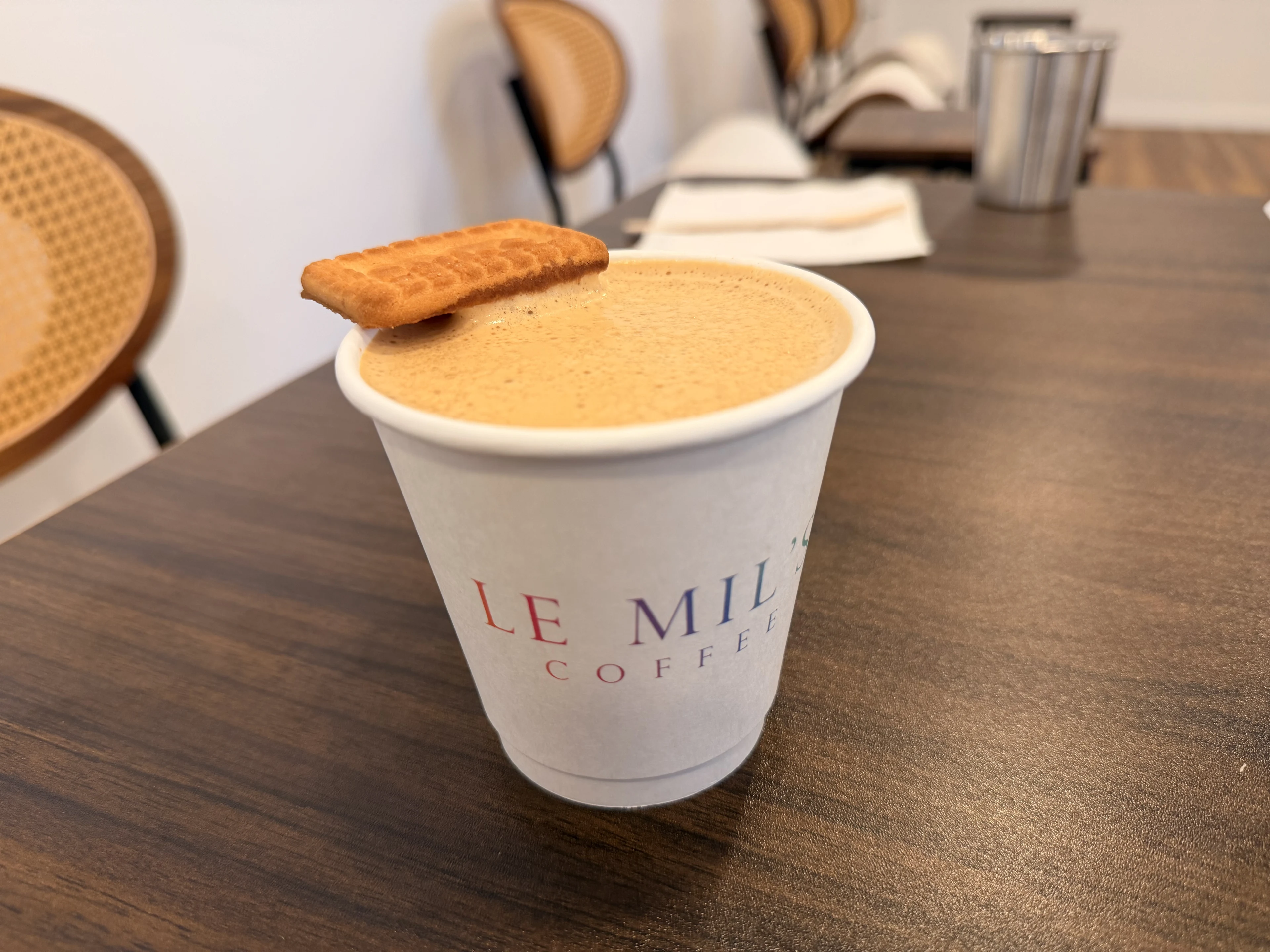
The Modbar sits under a long natural-wood bar at 1330 Polk St., with the counter kept clear for the news on Polk Street: Le Mil’s Coffee is now open in Lower Nob Hill, pouring Indian coffees tied to co-owner Milana Ram’s fifth-generation family farm. The cafe opened on 15 August 2026 and brings Navilumane Estate, Ram’s family farm, into a San Francisco morning routine through coffee roasted every two weeks at Berkeley’s CoRo shared roasting facility (Lemils).
Le Mil’s Coffee Opens in Lower Nob Hill
Le Mil’s Coffee opened at 1330 Polk St, San Francisco, CA 94109, in San Francisco’s Lower Nob Hill neighborhood. The date lands on India’s Independence Day, a detail that fits a cafe built by married co-owners Milana Ram and Himanshu Bhaisare, both of whom grew up in India, and both of whom now use a Polk Street storefront to place Indian-grown coffee in front of San Francisco drinkers (Lemils).
Le Mil’s operates in Lower Nob Hill. Le Mil’s operates Monday through Friday from 7 AM to 3 PM, and Saturday through Sunday from 8 AM to 4 PM. That schedule makes the first visit simple: weekday before work for filter coffee, weekend late morning for a pourover when there is time to ask what Ram has roasted most recently at CoRo in Berkeley (Lemils).
Bhaisare leads marketing, finance, technology, and distribution for Le Mil’s, while Ram carries the coffee link from farm to roast. The couple met at San Francisco State University while pursuing master’s degrees, Ram in electrical engineering and Bhaisare in computer science. Le Mil’s Coffee is a San Francisco cafe with an Indian farm relationship built into the ownership.
Bhaisare described the room as a daytime cafe with a slower register: “Our goal was to create a ‘cafe lounge’ experience that bridges the gap between a traditional daytime cafe and an evening lounge, treating specialty coffee with the same reverence as wine,” said Himanshu Bhaisare1. The line explains the open counter, the seated mezzanine, and the emphasis on brewed coffee that asks for a few minutes rather than a grab-and-go sprint.
The Fifth-Generation Farm Link Behind the Cup
The family account, reported by Daily Coffee News, traces its coffee history to Ram’s great-great-grandfather, Kalasapur Thimmiah, who received approximately 200 acres of farmland in Karnataka from the Mysore royal family. The land later moved through generations and shrank as family members sold their shares (Thenovacafe).
Ram remembers spending time as a child on 60 acres then owned by her grandfather. Today her parents manage the family’s remaining 20 acres in Baba Budangiri and Hassan. When a customer orders coffee on Polk Street, the cafe can point to the family farm, the current acreage, and the people still managing it in India.
The scale is small enough to shape the business. Ram has said the family farm produced only one ton of coffee beans in 2023. Milana and Himanshu decided to give the family farm a chance when her parents were considering selling it, and Le Mil’s became the market that could carry the crop into roasted coffee, brewed drinks, and retail bags for San Francisco customers.
Ram also sources from neighboring producers in India. She put that shift in village terms: “Starting in 2026, we began sourcing beans from neighboring farms along with our family farm. The neighboring farmer community is very proud that a girl from their village has taken their coffee so far and they are excited to work with us,” said Milana Ram2.
The varieties named for the family crop are S795, S274, Selection 9, and Cauvery. The coffees undergo washed and natural post-harvest processing before arriving in the United States. Those details give regulars a route into Indian coffee beyond country name alone: variety, process, farm, neighboring producer, roast date. Customers can ask which process is on pourover and whether the coffee is from Navilumane Estate or a neighboring farm.
Roasting at CoRo, Serving India on Polk Street
Ram roasts Le Mil’s coffees every two weeks at Berkeley’s CoRo shared roasting facility. That cadence is the production clock behind the Polk Street bar. It also gives the cafe a clear answer to the question serious coffee drinkers ask after origin: when was it roasted, and by whom?
The answer at Le Mil’s is specific. Ram roasts the coffee herself at CoRo, then brings it into a menu that includes South Indian filter coffee, qishr, manual pourovers, and espresso drinks. The South Indian filter coffee connects the cafe’s Indian coffee focus to a brewing format with its own service language. The manual pourover serves the current roasted lot without milk, syrup, or espresso pressure shaping the cup.
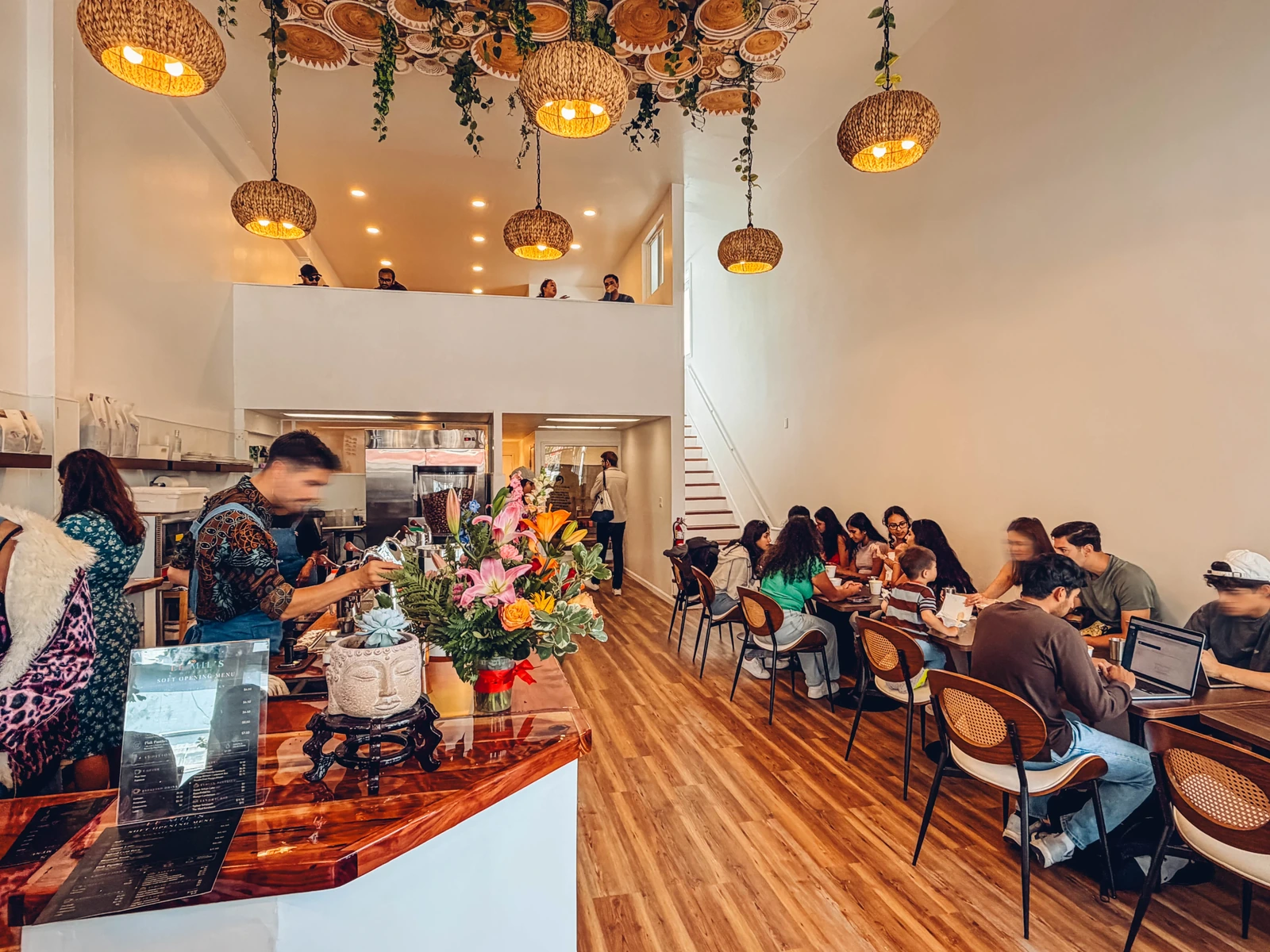
The espresso program runs through a Modbar undercounter espresso system. That choice keeps the sightline open between barista and guest, with less machine bulk on the counter. The open bar gives customers a view of the cafe’s Indian-grown coffee service. A guest can see the pour, the handoff, the bag, and the person working the coffee.
Ram has also said Le Mil’s baristas are learning and participating in roasting sessions as demand grows. The staff may learn coffee from green to roasted to brewed, which can answer better questions at the counter. A barista may see the roast cycle as well as the dosing cup.
The Room: Baskets, Rattan, and an Open Counter
White walls hold the long Polk Street space. Woven rattan pendants hang from high ceilings. Leafy plants drop from a layered South Asian basket installation above the ground-floor main area and at eye level for guests seated on the upstairs mezzanine.
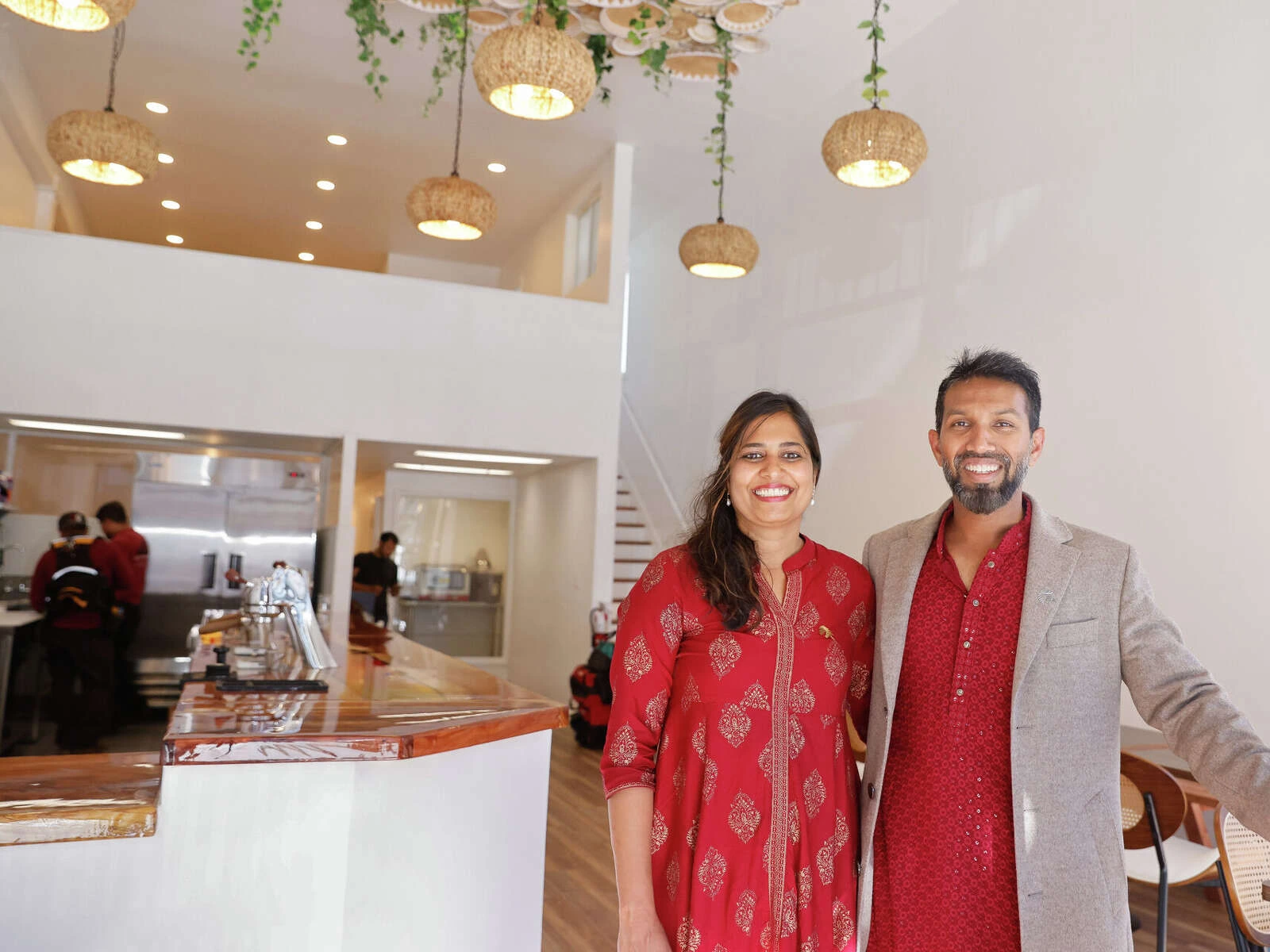
Ram and Bhaisare designed the basket installation themselves. Ram and Bhaisare did not outsource the South Asian reference to a design studio. The same two people who built the sourcing link also shaped the object overhead. Here the visual work keeps pointing back to the owners.
The natural-wood bar carries colorful epoxy accents, with the Modbar system set underneath. The result is practical first: baristas get space to work, customers get a clearer view of service, and the counter can function as a place for questions.
Le Mil’s also serves food and drink items that keep the menu in the same field: nan khatai, gulab jamun cake, mango-cardamom cake, and vegan lassi. Nan khatai is served as a pastry with coffee if available.
Why Le Mil’s Coffee Matters for San Francisco Mornings
Le Mil’s Coffee gives Lower Nob Hill a specific Indian coffee address with a named family farm behind it. Drinkers who plan mornings by origin, roaster, and service will find a named family farm behind Le Mil’s Coffee in Lower Nob Hill. Navilumane Estate and neighboring Indian producers supply the coffees, Ram roasts every two weeks at CoRo, and the bar team serves them on Polk Street.
The cafe also gives Indian specialty coffee a visible retail setting in a city where many customers already understand single-origin menus, pourovers, and roast dates. It needs to put Indian coffees into those familiar formats, then add the parts many customers may not know yet: Baba Budangiri, Hassan, S795, S274, Selection 9, Cauvery, washed processing, natural processing.
The manual pourover can follow the most recent CoRo session by Ram. The counter may have the current roast available before the next two-week roast cycle. The cafe closes at 4 PM on Saturday and Sunday.
The next measure of Le Mil’s will be visible at the bar at 1330 Polk St., every time Ram’s two-week roast cycle turns another Indian crop into a morning cup.