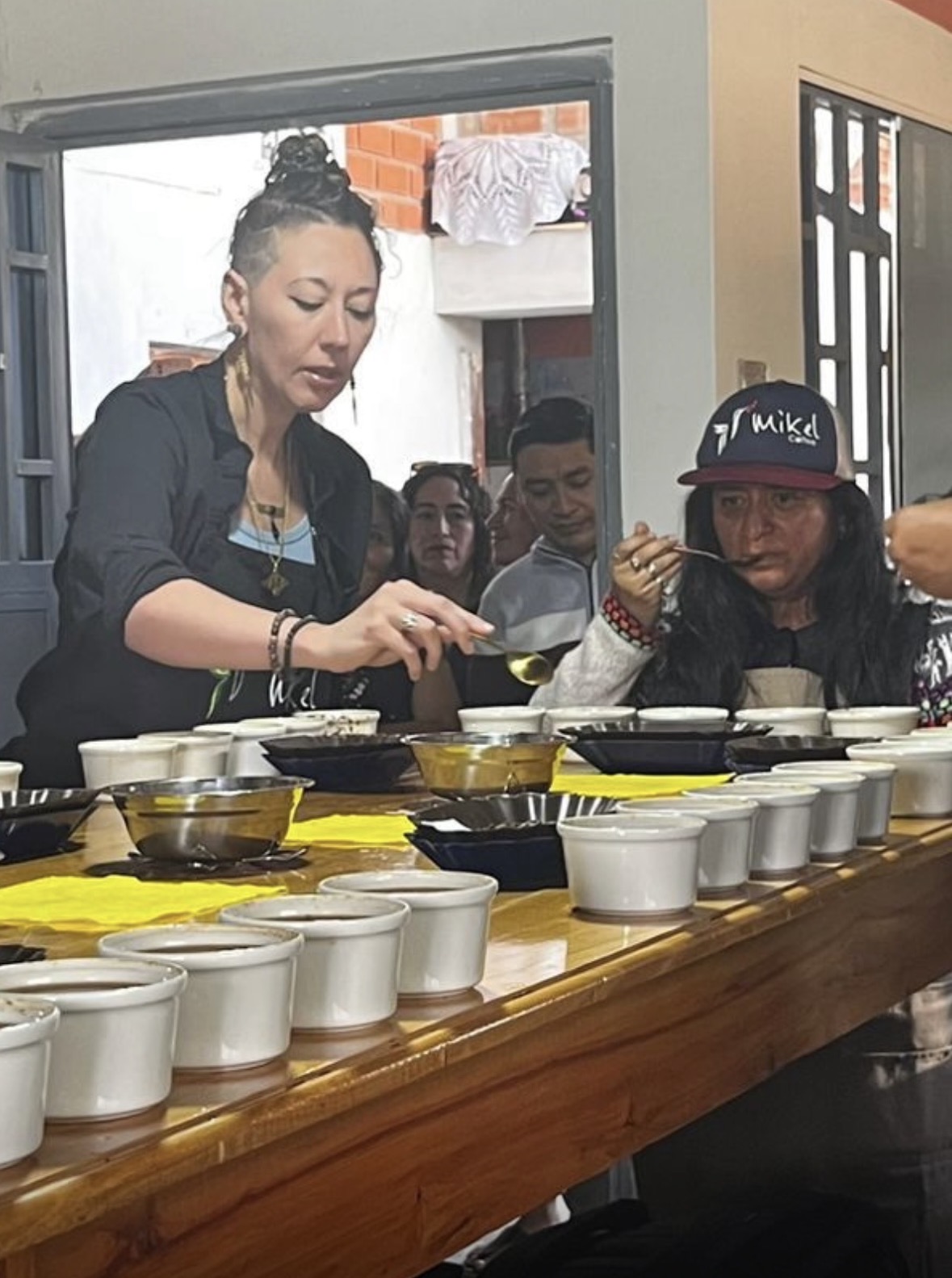
One container was the cautious first-year target; more than 10 containers became the first-year result. Kris Carlson of Coffeekris is a Kansas City-based green coffee sourcing curator launched in 2025, built for roasters who want one desk for many importer relationships without paying above direct importer pricing.
Carlson runs Coffeekris as an authorized representative for importing companies. She works as an authorized representative for importing companies, then helps roasters navigate coffees from those partners through a single point of contact. The roaster pays the same price they would pay by going directly to the importer. The importer compensates Carlson for the connection.
Small roasting companies can use Carlson as a single point of contact for buying. The buyer can start with Carlson for offer sheets, shipment and availability questions, and the exporter relationship behind each lot. The work turns on green coffee basics: bags, pallets, supersacks, containers, landed positions, relationships, and the judgment of a buyer who has cupped at origin and stood behind a roaster.
From Take Five to Revocup, Kris Carlson's Coffeekris path
Carlson started in coffee at Take Five Coffee + Bar in Overland Park, Kansas, a coffee shop and venue that closed in 2015. Carlson started in coffee over a decade ago. The room suited her earlier life as a music and art major. Take Five gave that idea a counter, a bar shift, and a working service floor.
She later joined Revocup Coffee Roasters, an Ethiopian-founded Kansas City-area roasting and retail company. Revocup also ran a nonprofit that gave back to coffee producers and their communities. Revocup's producer connection made Carlson's job more relational. Coffee moved between producers, exporters, and buyers.
Revocup became a personal shelter as well as a professional one. Six months after Carlson began working there, her mother died by suicide. After two weeks away from work, Carlson returned to cards, flowers, food, monetary donations, and hugs from the Revocup community. TG, the matriarch of Revocup, took Carlson in as her own. She talks about equity, respect, and the people inside the system because her own coffee life was changed by people inside one company (Voyagekc).
Carlson spent five years at Revocup. She worked in cafe management, roasting, and wholesale. She volunteered at events, applied for scholarships, competed as a coffee roaster, and accepted roles that widened her practical understanding of the business. In 2022, she received a Diedrich Roasters scholarship through the Coffee Roasters Guild (Voyagekc).
What a sourcing curator actually does
After more than a decade across cafes, roasting, wholesale, green coffee sales, and sourcing, Carlson gave herself the title sourcing curator. The business selects, connects, and explains. It helps roasters decide which importer partner fits the volume, quality target, and buying values in front of them.
Roasters who have outgrown casual spot buying but have not built a full green buying department need this distinction. A conventional importer buys coffee, brings it into inventory, and sells from that position. Carlson's role offers a different option. Coffeekris represents a network of specialized importing companies and works as an authorized representative for them. The roaster sees who the importer is and where the coffee is coming from. The importer remains visible to the roaster.
The buyer can know whether a coffee is coming through Swift Coffee Sourcing, Optimist Coffee Traders, Benchmark Coffee Traders, or another Coffeekris partner. In practice, that means the buyer is not asked to trust a mystery list. The names stay attached to the coffee.
Coffeekris clients pay the same prices they would pay when buying directly from the importers. Carlson's compensation comes from the importers for the connection. That arrangement answers one of the first questions a roaster will ask of any broker or representative: what is this layer costing me? Coffeekris importers compensate Carlson, and roasters pay direct importer prices.
Building a Transparent Sourcing Model with Kris Carlson of Coffeekris
The portfolio currently includes 11 importing partners, including Swift Coffee Sourcing, founded by Emily McIntyre; Optimist Coffee Traders, founded by Jim Ngokwey, a former Mighty Peace Coffee co-founder; and Benchmark Coffee Traders, founded by Vikram Patel. Those names are part of the buying process.
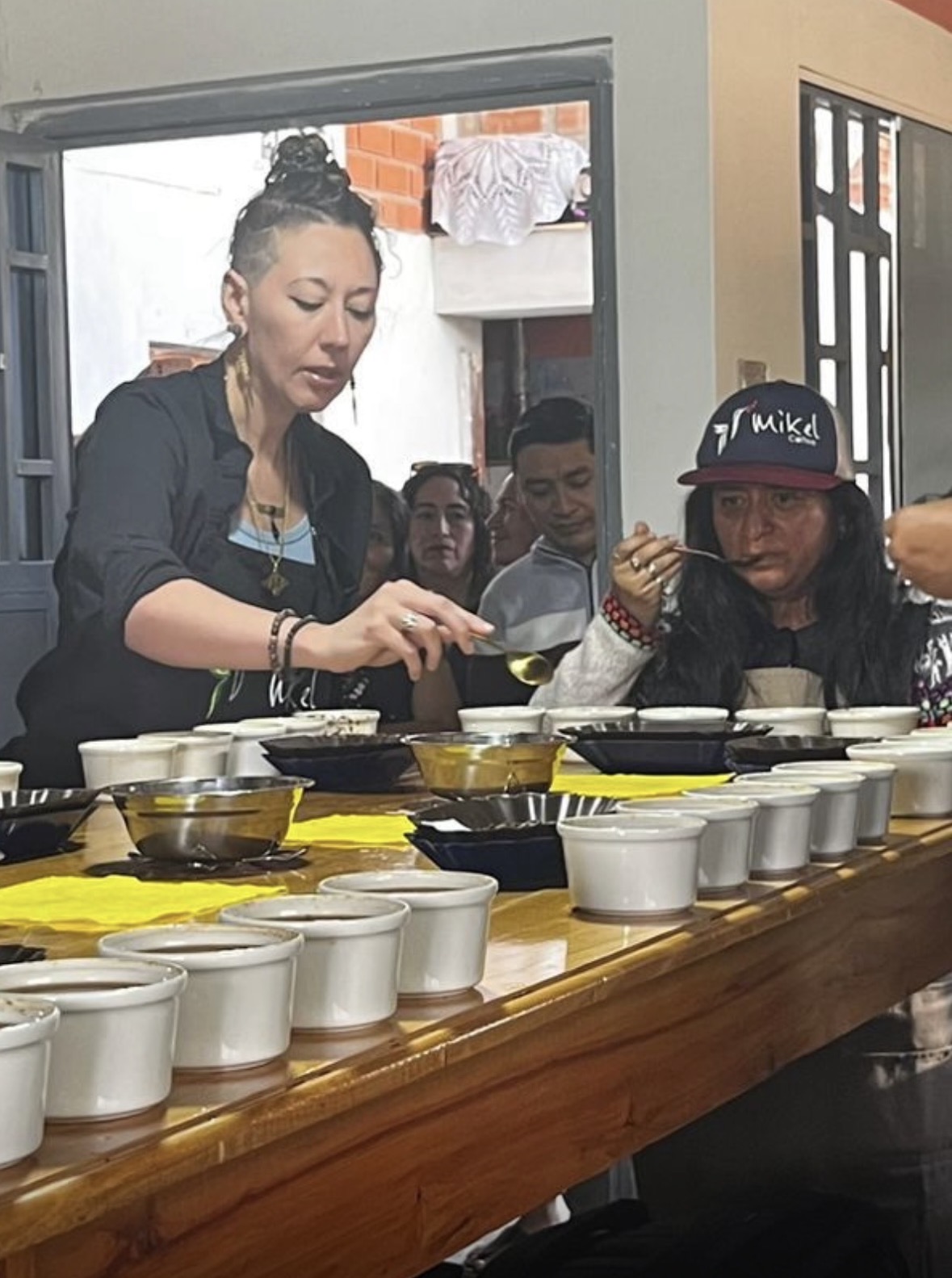
Carlson’s earlier green coffee turn came through Mighty Peace Coffee, a women and minority led social impact importer focused on the people and coffee of the Democratic Republic of Congo. Mighty Peace has since ceased operations. Carlson later worked at Anthem Coffee Imports. Across that phase of her career, she worked at multiple origins across Latin America, East Africa, and Asia, cupping, selecting lots, and building relationships with producers and exporters directly.
Working at origin gave her a vocabulary beyond sales. Cupping a lot at origin is different from reading a list of tasting notes in a warehouse offer. Selecting lots means making decisions with exporters and producers close to the point of production. Direct relationships mean considering risk, timing, payment, shipment, quality, and the weather of human business before a coffee becomes a roasted retail bag.
For cafes and bakeries that roast in the back room, sourcing affects production. How many bags can the roaster take? How long will the coffee sit before roast? Can the buyer commit to a pallet, or is two bags the right starting point? Carlson says scale should not decide who gets respectful treatment.
"I don't care if you're the janitor or the president of the company, I try to treat everyone with the same respect. If you buy two bags, two pallets, two supersacks, or two containers, I can work with you"Daily Coffee News
Two bags and two containers require different logistical work. In Carlson's frame, both create an ethical obligation to respect the buyer, the importer, and the people behind the coffee.
Importer partners, and who gets chosen
Carlson intentionally favors partners led by women and people from historically underrepresented groups. She also keeps the Coffeekris portfolio broad enough to serve roasters buying a few bags as well as roasters buying commercial volumes. A roaster still needs coffees that fit price, quality, volume, timing, and customer demand.
Swift Coffee Sourcing brings Emily McIntyre's company into the Coffeekris orbit. Optimist Coffee Traders brings Jim Ngokwey, whose background includes Mighty Peace Coffee. The list gives roasters multiple importer relationships without asking them to start from zero on every introduction.
Transparency can flatten if it stops at a label claim. Carlson's version asks who the importer is, why she works with them, where the coffee is coming from, and who gets paid for which part of the transaction. Those questions are practical. The reason Carlson is working with them matters. Why Carlson is working with them is the key question. They are the questions that decide whether a roaster understands the coffee well enough to stand behind it on a menu board.
For Artefice readers, this is where sourcing meets the morning cup. A cafe’s batch brew does not begin at the Fetco, the grinder, or the opening dial-in. A cafe’s batch brew begins with a buying decision made weeks or months earlier. The person choosing that green coffee decides what the barista can brew at 8 a.m., what the baker’s regular drinks with a laminated pastry, and which producer or exporter name makes it onto the retail shelf.
The stakes sit in those everyday service decisions. If a roaster buys two bags, the coffee may become a short run on a pour-over menu. If a roaster buys two containers, it may anchor espresso across wholesale accounts. Carlson’s stated range, from two bags to two containers, puts very different buyers at the same sourcing desk and asks the importer network to hold both ends of that scale.
Ten containers, one cautious first-year goal
When Coffeekris launched, Carlson hoped to sell the equivalent of one container of green coffee during the first year. First-year sales exceeded 10 containers. Coffeekris is a new sourcing business built around representation.
The number also lands differently because Carlson has spoken about being told by a room of men that she was not capable. She has said she holds the first-year success with humility and pride, while also naming that starting a business has not been easy.
Green coffee sales at container scale ask for more than a good pitch. A container is a commitment. It touches cash flow, warehousing, quality control, roast planning, wholesale promises, and the shelf life of a menu. Moving more than 10 containers in a first year means roasters trusted Carlson enough to put production decisions through her desk.
Carlson did not build the business around a single origin, a single importer, or one scale of customer. She built it around 11 importing partners, direct-price access for roasters, and a clear statement that women-led and underrepresented businesses belong in the center of the trade.
That trust grew from a career with several pressure points. Carlson learned service at Take Five, roasting and community at Revocup, green coffee through Mighty Peace and Anthem, and origin work across Latin America, East Africa, and Asia. The Coffeekris business gathers those phases into one role.
What roasters should watch next
Coffeekris sourcing conversations keep the importer named. A Coffeekris sourcing conversation traces which importer brought in a coffee, why Carlson works with that partner, what volume fits the roasting plan, and whether two bags or two containers fit the business in front of her.
Small roasters can use Coffeekris to find a first relationship beyond a familiar spot list. Established roasters can use Coffeekris to add importer partners without scattering buying conversations across a dozen inboxes. Cafes that roast for their own counters can connect the morning batch brew with the people who moved the coffee before it reached the roaster.
Kris Carlson now sits at a specific crossing in specialty coffee: Kansas City service roots, importer representation, women-led and underrepresented partner selection, and first-year sales that cleared 10 containers after a one-container goal. The next measure will be quieter than the launch number. It will be whether roasters keep returning to a sourcing desk where the importer is visible, the price is direct, and the smallest buyer still gets a straight answer.