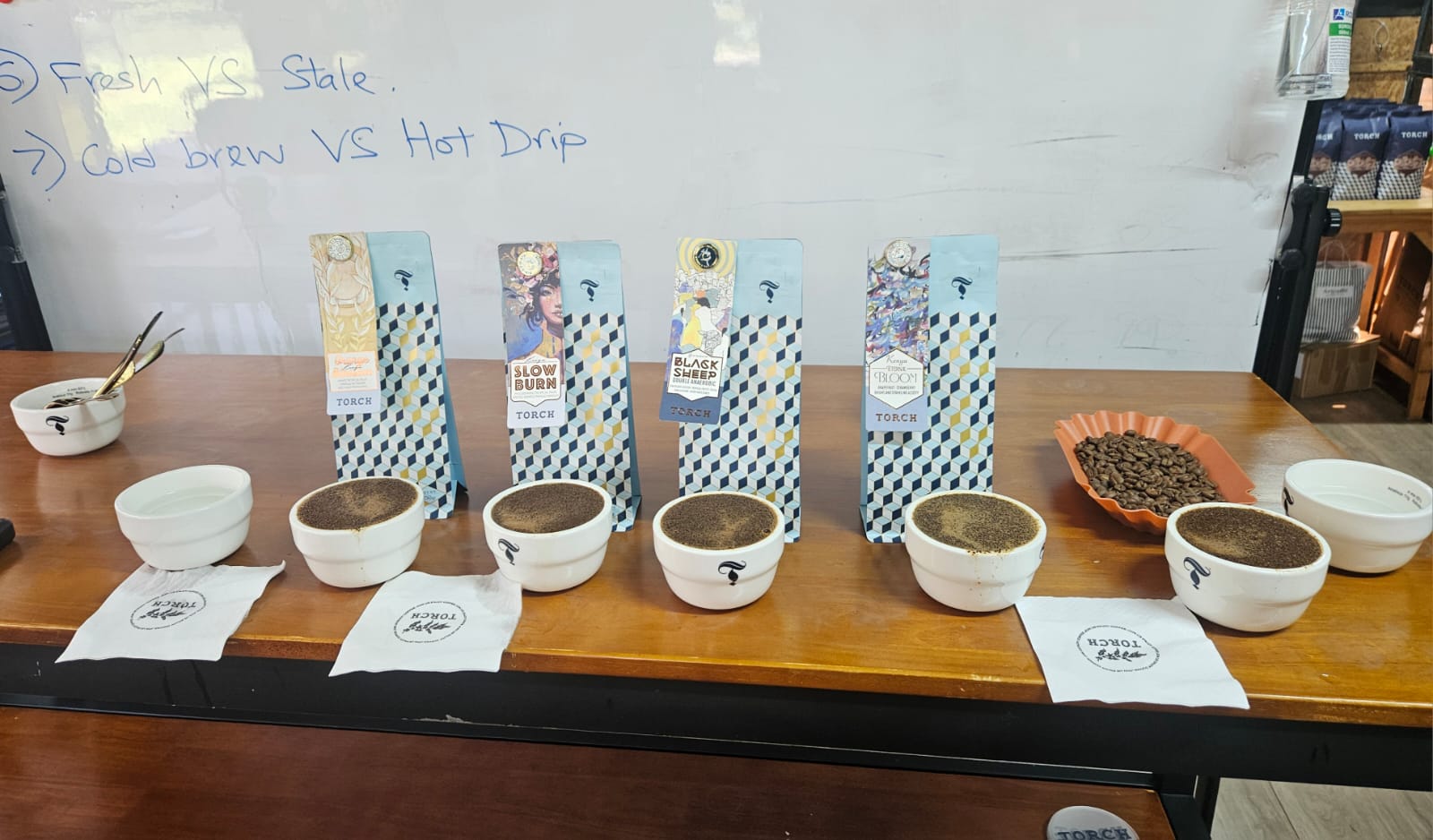
At Shamba Events Center in Loresho, Nairobi, the November tables are being built for scale: 300 trained cuppers, up to 500 Kenyan coffees, 34 coffee-growing counties, and two days of blind sensory evaluation. The Kenya Coffee Flavor Map is scheduled for 2027 and will be built from cupping evaluations at the November 2026 Kenya Coffee Flavor & Origin Expo in Nairobi (Linkedin).
The 14 to 16 November 2026 expo in Nairobi brings the people who farm, roast, cup, and serve Kenyan coffee into the same room. FAO says professional cuppers from Kenya and abroad can join the sensory evaluations on 15 and 16 November.
The project is presented by the Coffee Board of Kenya, FAO in Kenya, and the Kenya Coffee Platform, with Torch Coffee Kenya as technical partner.
Inside the Kenya Coffee Flavor Map Project
The Kenya Coffee Flavor Map will draw on blind evaluations of up to 500 coffee samples. The expo program describes a national-scale flavor exercise across Kenya’s 34 coffee-growing counties, organized through 12 regions and built around a Flavor Map Live Cupping with 300 professional cuppers (Linkedin).
A table of Kenyan coffee can flatten into a familiar set of words. Five hundred samples give cuppers room to separate county, process, handling, roast approach, and cup character. The project gathers trained palates in Nairobi, then uses those results to build a public reference point scheduled for release in 2027.
Ritesh Doshi, owner and CEO of Nairobi-based Spring Valley Coffee, is among the Kenyan coffee professionals contributing expertise to the project. Martin Shabaya of Shabaya Limited, a four-time Kenyan National Barista Champion and 2021 World Barista Championship finalist, is also involved. Edwin Wanjiru, a Q Grader who works with Torch Coffee Kenya, contributes from the quality and export side.
The technical cast includes Doshi, Shabaya, and Wanjiru. Doshi brings the vantage point of a Nairobi coffee business owner who sells coffee close to origin. Shabaya brings competition-stage brewing and barista training experience. Wanjiru works with exports, quality standards, and farmers on processing methods.
Applications for coffee cuppers open in July 2026, and the project is recruiting trained specialty coffee cuppers from Kenya and key global markets. The contact for partnership and other enquiries is KE-coffee-flavor-map@fao.org. The contact for late applicants for the sensory evaluations is info@coffeeflavormap.com (FAO).
Why Nairobi Is the Right Stage for a Coffee Identity Reset
Nairobi gives the cupping work a different center of gravity because the expo places the tables at Shamba Events Center in Loresho. The expo places the tables at Shamba Events Center in Loresho, with Kenyan professionals helping define the flavor language. Kenyan professionals get to speak first at Shamba Events Center in Loresho.
Kenya’s Coffee Development and Marketing Strategy 2024 to 2029 says about 95% of the country’s coffee was exported in green form in 2020/21. Green coffee travels out, roasters abroad develop brands around it, and tasting notes return to producers as market language. The Kenya Coffee Flavor Map puts trained Kenyan cuppers, local coffee businesses, and production voices at the center of that description work.
Wanjiru, who works with Torch Coffee Kenya, described the challenge as ownership over expertise. "One of our greatest challenges is ensuring that this knowledge is developed, shared, and valued locally," said Edwin Wanjiru1.
Sensory knowledge is a skill set: calibration, sample handling, roast awareness, triangulation, defect recognition, and the discipline to describe what is in the cup without reaching for a default script. If that knowledge is developed locally, producers can hear how trained cuppers describe their coffees. Roasters in Kenya can use a shared vocabulary. Buyers can ask better questions. Baristas can connect the cup on the counter to the county, process, and producer behind it.
Creative Coffee Week will run during the expo with public cuppings, barista demonstrations, and cultural activities, according to FAO. Nairobi’s drinkers and visiting cuppers will take part in that public layer. Kenya’s Agriculture and Food Authority reported that coffee shops increased from 231 in 2019 to 791 in 2023. More counters mean more chances for Kenyan coffee to be roasted, brewed, explained, and bought within Kenya.
What This Could Mean for Producers, Roasters, and Coffee Buyers
The Kenya Coffee Flavor Map challenges the phrase set that many coffee buyers know by muscle memory. "For fifty years, Kenyan coffee has been described with the same three words: black currant, bright, acidic," said Ritesh Doshi2.
Those three words have sold plenty of Kenyan coffee. They also leave little room for producers whose lots fall outside that narrow frame. Doshi points to natural-processed coffees from Mount Elgon and anaerobic lots from Ruiru as examples of the flavor diversity among Kenya’s producers. Processing method and place can shift a coffee’s cup character.
A public national flavor map could make producer recognition less dependent on a buyer already knowing where to look. If a county, region, or processing style appears clearly in the map, producers may have another tool when talking to roasters and exporters. Doshi has said the map could help producers get found and paid for the flavors that distinguish their coffees.
A roaster looking for Kenyan coffee may already know the familiar profile. A public map built from hundreds of samples could add county-level and regional context before the first sample roast lands in the tray. It could help a roaster explain why two Kenyan coffees do not behave the same on bar, or why one lot fits filter service while another needs a different roast curve, even when both carry Kenya on the bag.
A customer ordering a Kenyan filter brew may expect currant and acid because that is what the trade has taught them. A barista with better origin language can name a broader field of flavors, processes, and places.
The Export History Behind the Cupping Table
Kenya’s coffee industry grew under British colonial rule around large settler estates and export markets. African farmers faced restrictions on growing coffee. Limited cultivation rights began in the 1930s, with broader African participation expanding in the 1950s before independence in 1963.
That history still matters when a national flavor project gathers in Nairobi. Export structures shape who has access to value, who controls language, and who gets named when coffee travels. A green coffee lot can leave a producing country with detailed traceability and still be known abroad through the roaster that presents it. The Kenya Coffee Flavor Map gives Kenyan professionals a shared instrument for describing the country’s coffees before outside markets reduce them to a few familiar words.
The expo’s educational program will feature Kenyan voices across coffee science, production, and entrepreneurship, including Dr. Cecilia Kathurima of the Coffee Research Institute at the Kenya Agricultural and Livestock Research Organization. That program connects the cupping table to the lab, the farm, the roasting room, and the cafe counter. The map depends on tasting and on people who understand why a coffee tastes the way it does.
Shabaya’s role points to another piece of the work: skills beyond farming. He has said Kenya’s future in coffee depends on expanding opportunities in roasting, brewing, sensory evaluation, and entrepreneurship. That list tracks the full route from parchment to cup. If more of those skills are built and paid for locally, more of the coffee economy can remain visible within Kenya.
How to Follow the November Expo
The Kenya Coffee Flavor & Origin Expo is scheduled for 14 to 16 November 2026 at Shamba Events Center, Loresho, Nairobi. The expo runs for three days, with Creative Coffee Week adding public cuppings, barista demonstrations, and cultural activities (FAO).
The application is free for professional cuppers, and the project is recruiting from Kenya and key global markets.
The Kenya Coffee Flavor Map will be judged by what it makes visible in 2027: counties, processes, producers, and trained Kenyan sensory work that can stand beside export data. The cupping roster in July 2026 will show who helps decide how Kenyan coffee is named before it leaves home.