
From 7:30am Tuesday to Sunday, Filled In The Blank can still start with kaya toast and Hor Ka Sai; now the same Dhoby Ghaut cafe also serves a $24++ Laksa Risotto by Derek Cheong. Filled In The Blank Dhoby Ghaut has launched a new menu by the MasterChef Singapore Season Two winner at Citadines Connect City Centre, four minutes on foot from Dhoby Ghaut MRT Station (Eatbook) (Eatbook).
The order to know first is the Laksa Risotto. It takes the structure of Italian risotto and moves it toward Singapore laksa, a dish built on fragrance, richness and heat. Online reviews describe that heat as gradual rather than immediate. A good laksa does not only burn; it climbs.
For a cafe in Dhoby Ghaut, that changes the way a visit gets planned. Filled In The Blank can still handle the morning run, with Kaya Toast with Butter from $3.30++ and Hor Ka Sai from $3++. Now it also asks for a lunch or dinner slot, when the table has room for Laksa Risotto, Beef Short Rib Galbi at $32++, and a $16++ Hong Kong French Toast that moves dessert into the same sitting (Eatbook) (Eatbook).
Filled In The Blank Dhoby Ghaut gets a Derek Cheong menu
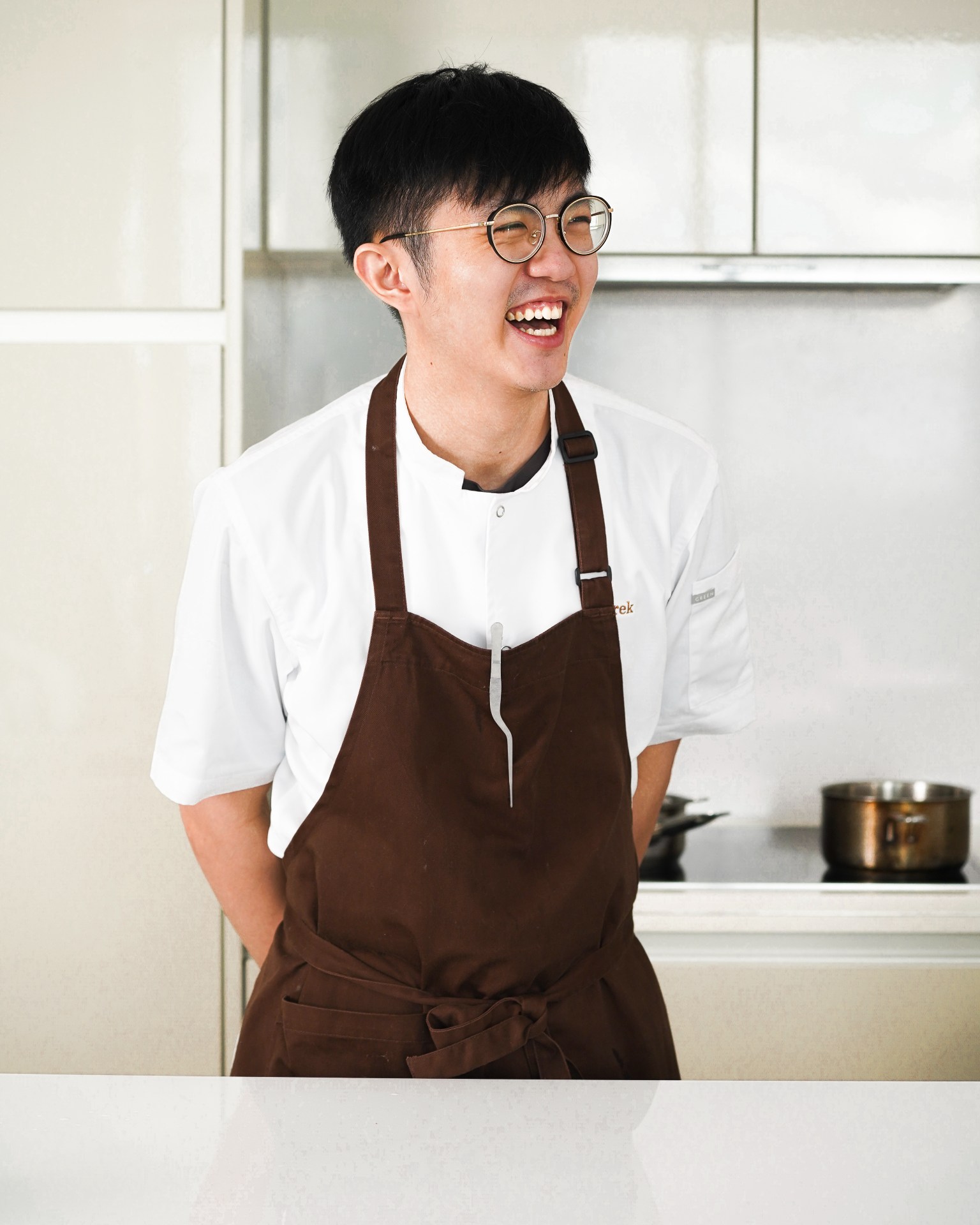
Derek Cheong arrives here with the most legible credential in the story: he won MasterChef Singapore Season Two. At Filled In The Blank, that credential lands in a cafe format rather than a tasting-menu room. The address is Citadines Connect City Centre, #01-02, 182 Clemenceau Avenue, Singapore 239923. The neighborhood is Dhoby Ghaut, which means the cafe sits in the daily path of students, office workers, hotel guests and people transferring across central Singapore (Eatbook) (Eatbook).
Filled In The Blank is a Nanyang cafe, and that matters for how to read the menu. Nanyang cafes already sit at a meeting point: kopi, toast, butter, eggs, malt, Western breakfast cues, and a long day of service rather than a narrow brunch window. Cheong's menu upgrade does not erase that base. It stretches it.
The best signal is the pairing of the old morning anchor with the new lunch centerpiece. Kaya Toast with Butter starts from $3.30++, a price that keeps the cafe attached to the familiar breakfast rhythm. The Laksa Risotto sits at $24++, a different kind of order, slower by design and built around a spoon rather than a quick bite. The same counter now has both speeds.
That split is useful for readers who plan cafe visits with purpose. If you are going early, the order can stay tight: toast, Hor Ka Sai, a seat near the lobby flow. If you are going for Cheong's menu, the order changes. You want the risotto first because it carries the clearest idea of the launch: a Singaporean flavor structure translated through risotto technique.
The Laksa Risotto is the order to start with
The Laksa Risotto costs $24++ and is the dish carrying the early attention around this menu. It combines Italian risotto technique with Singapore laksa flavors, and it has been described as a rich, fragrant bowl. That phrase is doing practical work. Risotto needs body and repeated stirring to bind the grain and liquid; laksa needs aromatic force and a broth profile that can carry spice, coconut richness and seafood memory without collapsing into heaviness.
The cafe has not published a full technical sheet for the dish, so the useful details are the ones already visible from diners' reports: the laksa character comes through clearly, and the heat builds in stages. That matters because many fusion dishes fail by stacking two references on the plate without resolving texture. A risotto version of laksa has to answer a basic craft question: can the grain hold sauce the way noodles hold broth?
Here, the order makes sense because it turns a familiar Singapore flavor into a slower cafe dish. Laksa is usually judged fast: steam, spice, coconut, slurp. Risotto asks for another tempo. The spoon checks consistency before it checks heat. If the bowl works, the laksa does not need to arrive as soup; it can arrive as a coating, a perfume, a burn that gathers after the first mouthful.
For the Artefice reader, this is the dish to use as the measure of the collaboration. It is not the safest plate on the table. It is the one with the most at stake. Cheong's MasterChef title gives diners a reason to look; the risotto has to justify the detour from a standard cafe order.
Hong Kong French Toast, galbi and the sweet edge of the menu
The second dish to put on the table is the Hong Kong French Toast at $16++. It uses thick-cut bread served warm, buttery and pillowy-soft, paired with cold ice cream. The contrast is the point: heat against chill, butter against dairy, soft bread against the clock before the ice cream begins to melt.
That hot-cold structure is a cafe trick with long legs. It needs the bread to stay plush instead of collapsing, and it needs the ice cream to cool the plate without turning it soggy too quickly. If the Laksa Risotto is the menu's technique statement, the Hong Kong French Toast is the shareable order. It is easier to split. It also gives the table a reason to stay after the savory plates.
For a heavier savory order, the Beef Short Rib Galbi is priced at $32++. It is described as Korean-inspired, with beef braised until tender and coated in a galbi glaze. That puts it at the top end of the listed prices here, and it reads as the dinner anchor. If the visit is built around one main and one sweet, the choice is between the Laksa Risotto and the galbi. Start with the risotto if the purpose is to taste Cheong's fusion idea most directly.
The XO Carrot Cake at $12++ gives the menu a sharper, snack-sized route. Crisp-edged carrot cake, egg and XO heat make it the order for a smaller table or a second savory dish. It also fits the Nanyang cafe frame more naturally than the galbi, because carrot cake already lives in the local breakfast and supper vocabulary. The XO element adds force without requiring the dish to move too far from its base.
Dessert stays simpler with Panna Cotta at $9++. The useful detail is the tart berry sauce, which cuts the creamy custard. After laksa heat, galbi glaze or XO spice, that acidity matters. It resets the mouth rather than extending the meal's richness.
Breakfast still has Kaya Toast with Butter and Hor Ka Sai
A menu upgrade can make a cafe forget why people first walked in before 9am. Filled In The Blank keeps the morning format readable. Kaya Toast with Butter starts from $3.30++, and Hor Ka Sai starts from $3++. Those two prices sit at the other end of the menu from the $32++ Beef Short Rib Galbi, and they keep the cafe open to a quick first meal rather than only a planned chef-led visit.
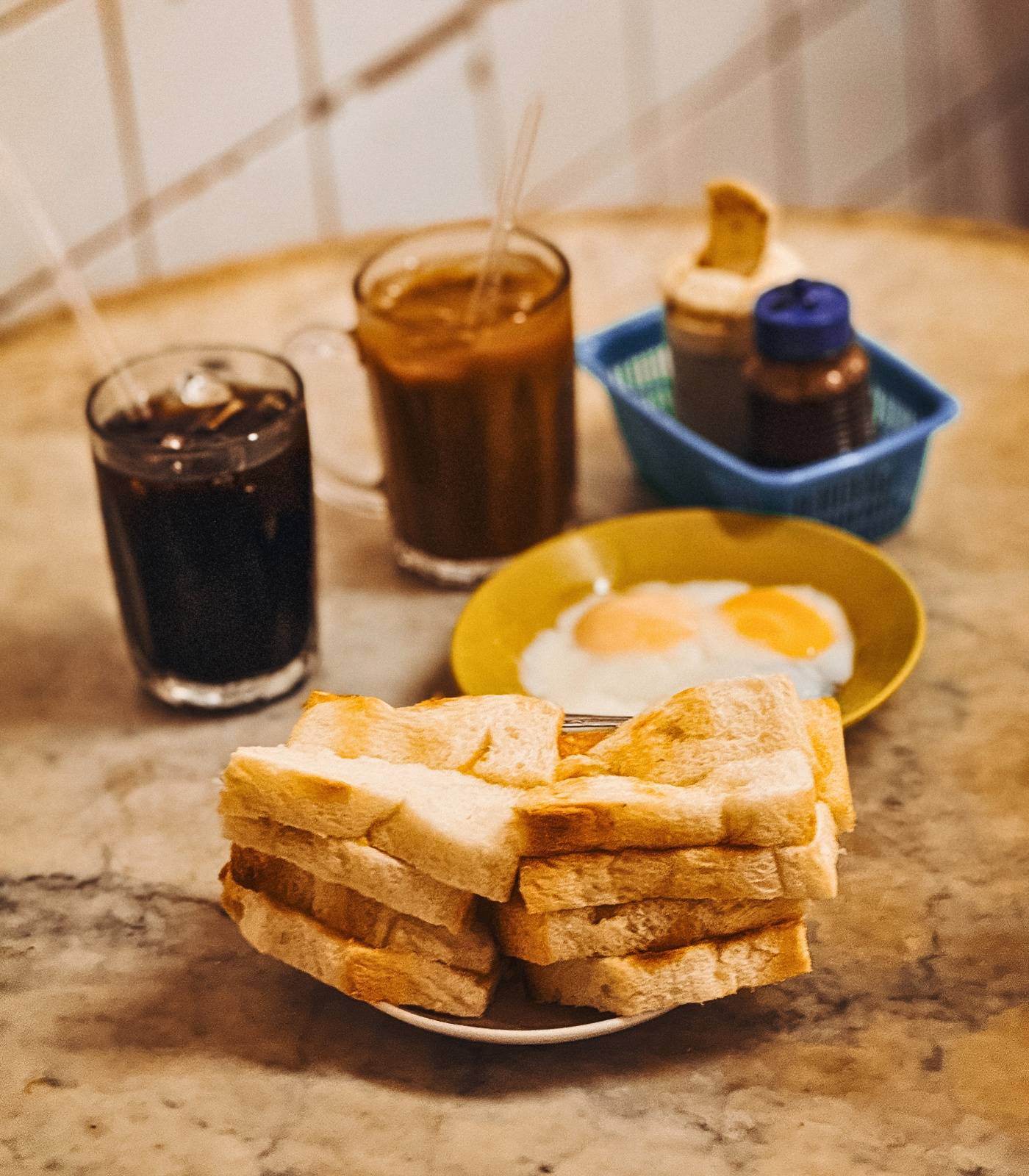
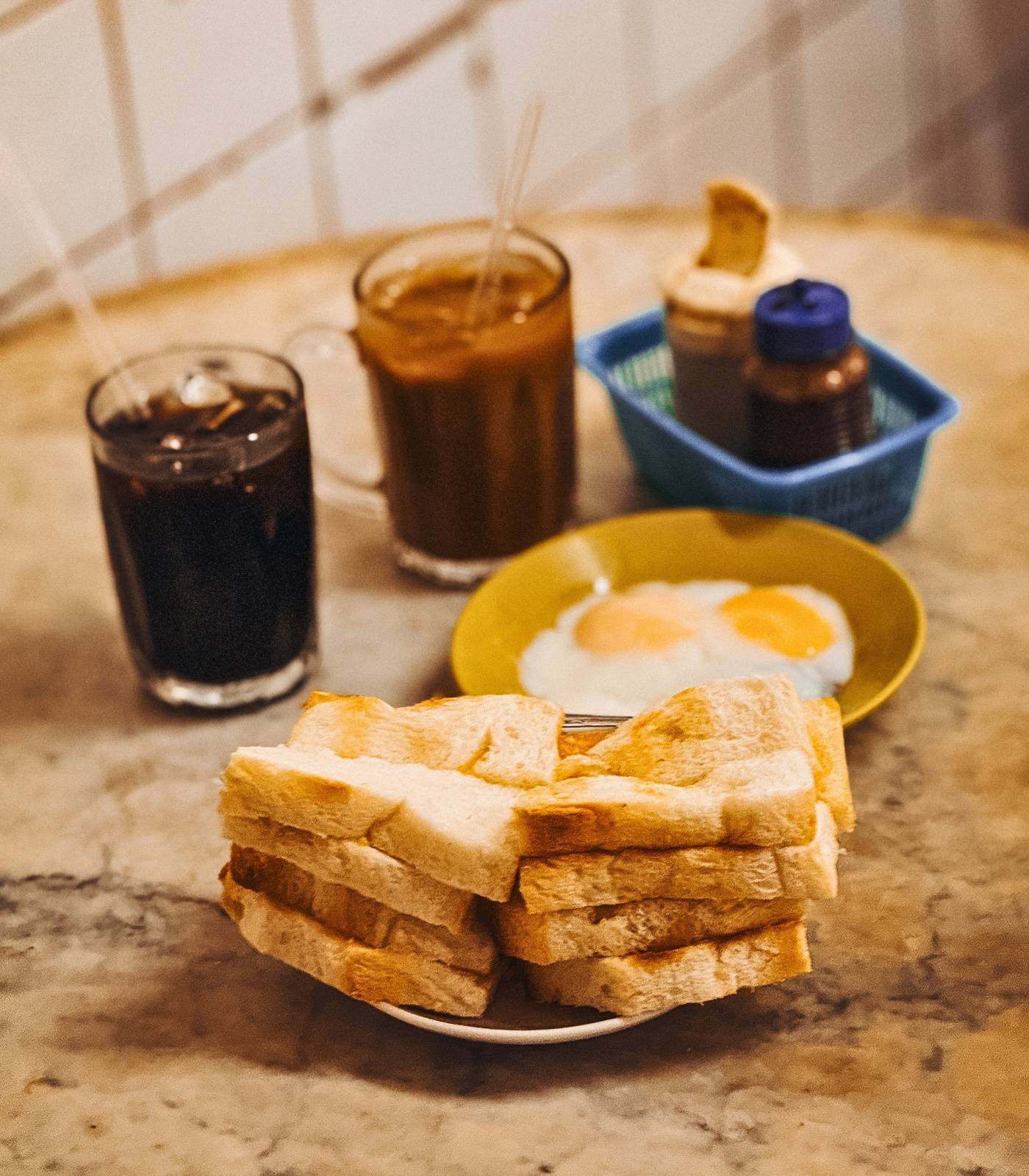
Hor Ka Sai is a Malaysian-style blend of chocolate malt and Nanyang kopi. The drink is described as thick and velvety, which makes it a better companion to toast than a bright, acidic filter coffee would be. It leans into malt, coffee bitterness and the soft sweetness that belongs with kaya and butter.
The Kaya Toast with Butter is the baseline order because it gives context to the rest of the menu. Without it, the Laksa Risotto could read as a one-off fusion plate. With it, the cafe's range becomes clearer: morning kopi culture at one end, chef-built crossover dishes at the other. The menu can hold both if the counter keeps its sense of timing.
Kaya Latte has also been part of the menu conversation around the launch, which tracks with the cafe's Nanyang direction. The priced drink to pin down, though, is the Hor Ka Sai from $3++. If you are visiting for breakfast, order that with the toast. If you are visiting after noon, use the drink as a bridge into the richer plates rather than treating it as an afterthought.
How to plan a visit to Citadines Connect City Centre
Filled In The Blank is located at Citadines Connect City Centre, #01-02, 182 Clemenceau Avenue, Singapore 239923. The cafe is a four-minute walk from Dhoby Ghaut MRT Station, which makes it a low-friction stop for anyone moving through central Singapore. You do not need to build a whole day around the address, but the menu now gives you enough reason to choose it over a default mall meal (Eatbook).
Opening hours run Tuesday to Sunday, 7:30am to 8:30pm. That schedule creates three useful windows. Go early for Kaya Toast with Butter and Hor Ka Sai before the day gets noisy. Go at lunch for the Laksa Risotto, when the dish can carry the meal without needing many sides. Go later if the table wants the Beef Short Rib Galbi, XO Carrot Cake and Hong Kong French Toast together.
The price spread is clear. Kaya Toast with Butter starts from $3.30++. Hor Ka Sai starts from $3++. XO Carrot Cake is $12++. Panna Cotta is $9++. Hong Kong French Toast is $16++. Laksa Risotto is $24++. Beef Short Rib Galbi is $32++. That gives the cafe two modes: a quick Nanyang breakfast under the cost of a full main, or a chef-led meal where two people can share across sweet, spicy and braised dishes.
The order to make first is the Laksa Risotto, then the Hong Kong French Toast if there is room or another fork at the table. Add Hor Ka Sai when the visit starts in the morning, and consider XO Carrot Cake when the table needs something savory but not as heavy as the galbi. The next thing to watch is whether Filled In The Blank keeps this menu as a stable part of its Dhoby Ghaut rhythm, because a chef collaboration only matters after the first wave if regulars keep ordering it on an ordinary Tuesday.